

Smart glasses are quickly becoming one of the most interesting categories in wearable technology. While some devices focus on augmented reality experiences and others focus on AI-powered assistance, manufacturers are still trying to find the right balance between the two.
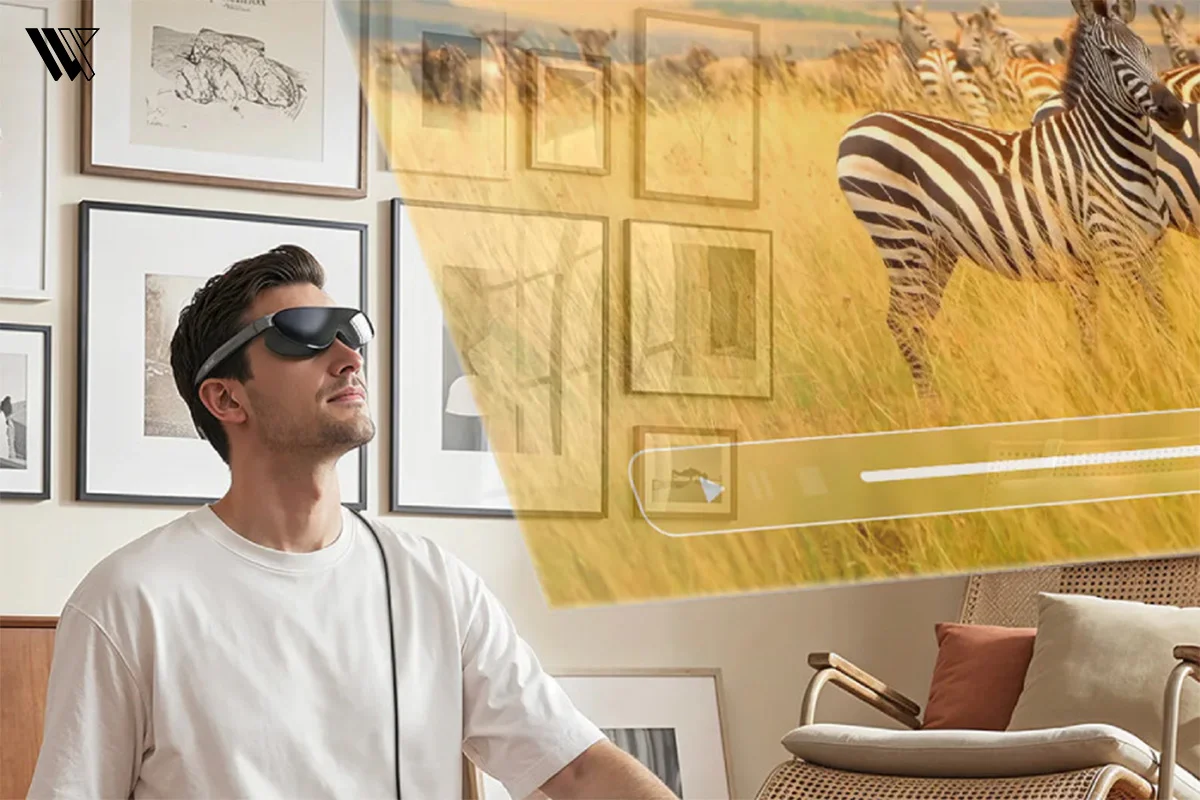
With Acer smart glasses 2026, Acer has taken a different approach by introducing two separate products: the AR Vision GR0 and the GI0 AI Glasses. The AR Vision GR0 is designed for immersive virtual displays and productivity, while the GI0 AI Glasses focus on hands-free AI features powered by Google Gemini.
Rather than building a single device that tries to do everything, Acer is targeting two different user needs. In this article, I’ll explain the features, specifications, use cases, limitations and even how these new smart glasses fit into the future of wearable technology.
Decode the Decor
The Smart Jewelry Revolution — a practical guide to wearable tech.
What Is the AR Vision GR0?

The Acer AR Vision GR0 is a specialized pair of wired augmented reality (AR) glasses designed to give you a massive, portable virtual display wherever you go. These glasses do not have an onboard battery or an integrated operating system. Instead, they act as a high-tech monitor that sits directly on your face, leveraging the external processing power of a device you already own.
You can plug the glasses directly into a laptop, a smartphone or a portable gaming handheld using a single USB-C cable. This setup makes the device an excellent tool for professionals who need a private multi-monitor setup while traveling or for gamers who want to experience their favorite titles on a massive screen without being anchored to a television.
To keep track of your movements in virtual space, Acer equipped the glasses with internal hardware tracking sensors. This includes 3DoF (Three Degrees of Freedom) tracking, which functions using built-in accelerometers, proximity sensors and magnetometers. This sensor array allows the virtual screen to shift smoothly with your head movements, keeping the display naturally aligned with your perspective.
Key Features and Specs
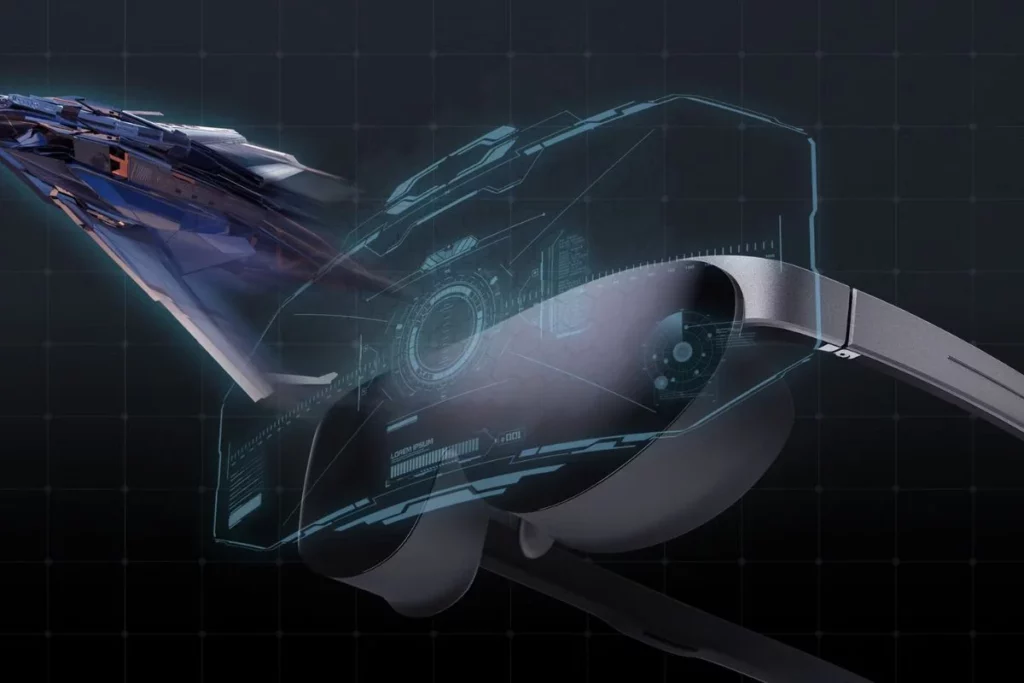
Acer packed the AR Vision GR0 with high-end display technology to ensure that your virtual screen looks incredibly sharp and lifelike. Here is a detailed breakdown of the internal hardware specifications:
- Display Technology: The glasses feature dual micro OLED Full HD screens. In standard 2D mode, each eye receives a dedicated 1920×1080 resolution image. When you switch to 3D mode, the glasses output a combined resolution of 3840×1080.
- Virtual Screen Size: Acer designed the optics so that the display experience mimics looking at a massive 172-inch screen from a distance of 6 meters away. This gives you an incredibly wide field of view that fills your sight.
- Color and Contrast: The displays feature an impressive 50,000:1 contrast ratio, meaning blacks look deeply dark instead of washed-out gray. It also covers 95% of the DCI-P3 color gamut with 24-bit color depth, delivering professional-grade color accuracy.
- Brightness and Refresh Rate: The panels run at a smooth 60 Hz refresh rate and offer 200 nits of peak brightness. While 200 nits sounds modest for a smartphone, it is plenty bright for glasses because the displays sit right next to your pupils.
- Physical Controls: You do not need to pull out your phone to change your basic settings. The frame features built-in touch sensors, allowing you to use a simple swipe brightness motion or a swipe volume gesture directly on the arms of the glasses.
- Audio, Fit and Hardware Support: Sound is handled by a stereo system with one dynamic unit positioned on each side of the frame, aiming audio directly into your ears. The entire chassis weighs just 69 grams, making it comfortable enough for hours of continuous use. These glasses feature a fixed Interpupillary Distance (IPD) of 64 mm, which is the average distance between human pupils. For additional comfort and utility, they include a detachable light shield to block out glare, as well as an optional myopia magnetic lens attachment for users who wear prescription eyewear.
- Power Requirements: Since there is no onboard battery, the host device sends power through the cable at a rated consumption layout of 5.5V at 0.85A.
Practical Use Cases
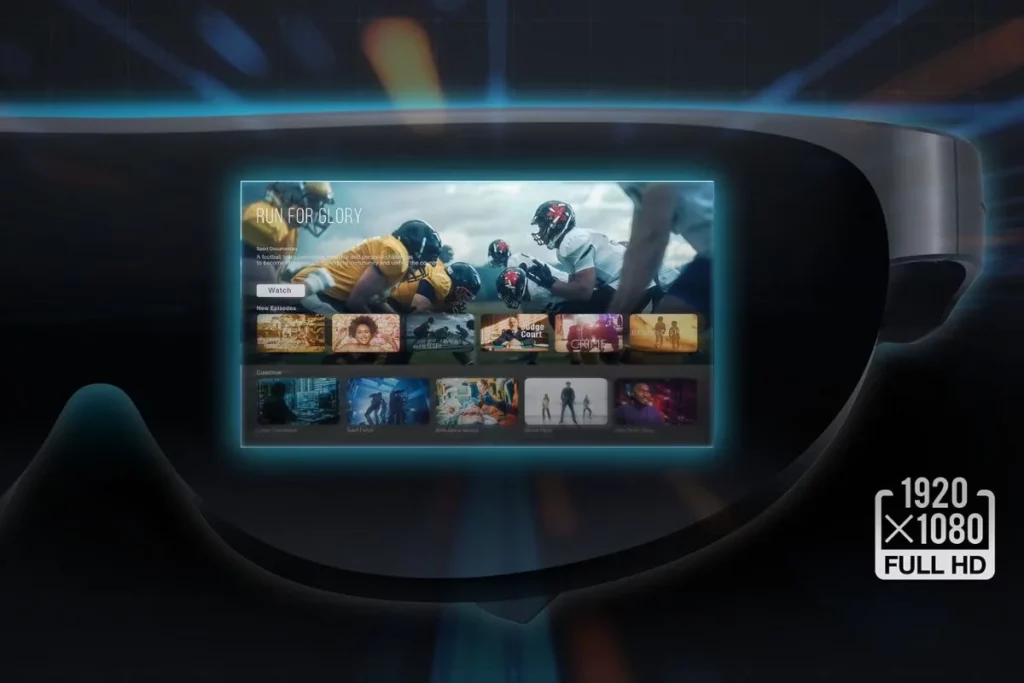
Because the AR Vision GR0 provides an incredibly immersive, private viewing space, it excels in a few major real-world scenarios:
- Remote Work and Presentations: If you frequently work on sensitive documents in coffee shops, public parks or airplanes, these glasses keep your data completely safe from prying eyes. You can open multiple spreadsheets or coding windows on a giant virtual display that only you can see, turning any cramped tray table into an expansive executive office.
- Immersive Gaming: Connecting the glasses to a portable gaming console or a laptop changes everything. Instead of squinting at a small seven-inch integrated panel, you are suddenly playing your games on a theater-sized screen with rich contrast and deep colors.
- Multi-Device Productivity: Because the glasses are fully compatible with Windows, macOS, Android and iOS, you can shift them between your devices seamlessly. You can edit videos on your laptop, unplug and instantly connect to your phone to watch a high-definition movie.
Limitations
While the hardware is undeniably impressive, the AR Vision GR0 has a few distinct design limitations that you should keep in mind:
- Wired Dependency: These glasses do not have an internal battery or a wireless receiver for video. You must keep them physically cabled to a host device at all times. This wire can feel a bit restrictive if you want to move around your environment while wearing it.
- Not a Hands-Free AI Assistant: The GR0 does not include cameras, microphones or integrated AI software. It cannot analyze the environment around you, answer voice questions or help you navigate a city. It is strictly a high-end wearable monitor.
- Bulkier Form Factor: Weighing 69 grams and featuring thicker arms to house the micro OLED optics, these glasses look and feel like futuristic tech gear. They do not look like ordinary everyday reading glasses, meaning they are not something you would wear to a restaurant or a social gathering.
What are the GI0 AI Glasses?
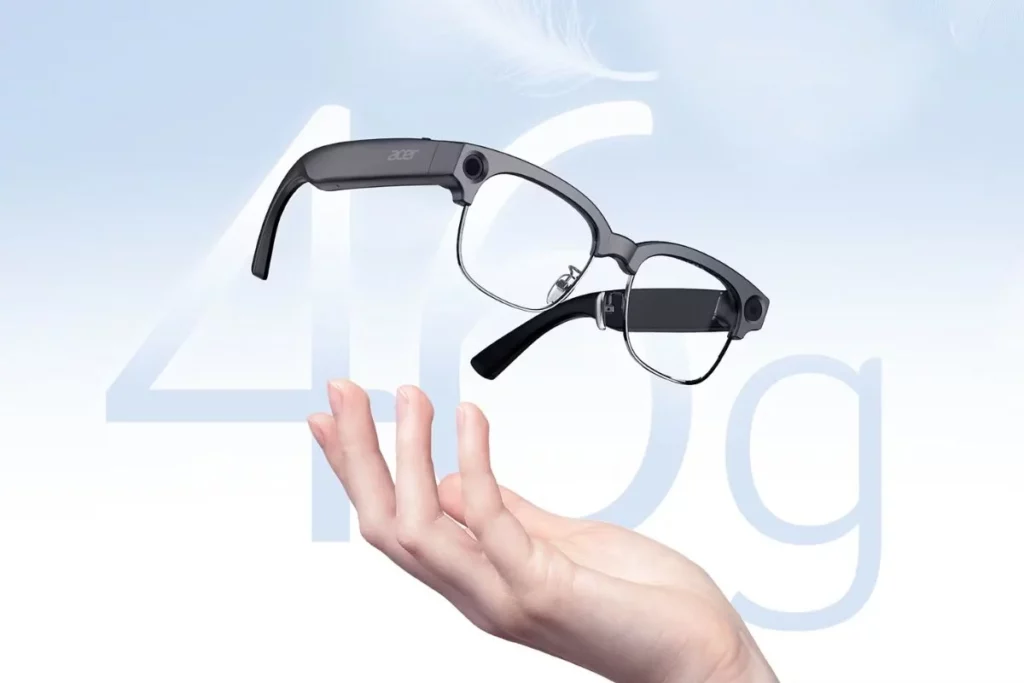
If the GR0 is built to replace your television, the Acer GI0 AI Glasses are built to replace your smartphone assistant. The GI0 is a wireless, ultra-lightweight pair of smart glasses focused entirely on hands-free ambient intelligence, everyday productivity and audio interaction. Unlike the GR0, which relies on a wired connection for power, the GI0 features a built-in 217 mAh rechargeable battery for completely wireless use. Acer has not yet disclosed official battery life figures.
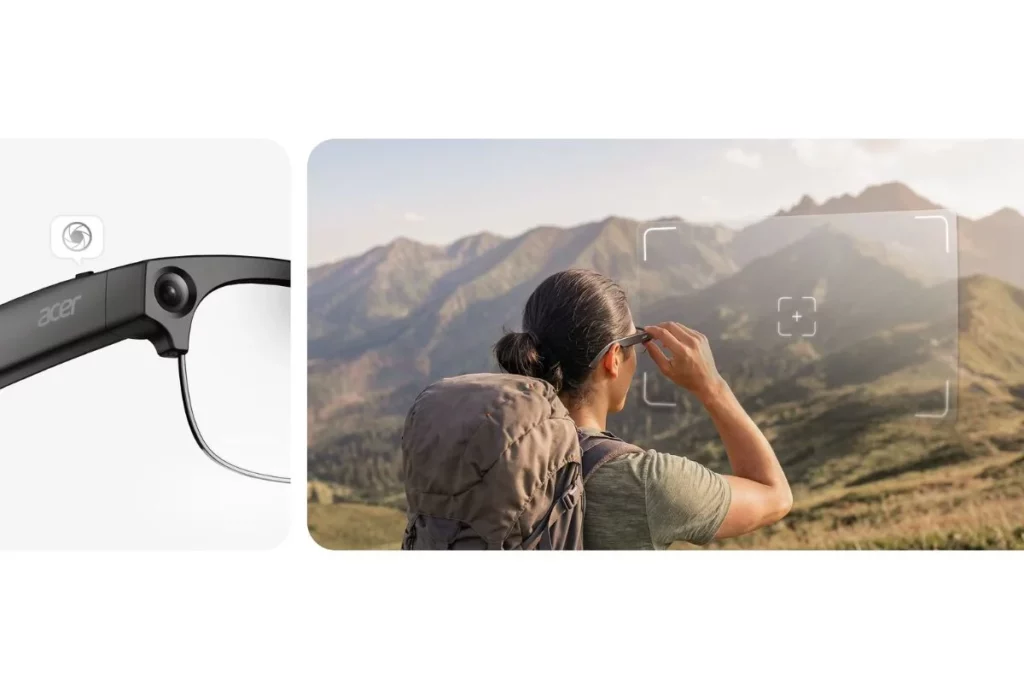
These glasses do not have any screens, lenses that project images or AR elements. Instead, they look and feel like a standard pair of premium everyday frames, weighing a mere 46 grams. To achieve this minimal weight, Acer utilized an unusual, stylish half-rim frame design that leaves the bottom portion of the lenses exposed, minimizing bulk. They connect wirelessly to your phone via Bluetooth 5.0 and Wi-Fi 5, using a companion app to link directly with Google Gemini. This integration lets the glasses serve as an always-on, intelligent companion that hears what you hear and sees what you see through an integrated camera.
Core Features

The GI0 AI Glasses are designed to blend seamlessly into your daily life while providing powerful utility through your voice and touch:
- Google Gemini Integration: The core power of these glasses comes from advanced cloud AI. By talking naturally, you can ask Google Gemini to answer questions, summarize long concepts, look up local information or brainstorm ideas without ever opening a screen.
- Point-of-View Camera: The frame houses an integrated 12-megapixel camera capable of taking sharp 3024×4032 still images. It can also record crisp 1920×1080 video at 30 frames per second, allowing you to capture spontaneous memories completely hands-free.
- Real-Time Translation and Capture: Because the camera can feed images directly to the AI, you can look at a foreign menu, use a voice command and receive an instant translation read aloud through the built-in speakers. The frame features a physical capture button that supports a short press for photos and a long press for video recording.
- Onboard Hardware Specs: The glasses include 32 GB of built-in eMMC storage, which lets you record hours of voice notes, lectures or ambient audio clips during meetings. It features an advanced three-microphone array for perfectly clear voice isolation, a side touchpad for quick tap controls, a status LED to let others know when the camera is recording and a 217 mAh battery that recharges via a standard 5V/1A connection.
Practical Use Cases
The GI0 AI Glasses shine brightest when you are moving through the real world and need quick, context-aware information:
- On-the-Go Productivity: Imagine walking through a grocery store, cooking a complex meal or working with your hands in a workshop. With the GI0, you can record voice memos, add items to your digital to-do lists or ask the AI to calculate measurements completely hands-free while your phone stays in your pocket.
- Language Translation for Travelers: When exploring a new country, navigating train stations or reading warning signs becomes completely effortless. You can look directly at a sign, tap the temple arm and let Google Gemini translate the text in real time or use the three-microphone array to have a fluid, bilingual conversation with a local resident.
- Quick Information Retrieval and Notes: If you are a student attending a lecture or a professional sitting in an important meeting, you can use the built-in audio recording feature to log the entire conversation. The 32 GB of onboard storage keeps your audio secure, letting you offload it later to the Acer AspireSync app for easy reading and AI summarization.
Limitations
Because Acer prioritized a lightweight design and long-lasting comfort, the GI0 AI Glasses lack several multimedia capabilities:
- No AR Projection: There are absolutely no digital screens, heads-up displays or holograms inside these lenses. You cannot use them to watch video clips, look at map graphics or read text floating in front of your eyes. All information is delivered through audio.
- Poor Media Consumption: Because there is no visual screen, you cannot use these glasses for mobile gaming, streaming movies or reviewing photo layouts. They are strictly an audio-and-capture interface.
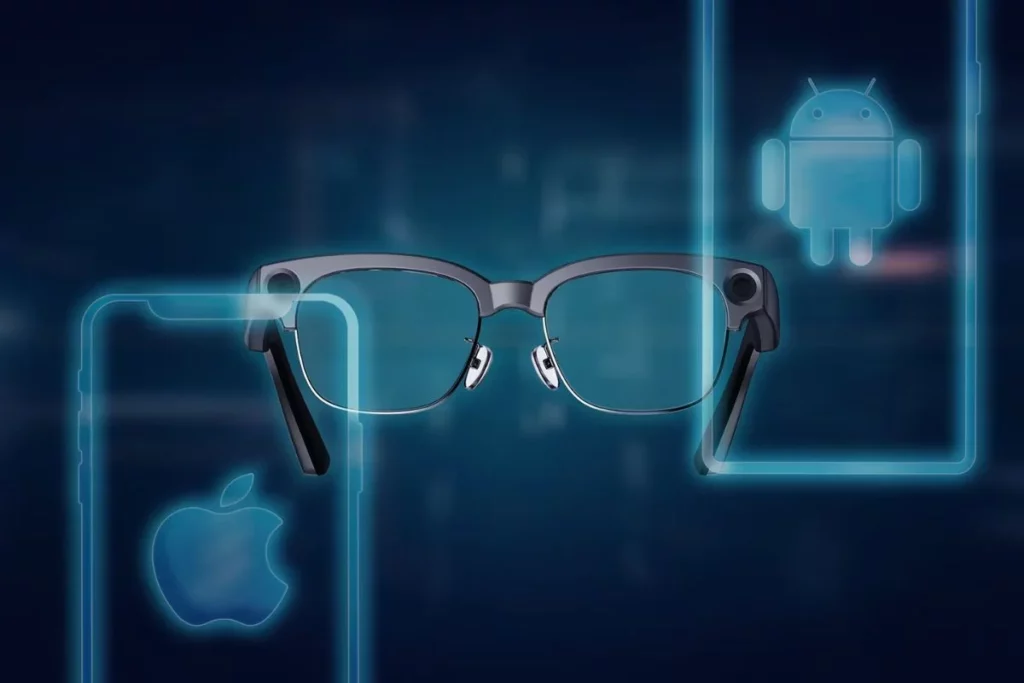
- Heavy Ecosystem Dependence: The glasses require a constant wireless connection to an iOS or Android smartphone running the Acer AspireSync companion app. If your phone battery dies or if you lose your cellular data connection, the advanced Google Gemini features will stop working.
Comparing Acer’s AR and AI Glasses
Target Users for Each Device
Acer did not design these two pairs of glasses to compete with each other. Instead, they address two very different needs, which is why the better choice depends largely on how you plan to use them.
The AR Vision GR0 is best for tech enthusiasts, professional remote workers, software developers and avid gamers. This user values a high-quality visual workspace over everything else. They want a device that lets them leave their heavy external monitors behind while giving them an incredibly immersive space to play games or manage multiple software windows simultaneously.
The GI0 AI Glasses, on the other hand, are built for busy professionals, frequent travelers, daily commuters and casual tech users who want a digital assistant integrated into their lifestyle. This user does not care about virtual screens; they want a highly portable tool that helps them capture family memories, translate text on the fly, take hands-free notes and interact with an AI assistant without looking down at a smartphone screen all day.
Strengths and Weaknesses
| Features | AR Vision GRO | GIO AI Glasses |
|---|---|---|
| Display | ✓Dual Full HD Micro OLED (1920×1080 per eye) | ✕ |
| Virtual Screen Size | Massive 172-inch screen at 6 meters | ✕ |
| AI Capabilities | None (Dependent entirely on host device software) | Integrated Google Gemini Voice and Image AI |
| Camera System | None | 12 MP Camera (1080p video at 30 FPS) |
| Audio Hardware | Two ear-facing dynamic stereo speakers | Two stereo speakers + Three-microphone array |
| Onboard Storage | None | 32 GB eMMC built-in storage |
| Connection Type | Wired (USB Type-C cable to host device) | Wireless (Bluetooth 5.0 and Wi-Fi 5) |
| Weight & Comfort | 69 grams (Thicker frame for optics) | 46 grams (Ultra-lightweight, all-day wear) |
| Battery Layout | Powered directly by the connected host device | Internal 217 mAh rechargeable battery |
| Compatible OS | Windows, macOS, Android, iOS | Android 12 and above, iOS 15 and above |
| Best Used For | Productivity, media streaming and immersive gaming | Hands-free capture, translation and AI help |
How They Complement Each Other
When you look at them together, these two devices form a highly effective ecosystem that covers every aspect of modern wearable technology.
Acer’s strategy ensures that you do not have to make heavy compromises. If you are sitting down at an airport terminal or an office desk, you can slip on the AR Vision GR0 to expand your laptop monitor into a massive, private multi-screen workstation. The moment you pack up your laptop bag and walk out into the city streets, you can switch to the lightweight GI0 AI Glasses to navigate traffic, take voice notes, snap quick photos and stay connected via Google Gemini.
By dividing these use cases into two specialized forms, Acer successfully delivers top-tier performance in both categories without forcing you to wear an incredibly heavy, hot and expensive hybrid headset out in public.
How Acer Fits Into the 2026 Wearables Landscape
Compared to Meta, XREAL and RayNeo
The year 2026 has become a major turning point for the smart glasses industry and Acer’s arrival radically shifts the competitive playing field against established brands like Meta, XREAL and RayNeo.
Meta has found massive success with its Ray-Ban Meta glasses, which focus heavily on audio, style and lightweight AI assistance. On the other side of the market, brands like XREAL and RayNeo have focused almost exclusively on display-first AR glasses, offering brilliant virtual screens but requiring complex phone apps to handle basic AI tasks.
Acer is entering the market by attacking both sides at the exact same time. Instead of trying to engineer an incredibly complex, expensive set of hybrid glasses that crams micro OLED displays, a camera, Wi-Fi chips and a battery onto a single frame, Acer is splitting the market down the middle. This enables them to offer highly competitive pricing and reliable performance, giving consumers an incredibly clear choice based on exactly what they need their glasses to do.
Why Acer’s Dual Approach Matters
This dual-product strategy matters immensely because it addresses the core physics and battery limitations that have plagued the wearable technology industry for over a decade. High-end AR displays require a massive amount of power and generate noticeable heat, which demands a thick cable or a heavy, uncomfortable battery pack mounted on the frame. Conversely, an ambient AI assistant needs to be incredibly lightweight, socially acceptable to wear in public and capable of lasting a full day on a tiny charge.
By launching the AR Vision GR0 and the GI0 AI Glasses alongside each other, Acer acknowledges these engineering realities. They are giving consumers a clear choice: choose the GR0 if you want an immersive, high-fidelity visual workstation or choose the GI0 if you want a practical, all-day smart assistant. This approach sets a brand-new design trend for the entire market, signaling that smart glasses are shifting away from clunky, jacks-of-all-trades devices and moving toward elegant, task-specific tools.
What This Means for Consumers
Choosing Between AR and AI
Deciding which pair of Acer smart glasses fits best into your daily routine comes down to evaluating your personal workflow, your lifestyle and how you prefer to interact with your data.
You should choose the AR Vision GR0 if your daily life centers around heavy media consumption, long coding sessions, video editing or portable gaming. If you constantly wish you had a secondary or tertiary monitor while working remotely or if you want a private entertainment setup that feels like a personal IMAX theater, the GR0’s gorgeous dual micro OLED displays are exactly what you need.
You should choose the GI0 AI Glasses if you are always on the move, frequently travel to foreign countries or find yourself constantly checking your phone screen for quick notifications and reminders. If you want a device that lets you capture high-quality first-person memories with your kids, record important business discussions without touching a voice recorder or chat effortlessly with a brilliant AI assistant while walking through a city, the ultra-lightweight GI0 frame is the perfect fit.
Future Trends in Smart Glasses
Looking forward, the arrival of the Acer smart glasses lineup shows us exactly where consumer wearables are heading over the next few years. We are beginning to see a massive wave of task-specific specialization. Instead of buying one single expensive device that tries to handle phone calls, gaming and environmental mapping all at once, consumers will soon curate an ecosystem of lightweight eyewear tailored to specific tasks.
As battery technology improves and microchips become even smaller, we will eventually see these two distinct paths converge. Within the next few product generations, Acer will likely find ways to integrate low-power, translucent heads-up displays directly into the lightweight GI0 frame, allowing future AI assistants to project helpful text, map directions and notifications without requiring a heavy, thick cable. For now, Acer’s dual approach provides the absolute best balance of performance, comfort and real-world utility that technology can offer.
Price and Availability
The Acer AR Vision GR0 will start at $499.99 in North America, €599 in Europe (EMEA) and AUD 999 in Australia. Australian customers are expected to get the glasses first in Q3 2026, while the European launch is scheduled for Q4 2026. Acer has not yet provided a more specific release date for North America.
The Acer GI0 AI Glasses will be more affordable, starting at $299.99 in North America, €399 in Europe (EMEA) and AUD 599 in Australia. Similar to the GR0, the GI0 is expected to arrive in Australia during Q3 2026, followed by a broader rollout in Europe in Q4 2026. North American availability has been confirmed, although an exact release date has not been announced.
This is going to be available for purchase from Acer’s official online/offline stores.
Wrap Up
By introducing the display-focused AR Vision GR0 alongside the Google Gemini-powered GI0 AI Glasses, Acer has carved out a unique position in the wearable tech industry. They are showing the world that smart glasses do not need to be over-engineered, heavy compromises to be incredibly useful. Instead of forcing consumers to choose a single device that tries to do everything, Acer’s dual-strategy offers a clear choice: a magnificent virtual private theater for your desk or a lightweight, voice-activated smart companion for your pocket.
As these new devices land on store shelves, they mark a major step forward for the industry, making advanced augmented reality and face-worn AI more accessible, practical and user-friendly than ever before.
FAQs
Decode the Decor
The Smart Jewelry Revolution
A practical guide to wearable tech's future — delivered straight to your inbox.
Author
