

The smart rings have evolved from simple sleep-tracking devices to high-powered health monitors that can keep track of heart rate, recovery, stress, sleep quality and physical activity. For me, these smart rings also act as a little accountability buddy that reminds me how staying alive on caffeine and four hours of sleep is not quite a healthy solution. For 2026, the two most hyped products include the new Oura Ring 5 and the RingConn Gen 3.

On one side, the Oura Ring 5 arrives with a smaller design, upgraded sensors, improved battery life and Oura’s growing health ecosystem. On the other side, the RingConn Gen 3 takes a different approach by introducing vascular health insights, blood-pressure-related trend tracking, longer battery life and a subscription-free experience. And when subscriptions tend to find their way into virtually all aspects of our lives, RingConn’s subscription-free model may be enough to tip the scales in its favor.
Decode the Decor
The Smart Jewelry Revolution — a practical guide to wearable tech.
Let’s take a closer look at how these two smart rings stack up against each other and where your money is best spent.
Oura Ring 5 vs RingConn Gen 3: Quick Comparison
| Features | Oura Ring 5 | RingConn Gen 3 |
|---|---|---|
| Price | Pre-order starts at $399 | $349 |
| Subscription Fee | ✓ ($5.99/ month) | ✕ |
| Sensors | Advanced Research-Grade Accel, PPG (Red, Green, IR), Digital Temp | High-Precision PPG, Accl, Cuffless Blood Pressure Trend Tracking |
| Sleep Tracking | Advanced Sleep Staging, Cardiovascular Age, Breathing Variance | Comprehensive Sleep Architecture, Deep Data Analytics |
| Recovery Metrics | Dynamic Readiness Score, Stress Log, Recovery Time | Combined HRV/Stress Analytics, BP Trend Integration |
| Battery Life | Up to 6-9 days | Up to 14 days |
| App Experience | Oura App | RingConn App |
| Design & Comfort | Ultra-lightweight, seamless interior, fully circular finish | Ergonomic square-circle design, anti-slip interior nodes |
| Best For | Premium ecosystem lovers, high-end sleep tracking enthusiasts | Platform-agnostic tech fans, deep data trackers, budget-conscious users |
What’s New in Oura Ring 5

Oura has dominated the smart ring market for years and the main design victory here is the size. Oura has managed to make the Gen 5 ultra-thin and 40% smaller in inner sensor volume compared to its older Oura Ring 4. They achieved this by flattening the three sensor bumps that used to press into the bottom of your finger. The interior features subtle sensor bumps that are designed to improve sensor contact and tracking accuracy, although Oura says that they are now smaller and less intrusive than those in earlier generations.
On the tech side, Oura has upgraded its optical sensor array. The ring uses a combination of red, green and infrared LEDs. The red and infrared lights check your blood oxygen levels (SpO2) while you sleep. The green and infrared lights alternate during the day and night to map out your 24/7 heart rate and heart rate variability (HRV). Oura claims that because the finger has a pulse signal up to 100 times stronger than the wrist, these upgraded sensors provide research-grade accuracy that matches lab equipment.
Also read: Why Is My Oura Ring Not Tracking Sleep?
The app ecosystem is also getting a boost with a focus on holistic health. Here, Oura translates your data into three main daily scores: Readiness, Sleep and Activity. With the Oura Ring 5, they are leaning heavily into long-term trends like Cardiovascular Age and Cardio Capacity, alongside specialized tracking for stress resilience, metabolic health and women’s full-cycle insights (including pregnancy and menopause guidance). There is also a new Counsel Health feature, which is an AI health companion that is built directly into the app to help interpret your data. However, remember that to see anything beyond basic, high-level scores, you have to pay a recurring $5.99 monthly membership fee.
What RingConn Gen 3 Brings to the Table

While Oura focuses on software refinements and sleek minimalism, RingConn has gone in a completely different direction with the Gen 3 by cramming an unbelievable amount of cutting-edge hardware into a ring that requires absolutely no monthly subscription. Based on RingConn’s official specifications and feature set, the standout hardware addition is its brand-new Vascular Health Insights engine.
The RingConn Gen 3 does not just track your heart rate, it measures how your pulse wave travels through your blood vessels. This allows it to give you blood pressure trend tracking. It is important to emphasize that this is not a clinical, single-reading blood pressure cuff. It will not tell you that your blood pressure is exactly 120 over 80 right now. Instead, it looks at the big picture. It tracks your overnight vascular load and daily habits to show you whether your blood pressure trends are rising, falling or remaining stable over weeks and months. For anyone looking to keep an eye on cardiovascular patterns without wearing a constricting arm cuff every day, this trend mapping is a massive leap forward.
Another incredible hardware inclusion is the built-in Smart Vibration Alerts. Inside this tiny 2.3 mm thick titanium shell is a micro-vibration motor. When users remain inactive for extended periods, the ring can deliver a gentle, silent buzz to encourage them to get up and move. It also vibrates to alert you about sudden health metric changes or when the battery is running low.
The physical design is slightly different from Oura’s perfect circle. It has a subtly squared-off, ergonomic exterior that helps keep the ring perfectly aligned so the optical sensors always face the palm side of your hand where the blood vessels are closest to the skin. The interior is lined with smooth, medical-grade epoxy and it weighs between 2.5 to 3.5 grams depending on your size.
Health, Recovery & Sleep Tracking: Head-to-Head
When comparing the Oura Ring 5 vs RingConn Gen 3, health tracking is easily the most important category. After all, people buy smart rings primarily to understand their sleep, recovery, heart health and daily wellness.
Both rings track the core metrics that most users care about. They can monitor heart rate, heart rate variability (HRV), blood oxygen levels (SpO2), skin temperature, activity levels and sleep quality. However, the way they present and use this information is slightly different.
Sleep Monitoring and Apnea Insights
Both rings are exceptional sleep trackers, but they approach the data with different technical tools. The Oura Ring 5 features a newly redesigned, ultra-precise sensor array that utilizes a 12-signal pathway system. It flashes alternating red, green and infrared LEDs into your skin.
According to the testing against in-lab polysomnography (the gold-standard medical sleep test), the Oura Ring 5 achieves a massive 95% accuracy in sleep staging. It breaks your sleep into Light, Deep and REM sleep, while maintaining a 99% accuracy rate for tracking overnight heart rate. It is incredibly good at recognizing when you wake up in the middle of the night for a cup of water, mapping exactly how long it takes for your resting heart rate to drop to its lowest point.
The RingConn Gen 3 matches this sleep stage tracking point-for-point with its own next-generation optical sensors, boasting a greater than 99% accuracy rate for total sleep time. Where it takes a technical step ahead, however, is its dedicated Sleep Apnea Pattern Insights.
The Gen 3 app presents this information through detailed visualizations designed to help users understand potential breathing patterns and overnight trends more clearly. The ring continuously measures my blood oxygen saturation (SpO2) with a tiny Mean Absolute Error (MAE) of less than 1.9%. It pairs this with your respiratory rate (which is accurate to within 1 breath per minute). Every 15 to 20 minutes, it cross-references these numbers with your heart rate. If your oxygen levels dip while your heart rate suddenly spikes, the RingConn app explicitly flags these indicators as breathing disruptions. It actively gives you a risk analysis for sleep apnea patterns, something Oura only tracks as generalized “breathing disturbances.”
Blood Pressure Trends vs. Standard Cardiovascular Age

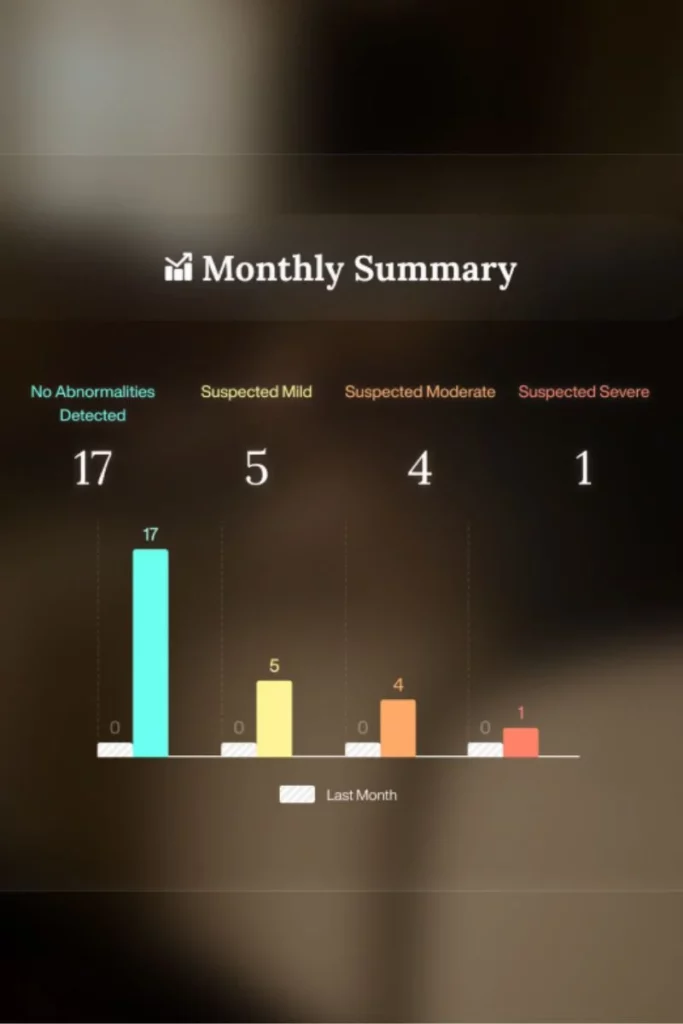
This is the widest technical gap between the two devices. The Oura Ring 5 does not feature any physical components capable of direct blood pressure tracking. Instead, Oura launched a software suite called Health Radar (which includes a 30-day rolling view of nighttime breathing). To measure vascular health, Oura relies on a metric called Cardiovascular Age. It uses its infrared sensors to analyze your pulse wave graph, measuring how stiff your arteries are to estimate whether your heart and blood vessels behave like someone younger or older than your actual age.
The RingConn Gen 3 tackles heart health through advanced hardware. It introduces a custom-built Vascular Health Insights engine. Instead of just guessing your heart’s age, the Gen 3 uses its upgraded optical sensors to measure Pulse Wave Velocity, the physical speed at which blood pumps from your heart down to your finger.
The ring automatically performs background measurements every 15 to 20 minutes when it detects that the wearer is resting or relatively still. The app then integrates your overnight vascular load, personal lifestyle tags (like having caffeine or a late-night heavy meal) and optional manual cuff calibrations to map out your long-term blood pressure trends. This will give users more insights into cardiovascular trends over time and their stress levels on a daily basis. This way, the representation of data would be more transparent.
Recovery Scores and Data Utility
How these rings calculate your readiness relies heavily on Heart Rate Variability (HRV), the variation in time between consecutive heartbeats, measured in milliseconds. A higher HRV means your nervous system is rested and ready to tackle the day, while a low HRV indicates stress or fatigue.
Oura’s Readiness Score is famous for its balance. It takes your resting heart rate, sleep efficiency, skin temperature trends (measured by a digital sensor) and your daytime stress data to act like an automated wellness coach. It balances all these metrics out to tell you exactly when to push yourself at the gym or when to take a rest day.
The RingConn Gen 3 features an upgraded temperature sensor and a high-precision 3-axis accelerometer to track your movement. It captures your HRV with an incredibly low error margin of less than 3.5 ms. The Gen 3 processes this into a similar holistic daily recovery score, but the way it serves that data feels much more raw and empowering.
The RingConn app gives you full, unrestricted access to every single data point, raw heart rate chart and historical trend line for the lifetime of the device. I love the Oura app interface, but knowing that my deep biometric trends are locked behind a $5.99/month paywall can feel incredibly frustrating. On the other hand, RingConn hands you the keys to your biometric data for free, making it easy to see exactly how an intense workout or a stressful workday impacts your body’s recovery.
Battery Life & Charging

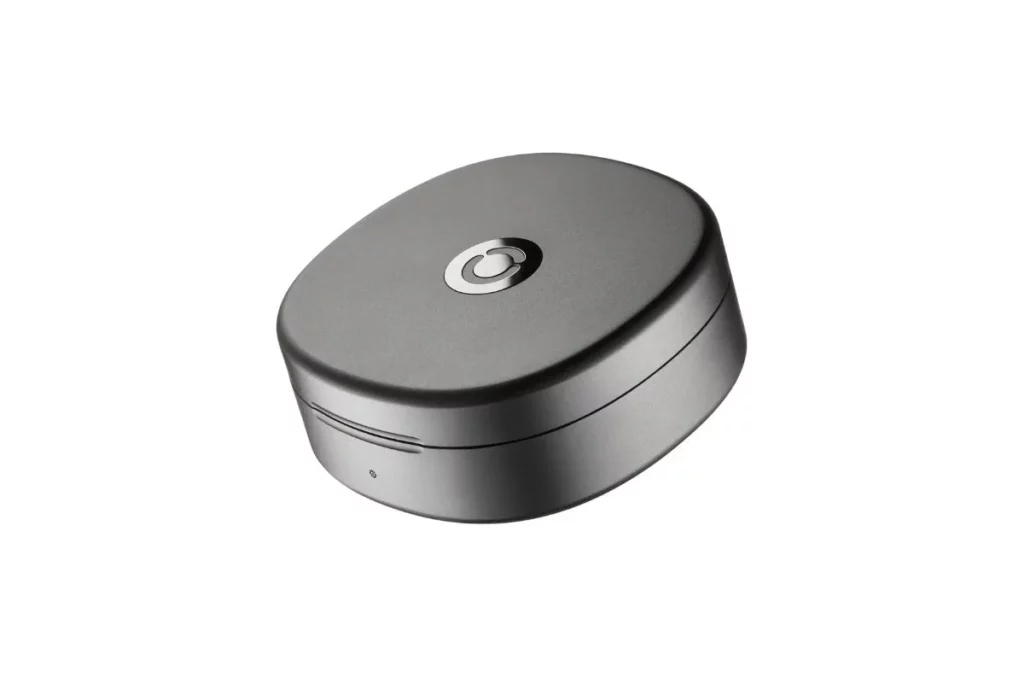
The Oura Ring 5 comes with a battery life of up to 6 to 9 days on a single charge. This solid performance is due to its highly compact internal components. When the battery runs low, you place it on a size-specific, flat desktop charging dock that plugs into a wall using a standard USB-C cable. If you want a portable option for traveling, Oura offers a dedicated Oura Ring 5 Portable Charging Case, but it is sold separately as a $99 USD accessory. This optional travel case holds up to 5 full ring charges, which means buying it represents an extra out-of-pocket expense.
On the other hand, the RingConn Gen 3 comes with a battery life of up to 14 days on a single charge if you turn off its smart vibration alerts. Even with the internal vibration motor turned on for active daily reminders, you can easily expect 10 to 12 days of continuous use.
RingConn also includes a Universal Wireless Charging Case right inside the box at no extra cost. This portable case holds a massive 150+ days of total backup power and works across all RingConn ring sizes, letting you pop the ring in to charge wirelessly whenever you take a quick shower.
App Experience & Ecosystem


The mobile app is where you can actually interact with your smart ring’s data. Both rings support iOS and Android, but their software presentation styles are completely distinct.
The Oura app focuses on curated, text-based guidance. Instead of just dumping raw numbers onto your screen, it uses an advanced AI engine called Oura Advisor to turn your metrics into conversational summaries. You can ask it natural questions like, “Why was my sleep score low last night?” and it will analyze your data to give you a personalized response.
Oura also includes specialized features like Health Radar, which scans your heart and breathing rates in the background to flag sudden changes and GLP-1 Insights to help users track medication journeys alongside their biometrics. For women’s health, Oura features a proprietary AI model that tracks menstrual cycles, pregnancy and menopause with an ovulation detection accuracy of over 96%. Furthermore, Oura integrates natively with over 100 third-party health apps, including Apple Health, Google Health Connect, Strava and Natural Cycles.
The RingConn app focuses on unrestricted visual analytics, presenting your data clearly with no hidden paywalls, blocked tabs or monthly subscription fees. When you open the app, you are greeted by a comprehensive dashboard that displays your real-time heart rate, stress curves, oxygen saturation and your vascular health trend score.
The layout relies on clean graphs and detailed timelines, making it perfect if you prefer tracking day-over-day biometric changes manually. RingConn continuously rolls out software updates to keep the experience seamless, such as a fully refreshed user interface and dedicated controls for the Gen 3 ring’s built-in vibration alerts.
The ring features 10 days of internal offline data storage, allowing you to travel without syncing to your phone daily. For ecosystem connectivity, it uses modern data frameworks to sync your steps, calories, sleep stages and resting heart rate directly into Apple Health on iOS or Google Health Connect on Android, ensuring your information is never trapped in a single app.
Oura Ring 5 vs RingConn Gen 3: Which Should You Buy?
Choosing between these two comes down to what you want out of a wearable device and how you feel about ongoing costs.
Buy Oura Ring 5 If…
- You want an ultra-slim, jewelry-first design: The smooth, nearly bump-free internal surface of the Gen 5 makes it the most comfortable, traditional-feeling smart ring on the market.
- You want premium, guided coaching: If you like having an AI companion translate your biometrics into daily advice and lifestyle recommendations, Oura’s software is unmatched.
- Deep third-party integration matters to you: If you want your ring data to talk directly to Strava, specialized workout apps or advanced cycle-tracking platforms, Oura’s massive integration ecosystem is essential.
Buy RingConn Gen 3 If…
- You want zero subscription fees: You pay for the ring once and you own 100% of your health data, charts and app features forever. No monthly payments, period.
- Vascular health and blood pressure trends are a priority: If you want cutting-edge monitoring that tracks your overnight vascular load and alerts you to cardiovascular shifts, this ring offers hardware Oura doesn’t have.
- You want maximum battery life and travel convenience: With up to two weeks of battery life and a pocketable wireless charging case that holds months of backup power, it is the ultimate low-maintenance wearable.
- You like physical reminders: The built-in smart vibration motor provides physical haptic alerts on your finger, keeping you active and informed in real-time.
Who Shouldn’t Bother
You can skip both rings if:
- You rarely check health metrics
- You expect medical-grade blood pressure measurements
- You need smartwatch features like notifications, calls or apps
- You primarily want a fitness watch for sports tracking
Final Verdict
If I had to choose between the two, I would lean toward the RingConn Gen 3. This is because of the many benefits associated with the device compared to the other one, such as no need for subscribing, longer battery life and an additional feature of being able to see my vascular health information.
However, Oura Ring 5 is highly appealing. The sleekness of the app along with the many other features, makes it hard to resist. However, if I were paying for it myself, I would choose the RingConn Gen 3. Because it offers more of what I need in terms of features and value.
FAQs
Decode the Decor
The Smart Jewelry Revolution
A practical guide to wearable tech's future — delivered straight to your inbox.
Author
