 Smart WatchesBest Running Smartwatches With Music Without a Phone: GPS Watches Compared
Best Fitness Smartwatches for Workouts and Heart Rate Tracking
Find the best fitness smartwatches for workout tracking, heart rate monitoring, recovery insights, GPS accuracy and everyday health tracking.
Independently tested. We never accept payment for reviews.How we test
What’s inside11 sections · 13 min read
- 01What Makes a Good Fitness Smartwatch?1 min
- 02Best Fitness Smartwatches at a Glance1 min
- 03Garmin Fenix Series: Best Fitness Watch for Serious Athletes1 min
- 04Garmin Forerunner: Best Running-Focused Fitness Watch2 min
- 05Apple Watch: Best Smartwatch for Fitness and Health Features2 min
- 06Samsung Galaxy Watch Ultra: Best Android Fitness Smartwatch2 min
- 07Fitbit: Best Fitness Smartwatch for Health Tracking Simplicity1 min
- 08How Accurate Are Fitness Smartwatch Heart Rate Sensors?1 min
- 09Fitness Smartwatch Comparison Table1 min
- 10Fitness Smartwatch Features That Matter Most1 min
- 11Which Fitness Smartwatch Should You Buy?1 min
Choosing the best fitness smartwatches is not as easy as it used to be. A person running a marathon needs different metrics than someone who lifts weights a couple of times a week. Or even someone who just wants to check their daily steps. Battery life and GPS accuracy are important along with workout profiles and phone compatibility but these things do not matter the same to everyone.
This guide puts watches into groups based on how they work for regular use and for training sessions. I did not pick one overall winner. Some seem stronger for running and multisport while others focus more on general health tracking. Heart rate accuracy comes up too since wrist sensors still have issues in some workouts. It seems like that part can get overlooked sometimes.
What Makes a Good Fitness Smartwatch?#
Begin by considering the types of exercises you plan on performing. At their best, Garmin’s watches support up to 100 plus activities, COROS supports around 30 and Polar’s Vantage V3 includes 14 activities on the watch itself. This is significant. It was also pointed out that a Garmin Vivoactive 5 has no rock climbing profile, and backcountry skiing logged as cross-country skiing on a Fitbit gives you a misleading picture. If you climb, ski or lift, check the profile list before you check anything else.
Then there is heart rate measurement. Blood flow is measured using light, so both your fitness and your movement can influence these figures. GPS will help if you run or ride outdoors; dual-frequency GPS is mostly useful in urban areas and under the trees. Finally, recovery scores translate your training and sleep into one figure per day. Battery time defines our categories; smartwatches (Apple, Samsung), GPS watches (Garmin) and bands each have their own category due to different battery life times.
The last one is comfort. Almost every reviewer says the best watch is the one you actually wear every day, including overnight. I wouldn’t rank any of these by sensor count alone.
Best Fitness Smartwatches at a Glance#
- Best for runners: Garmin Forerunner 570 ($549.99)
- Best for serious athletes: Garmin Fenix 9 Pro (from about $1,029)
- Best smartwatch experience on iPhone: Apple Watch Series 12 ($399)
- Best for long adventures on iPhone: Apple Watch Ultra 4 ($799)
- Best Android option with big battery: Samsung Galaxy Watch Ultra 2 ($699.99)
- Best Android value: Samsung Galaxy Watch 9 ($379.99) or Google Pixel Watch 5 ($399)
- Best battery life: Garmin Fenix 9 Pro solar (up to 57 days in smartwatch mode)
- Best budget: COROS Pace 4 ($249)
- Best simple tracker: Fitbit Charge 6 ($159.95)
Garmin Fenix Series: Best Fitness Watch for Serious Athletes#
Garmin Fenix 9 Pro#
© Garmin
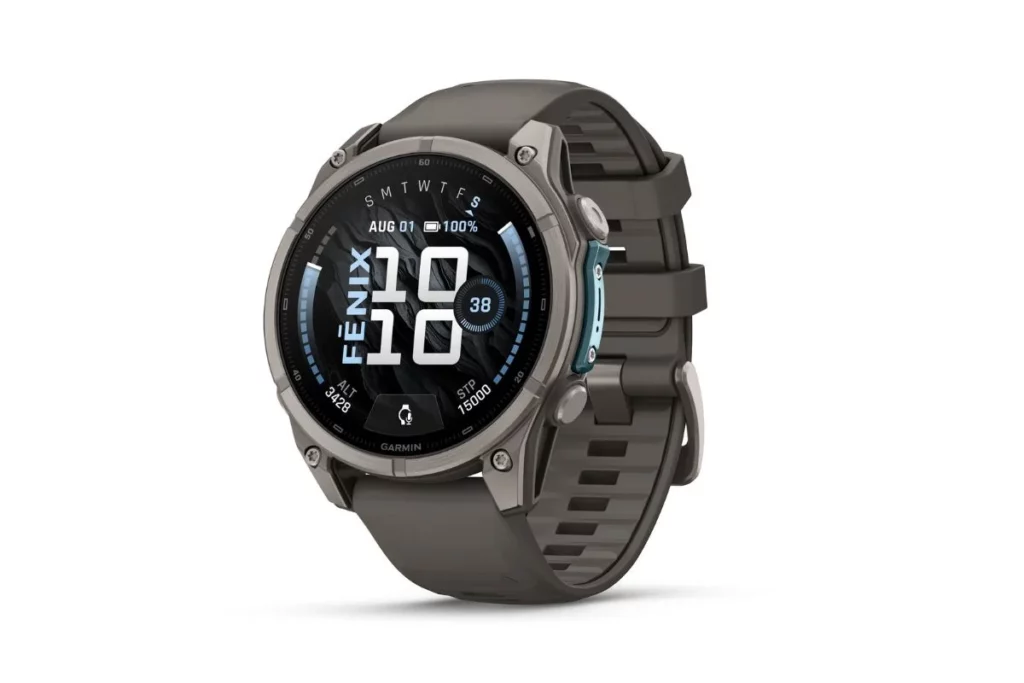
Fenix 9 Pro is the flagship of Garmin, and that is what I would recommend to serious athletes. The regular Fenix 9 model starts at $999.99. The Fenix 9 Pro model has a titanium case all over and starts at $1,029, while reaching $1,199.99 if there is an inReach satellite messaging option. The prices are different depending on retailers and reviews, but you can find more exact prices depending on the size you are interested in. Garmin discontinued the MicroLED version of its watch this year; therefore, it is AMOLED only up to 3,000 nits, with a 1.5-inch screen on the 51mm size.
The battery depends significantly on the size of your watch. The regular 47mm Fenix 9 has 16 days of battery life as a smartwatch and 30 hours of GPS time. With the help of solar power, the Fenix 9 Pro watches have up to 57 days of battery as a smartwatch in bright daylight. In practice, the results would be lower.
Garmin Connect is the application used with the watch, and that is where the depth is hiding. There are such features as Training Readiness, Training Status, HRV status, Body Battery, Garmin Coach plans and Epic. Some even called the Pro a modest update, but still the best Garmin makes.
Pros
- 100+ activity profiles and the deepest training tools here
- Battery that runs for weeks, up to 57 days with solar
- Bright AMOLED, up to 3,000 nits
- Titanium case and an inReach satellite option
Cons
- $1,029 to $1,199.99 for the Pro
- Testers describe the Fenix line as bulky for everyday wear
- Some analytics need the paid Connect+ tier
- Overkill if you only jog a few times a week
Garmin Forerunner: Best Running-Focused Fitness Watch#
Garmin Forerunner 570#
© Garmin
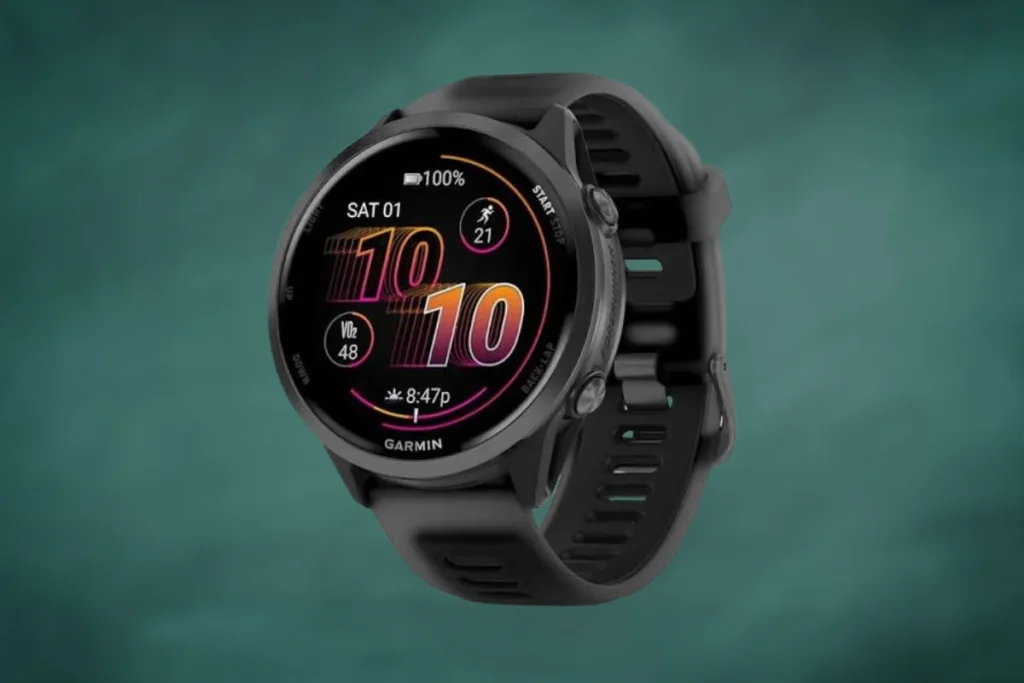
If you run, the Forerunner 570 is the one most guides land on. It costs $549.99 and comes in 42mm and 47mm with an AMOLED screen, dual-band GPS, a speaker and microphone, and music downloads from Spotify, Deezer and Amazon Music. Garmin rates it for up to 11 days as a smartwatch and 18 hours of GPS. Tom’s Guide ran it for about 150 miles of running and 80 miles of indoor cycling and saw no significant GPS or heart rate errors, though it called the price steep for the value.
It uses the same Garmin Connect app, so you get Training Readiness, race predictor, HRV status and daily suggested workouts. The 570 only has breadcrumb navigation, not full maps. It also skips ECG and the newer running economy and running tolerance stats that come with the Forerunner 970, which needs the HRM-600 chest strap for the best of them. The 970 lists anywhere from about $600 to $750 depending on where you look. If you want to spend less, the Forerunner 170 launched in May at $299.99 with the same software stack but a smaller 43mm case and no dual-band GPS.
Pros
- Bright AMOLED with dual-band GPS
- Up to 11 days battery, 18 hours of GPS
- Same training software as pricier Garmins
- Music and a speaker on the wrist
Cons
- $549.99 is a lot for the feature set
- Breadcrumb navigation only, no full maps
- No ECG
- Skips the 970’s running economy stats
COROS Pace 4#

© Coros
Well, the COROS Pace 4 is the budget pick if you mostly run. It’s $249 with an AMOLED screen, dual-frequency GPS and about 27 activity profiles. GearJunkie rated its battery at about 6 days with the screen always on and 19 days in gesture-only mode. It weighs 32 grams. It tracks HRV and sleep too. The COROS app is free and gives you training analytics that Garmin gates behind a subscription. GearJunkie called it the best data per dollar for road running.
Pros
- $249 for AMOLED and dual-frequency GPS
- Light at 32 grams
- Free app analytics
- Good battery for the price
Cons
- No offline maps, only breadcrumb navigation
- Fewer activity profiles than Garmin
- Thinner smartwatch features
Apple Watch: Best Smartwatch for Fitness and Health Features#
Apple Watch is the pick when you want workouts and a full smartwatch in one. If you’re after the fashion route, I covered the Hermès Apple Watch separately.
Apple Watch Series 12#
© Apple
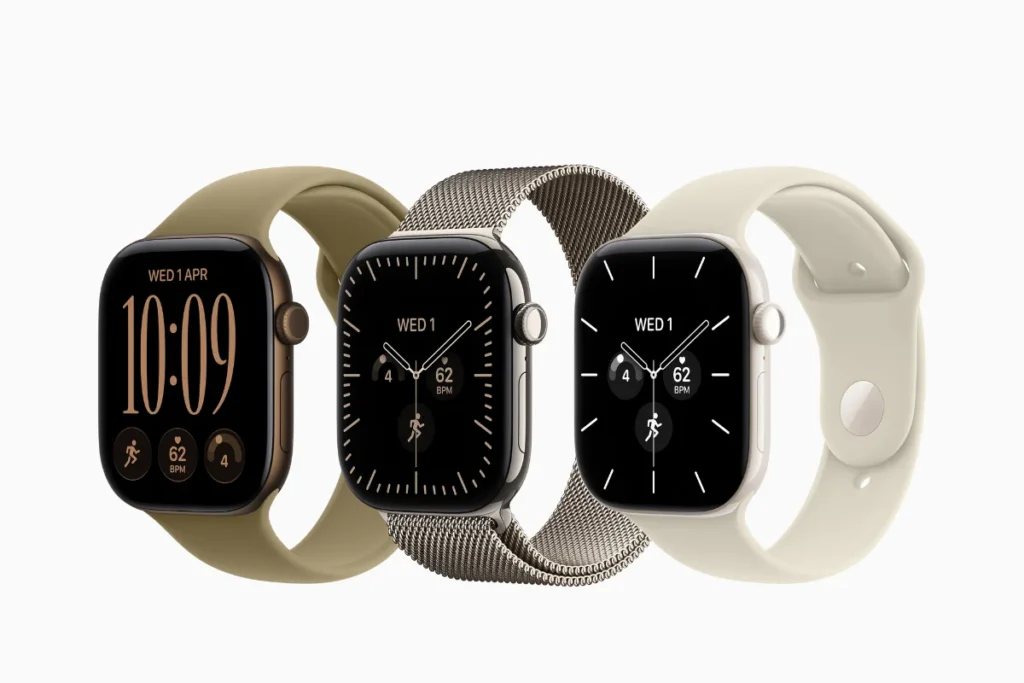
The Series 12 costs $399 for the 42mm GPS model and $449 for 46mm, with cellular adding about $100 more. The battery is rated for 24 hours of normal use and up to 10 hours of outdoor workout tracking. A 15-minute charge adds 12 hours. A Macworld review found battery and charging a bit variable and the watch occasionally sluggish. It uses L1 GPS, which is fine for most runs but behind the dual-frequency GPS on pricier watches.
The new Health Sensing System detects heart rate every five seconds. The new app experience consists of Apple Fitness and Health on the iPhone, along with a free Readiness score, new Functional Strength Training and Workout Buddy features. A redesigned Health app with a Longevity tab will arrive later in the year in beta form. However, it only works on iPhone devices, and thus a no for Android users.
Pros
- $399 starting price
- Strong heart rate performance in independent tests
- Free Readiness score and a polished Fitness app
- Fast charging, 15 minutes for 12 hours
Cons
- Daily charging, about 10 hours with GPS
- L1 GPS only
- iPhone only
- Less training depth than Garmin
Apple Watch Ultra 4#
© Apple
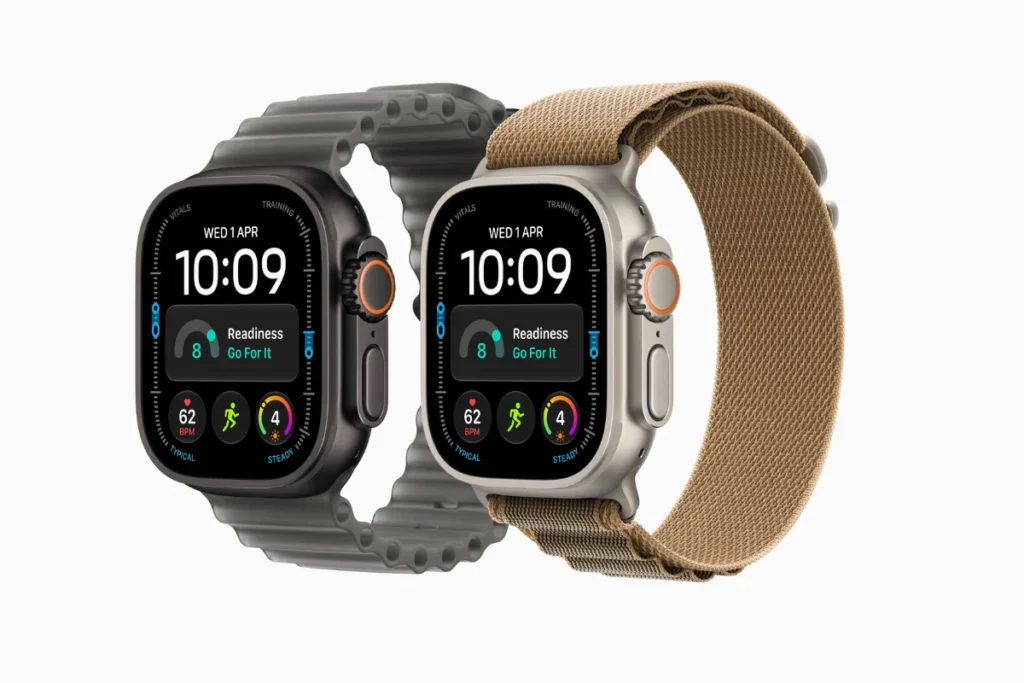
The Ultra 4 is $799 and it’s the one for long days outside. It has a 49mm titanium case, dual-frequency GPS and 100-meter water resistance, with dive support to 40 meters. Apple rates it for up to 50 hours of battery. The numbers that matter for workouts are 18 hours of outdoor tracking, 25 hours in the new Extended Workout mode and 45 hours in Max Extended Workout, which trims some features. Satellite SOS and messaging are built in. It shares the Series 12’s sensor, Readiness score and Fitness app. Those battery figures come from Apple, not independent tests.
Pros
- Up to 50 hours of battery
- Dual-frequency GPS and satellite messaging
- 100-meter water resistance and dive support
- Same heart sensor as the Series 12
Cons
- $799, double the Series 12
- Heavy at 63 grams
- iPhone only
- Max Extended mode reduces features
Samsung Galaxy Watch Ultra: Best Android Fitness Smartwatch#
Samsung Galaxy Watch Ultra 2#
© Samsung
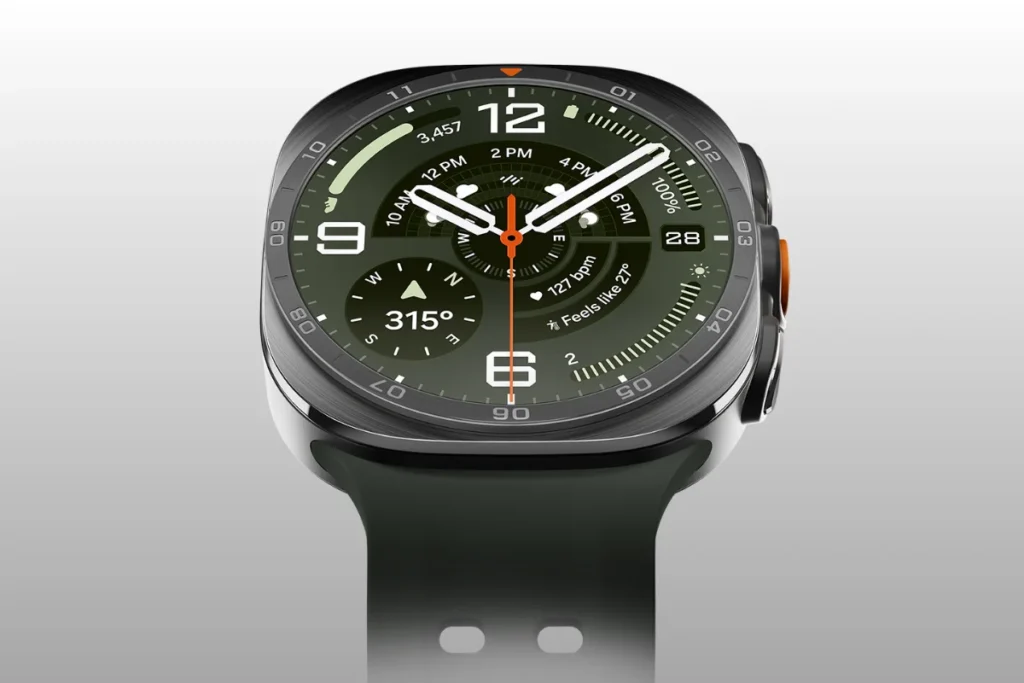
The Ultra 2 costs $699.99, which is $50 more than the original. The biggest feature update is the battery. Ultra 2 has an 800 mAh battery, the biggest on any Android smartwatch and it uses 25 to 35 percent of its capacity each day, including exercise sessions and sleep tracking. Don’t expect it to last weeks; just days. Thirty minutes charges it up to 40 percent. It weighs 61 grams and has a vibrant display, with over 5,000 nits according to Notebookcheck.
The app experience is Samsung Health and the Galaxy Wearable app. Fitness tracking is extensive, with the Energy Score and the Heart Health Score. ECG and blood pressure readings are available only if paired with a Samsung phone. One user disliked the amount of unimportant notifications by the Samsung Health, Bixby and Wallet apps.
Pros
- Multi-day battery, the best on an Android watch
- Very bright display
- Fast charging
- Thorough Samsung Health tracking
Cons
- $699.99
- ECG and blood pressure need a Samsung phone
- Bulky at 61 grams
- Notification clutter
Samsung Galaxy Watch 9#

© Samsung
The Watch 9 is the cheaper Samsung option at $379.99 for 40mm and $409.99 for 44mm, with cellular adding $50. Samsung claims 30 hours for the 40mm and 40 hours for the 44mm, but reviewers say expect about a day to a day and a half, and battery is the same as the Watch 8 in practice. It has a new Vitals dashboard that tracks heart rate, HRV, breathing, skin temperature and blood oxygen overnight.
The Heart Health Score is new. Samsung Health costs nothing to use and auto workout detection works reliably. Core tracking works on any Android phone, but ECG, blood pressure and sleep apnea features need a Samsung phone.
Pros
- No subscription for the health tracking
- Vitals and Heart Health Score
- Reliable auto workout detection
- Lower price than the Ultra 2
Cons
- Battery lasts about a day, same as the Watch 8
- Up $30 from last year
- Key health features need a Samsung phone
- No Classic model this year
Google Pixel Watch 5#
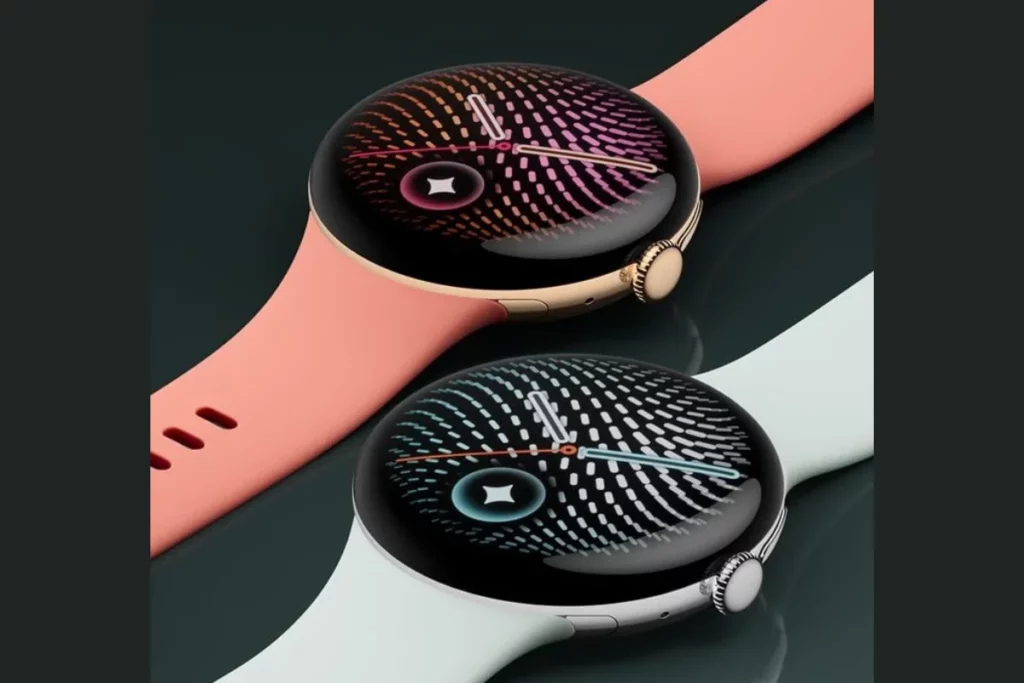
The Pixel Watch 5 starts at $399. Google rates the 41mm for up to 30 hours and the 45mm for up to 40 hours with the always-on display, and Android Central got about two days of real use. The app is now Google Health, which replaced the Fitbit app.
The free version is pretty stripped back, and the Gemini-powered coaching needs Google Health Premium at $9.99 a month or $99 a year. TechRadar liked the more accurate GPS, and Android Central found its heart rate closer to a Garmin Cirqa than the Galaxy Watch 9 was. Several reviewers say it’s too close to the Pixel Watch 4 to justify full price. You need an Android phone to set it up.
Pros
- Accurate GPS and good heart rate in comparisons
- About two days of real battery in one review
- Gemini voice control, like starting a workout by talking
- Fast charging
Cons
- Free app is basic, Premium needed for coaching
- Barely changed from the Pixel Watch 4
- Some Gemini features need a Pixel phone
- Android only
Fitbit: Best Fitness Smartwatch for Health Tracking Simplicity#
Fitbit Charge 6#

© Fitbit
The Charge 6 is $159.95 and it’s a band, not a full smartwatch. Battery is up to 7 days. It has built-in GPS, 40+ workout modes and 24/7 heart rate, and it connects to Peloton, NordicTrack and Tonal gear. Google Maps and Google Pay work on it.
However, it lacks details like cadence, power or rep counting. The app is Google Health, and the AI coaching sits behind Premium at $9.99 a month or $99 a year. It works with iPhone and Android.
Pros
- $159.95 with built-in GPS
- Up to 7 days of battery
- Connects to Peloton, NordicTrack and Tonal
- Works with iPhone and Android
Cons
- No cadence, power, or rep counting
- Coaching needs a paid Premium plan
- Fewer smartwatch features than a Pixel Watch
Fitbit Air#
© WearableXP
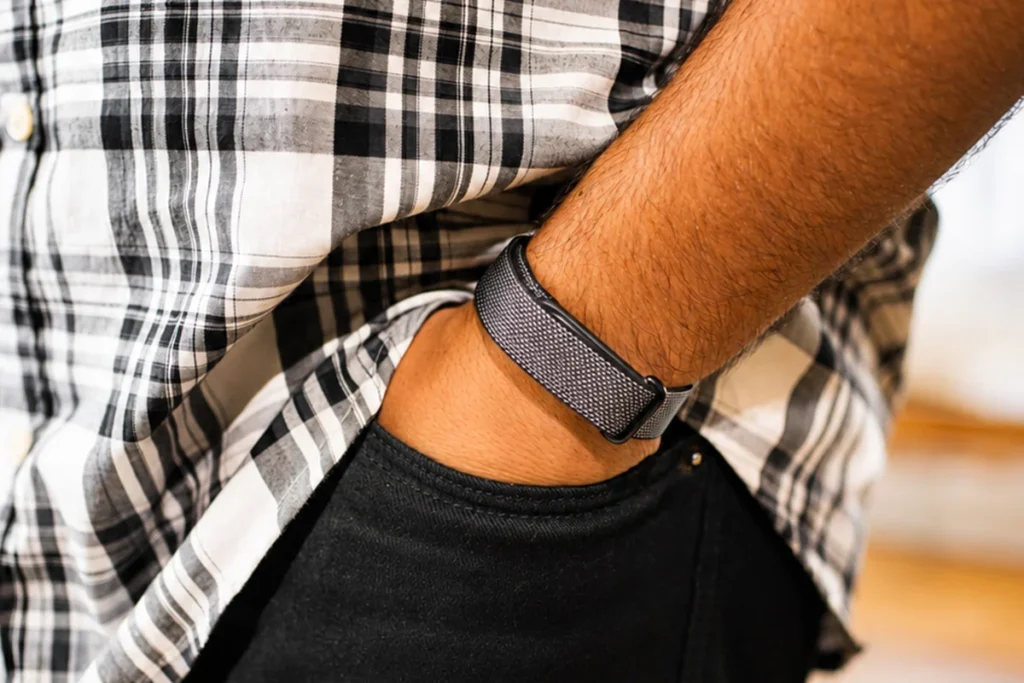
If you don’t want a screen, the Fitbit Air is $99.99. Battery is about a week, and reviewers confirmed that. It has no onboard GPS and no screen, so everything shows up in the Google Health app. The tracker works without a subscription and comes with three months of Premium free. After that, the AI coaching costs the same $9.99 a month. You have to take it off your wrist to charge it.
Pros
- $99.99 with no required subscription
- About a week of battery
- Light and comfortable for sleep
Cons
- No screen and no GPS
- Coaching needs Premium after the trial
- Must be removed to charge
How Accurate Are Fitness Smartwatch Heart Rate Sensors?#
A wristwatch shines some light on your skin and measures the blood flow. Movement, wrist flexion, fit and skin tone all mess with that. A chest strap uses an electrical signal from the heart instead of blood flow, which is the reason why a chest strap is still the reference in most studies. Garmin itself describes wrist heart rate as an accurate estimate and not an exact reading, so treat these numbers as a guide and not a medical one.
We also discovered that the accuracy of wrist trackers at rest and on the treadmill was high enough, while on the cycle or cross trainer was moderate. It is even said that if you train for a marathon or your doctor gave you some restrictions concerning heart conditions, it’s better to use a chest strap.
Calories are the least reliable number among all of them. The study conducted by Stanford back in the day established that no wrist bands could measure calories reliably. There is one very simple rule to follow. For running steadily and for general purposes, the wrist will do just fine. For anything else, from intervals to strength training, one needs a chest strap.
Fitness Smartwatch Comparison Table#
| Watch | Price | Best For | Workout Tracking | Heart Rate Features | Battery | Best User |
|---|---|---|---|---|---|---|
| Garmin Fenix 9 Pro | from about $1,029 | Serious athletes | 100+ profiles, multisport | HRV status, Training Readiness | Up to 57 days solar | Ultra and multisport athletes |
| Garmin Forerunner 570 | $549.99 | Runners | Running, triathlon, strength | Elevate v5 sensor, HRV, no ECG | Up to 11 days, 18 hr GPS | Road and trail runners |
| COROS Pace 4 | $249 | Budget running | About 27 profiles | HRV, sleep tracking | About 6 days | Budget runners |
| Apple Watch Series 12 | $399 | iPhone fitness | Fitness app, strength mode | 5-second heart rate, Readiness | 24 hr, 10 hr GPS | iPhone everyday athletes |
| Apple Watch Ultra 4 | $799 | Long iPhone adventures | Extended Workout modes | Same sensor as Series 12 | Up to 50 hr | Hikers and ultra runners |
| Galaxy Watch Ultra 2 | $699.99 | Android rugged | Samsung Health profiles | ECG, Heart Health Score | Multi-day | Samsung phone owners |
| Galaxy Watch 9 | $379.99 | Android value | Auto workout detection | Vitals, Heart Health Score | About 1 to 1.5 days | Samsung phone owners |
| Pixel Watch 5 | $399 | Android with Gemini | Google Health tracking | Gemini coaching with Premium | About 2 days | Non-Samsung Android users |
| Fitbit Charge 6 | $159.95 | Simple tracking | 40+ modes, built-in GPS | 24/7 heart rate | Up to 7 days | Casual users |
Fitness Smartwatch Features That Matter Most#
Heart rate. Look for continuous monitoring and heart rate zones you can see mid-workout. If you do intervals, plan on a chest strap no matter which watch you pick.
GPS. Dual-frequency GPS is the only upgrade that really changes running in tricky places like cities and tree cover. The Ultra 4, Forerunner 570 and Fenix 9 Pro have it. The Series 12 does not.
Recovery. Garmin has Training Readiness and Body Battery. Apple gives you a free Readiness score. Samsung has Energy Score. Google’s coaching sits behind Premium. They all turn sleep and training into one number, so pick the app you’d actually open each morning.
Battery. Daily charging is fine if you charge at your desk. If you want to wear it overnight for sleep data, you’ll want a watch that lasts several days or you’ll miss the recovery numbers.
Subscriptions. Samsung Health and COROS are free. Garmin’s Connect+ is optional but gates some analytics. Google Health Premium costs $99 a year for coaching.
Which Fitness Smartwatch Should You Buy?#
Choose Garmin if training performance matters most. The Forerunner 570 is the one for most runners and the Fenix 9 Pro is for multisport and long days outdoors. The COROS Pace 4 gets you most of the way for $249.
Choose Apple Watch if you have an iPhone and want fitness plus a full smartwatch. The Series 12 at $399 is the easy pick. The Ultra 4 at $799 only makes sense if you need the battery, dual-frequency GPS, or satellite messaging.
Choose Samsung if you use a Samsung phone. The Galaxy Watch Ultra 2 at $699.99 has the best Android battery, and the Watch 9 at $379.99 is the value one. If you use a different Android phone, the Pixel Watch 5 at $399 is the better fit.
Choose Fitbit if you want simple tracking. The Charge 6 at $159.95 has GPS, and the Air at $99.99 skips the screen.
Whichever you pick, wear it for a few weeks before you trust the numbers.
 RK
Written by
With a focus on real-world usability, Rahul at WearableXP covers smartwatches and wearable fitness tech. He evaluates how devices combine activity tracking, health metrics, battery life and connectivity. His work helps readers understand how smartwatches fit into everyday routines through practical performance and software-driven features.
More from Rahul 336 storiesKeep readingmore from Smart Watches
All storiesSmart WatchesBest Running Smartwatches With Music Without a Phone: GPS Watches Compared Smart WatchesGoogle Pixel Watch 5 Review: Are Its New Health Features Worth It?
 Smart WatchesXiaomi Watch 5 Muscle Sensing Explained and What It Can Actually Tell You
What’s inside
- 01What Makes a Good Fitness Smartwatch?1 min
- 02Best Fitness Smartwatches at a Glance1 min
- 03Garmin Fenix Series: Best Fitness Watch for Serious Athletes1 min
- 04Garmin Forerunner: Best Running-Focused Fitness Watch2 min
- 05Apple Watch: Best Smartwatch for Fitness and Health Features2 min
- 06Samsung Galaxy Watch Ultra: Best Android Fitness Smartwatch2 min
- 07Fitbit: Best Fitness Smartwatch for Health Tracking Simplicity1 min
- 08How Accurate Are Fitness Smartwatch Heart Rate Sensors?1 min
- 09Fitness Smartwatch Comparison Table1 min
- 10Fitness Smartwatch Features That Matter Most1 min
- 11Which Fitness Smartwatch Should You Buy?1 min