 Smart WatchesApple Watch Series 12 vs Pixel Watch 5: Which Has Better Health Tracking?
Galaxy Watch 9 vs Galaxy Watch 8: Is It Worth Upgrading?
Galaxy Watch 9 vs galaxy Watch 8: Compare the processor, battery, health features, display and price to find out whether Samsung's latest smartwatch is worth upgrading to.
Independently tested. We never accept payment for reviews.How we test
What’s inside10 sections · 15 min read
- 01Galaxy Watch 9 vs Galaxy Watch 8 Specifications1 min
- 02Galaxy Watch 9 vs Galaxy Watch 8: What’s Actually Different?1 min
- 03Design and Display: Is There Anything New?2 min
- 04Health Tracking: What New Features Does Galaxy Watch 9 Offer?2 min
- 05Performance: How Much Faster Is the New Processor?2 min
- 06Battery Life: Does Galaxy Watch 9 Last Longer?1 min
- 07Software and Smart Features: Wear OS 7 vs Wear OS 62 min
- 08Should You Upgrade from Galaxy Watch 8 to Galaxy Watch 9?1 min
- 09Final Verdict1 min
- 10FAQs1 min
Buying a new smartwatch is exciting, but choosing between two generations can quickly turn into a headache. Especially when Samsung launches a new Galaxy Watch with a faster processor, additional health features and a few battery improvements, but keeps almost the same design. So, if you are a Samsung user thinking about adding a smartwatch to your Galaxy ecosystem, you might be wondering whether to pick the Galaxy Watch 9 or save some money with the Galaxy Watch 8.
The Galaxy Watch 9 vs Galaxy Watch 8 comparison becomes interesting when you look beyond their similar designs. The newer model brings the Snapdragon Wear Elite processor, a bigger battery in the 40mm version and additional health insights. But are these improvements worth spending extra money on or is the previous generation still good enough? Let’s put both smartwatches side by side and find out which one deserves a place on your wrist.
Galaxy Watch 9 vs Galaxy Watch 8 Specifications #
| Specification | Samsung Galaxy Watch 9 | Samsung Galaxy Watch 8 |
|---|---|---|
| Processor | Qualcomm Snapdragon Wear Elite (3nm, penta-core) | Samsung Exynos W1000 (3nm, penta-core) |
| 2GB RAM / 32GB internal storage | 2GB RAM / 32GB internal storage | 2GB RAM / 32GB internal storage |
| Case Sizes | 40mm / 44mm | 40mm / 44mm |
| Display Size & Type | 1.34-inch (40mm) / 1.47-inch (44mm) Super AMOLED | 1.34-inch (40mm) / 1.47-inch (44mm) Super AMOLED |
| Display Resolution | 438 × 438 px (40mm) / 480 × 480 px (44mm) | 438 × 438 px (40mm) / 480 × 480 px (44mm) |
| Peak Brightness | Up to 3,000 nits | Up to 3,000 nits |
| Display Glass | Sapphire Crystal | Sapphire Crystal |
| Case Material | Armor Aluminum | Armor Aluminum |
| Battery Capacity (40mm) | 390mAh | 325mAh |
| OS at Launch | Wear OS 7 with One UI 9 Watch | Wear OS 6 with One UI 8 Watch |
| AI & Smart Features | Google Gemini with Raise-to-Talk, Generative AI Tiles | Google Gemini (button/wake-word), Galaxy AI summaries |
| Health Sensors | Samsung BioActive Sensor (HR, ECG, BIA, SpO2), Skin Temp | Samsung BioActive Sensor (HR, ECG, BIA, SpO2), Skin Temp |
| Key Health Features | Heart Health Score, Daily Cardio Load, Fitness Index, Vitals, Hearing Monitoring, Sleep Apnea 2.0 | Energy Score, Running Coach, Vascular Load, Sleep Coaching, Sleep Apnea (plus new metrics via One UI 9 update) |
| Connectivity | Bluetooth 6.0, Wi-Fi, NFC, Optional LTE | Bluetooth 5.3, Wi-Fi, NFC, Optional LTE |
| Price | Starts at $379.99 | Starts at $349.99 |
Galaxy Watch 9 vs Galaxy Watch 8: What’s Actually Different?#
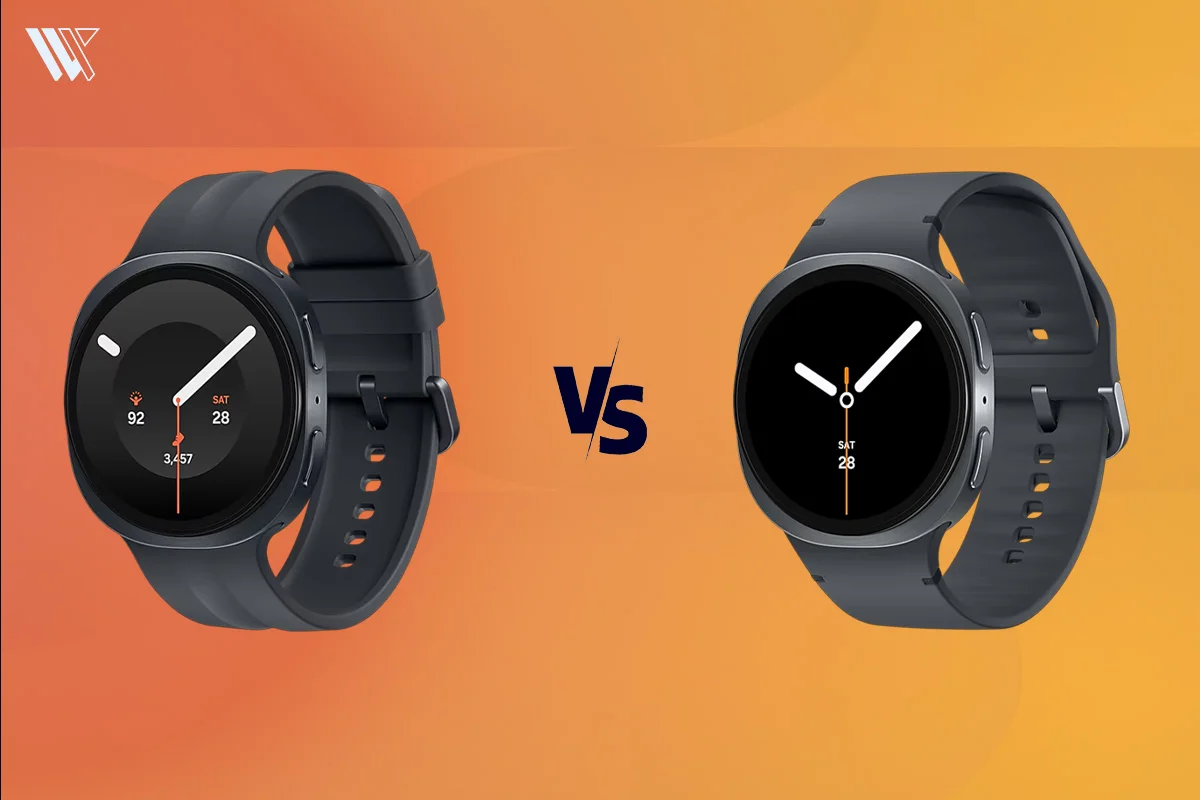
However, when you compare the Galaxy Watch 9 to the Galaxy Watch 8, the first and foremost point of difference to keep in mind is that Samsung did not design an entirely new watch for Galaxy Watch 9, instead, it took the cushion-shaped body that the company launched in Galaxy Watch 8. As far as the outside design goes, there is practically no visible difference between the Galaxy Watch 8 and Galaxy Watch 9. However, since the external design is almost identical, the majority of differences between these two watches lies beneath the surface. While the Galaxy Watch 8 uses Samsung’s own Exynos W1000 processor, Galaxy Watch 9 opts for the Qualcomm Snapdragon Wear Elite chipset.
In addition to the CPU update, battery size is the second largest physical difference in this battle between the two models. The 40mm version of the Galaxy Watch 9 has a 390mAh battery, while the Galaxy Watch 8 variant of the same size features a less powerful 325mAh battery. However, on the 44mm Galaxy Watch 9 and Galaxy Watch 8 models, the difference is much less, as the Galaxy Watch 9 has a 445mAh battery and the Galaxy Watch 8 has a slightly less 435mAh battery. Along with the power source capacity, the Galaxy Watch 9 includes Wear OS 7 and One UI 9 Watch with wellness features such as Heart Health Score, Daily Cardio Load, Fitness Index, Vitals and Hearing monitoring. Meanwhile, the Galaxy Watch 8 launched with Wear OS 6 and One UI 8 Watch.
Even with these improvements, a significant amount of the base hardware remains exactly the same for both watches. The Galaxy Watch 9 and the Galaxy Watch 8 both have the same 1.34 inches and 1.47 inches Super AMOLED displays, peak brightness of 3,000 nits, 2GB RAM and 32GB storage. Moreover, both models include exactly the same dual-frequency L1 + L5 GPS location system, Armor Aluminum case material, Sapphire Crystal display glass and 5ATM/IP68 water resistance. The only thing that has slightly improved is connectivity since the Galaxy Watch 9 has Bluetooth 6.0 and the Galaxy Watch 8 has Bluetooth 5.3, but still, Samsung has not introduced any exclusive feature because of the new Bluetooth version.
Design and Display: Is There Anything New?#

© Samsung
If you’re looking for a new design perspective on the Galaxy Watch 9 vs Galaxy Watch 8 matchup, you’ll see right away that Samsung was extremely cautious with the outer design. The Galaxy Watch 9 continues to feature the very same cushion case with rounded-square corners, which was first introduced on the Galaxy Watch 8. It gives a sleek and modern design that lays flat on your wrist. Also, they both offer the same materials used in construction, durable Armor Aluminum along with water/dust resistance rating of 5ATM and MIL-STD-810H for durability. In case you wonder how the thin cushion case compares with the rugged titanium series from Samsung, here’s our take on the Samsung Galaxy Watch 8 vs Watch Ultra: Which Samsung Smartwatch Wins?.
From a closer examination of the physical specifications, the two models are basically identical in terms of physical specifications on paper and even on the wrist. The 40mm Galaxy Watch 9 has dimensions of 42.7 x 40.4 x 8.6mm, while the 40mm Galaxy Watch 8 has the same dimensions of 42.7 x 40.4 x 8.6mm. Likewise, the 44mm Galaxy Watch 9 has the exact dimensions of 46.0 x 43.7 x 8.6mm, as the 44mm Galaxy Watch 8. The weight between the two models is also similar, with both watches weighing 34 grams each without the strap in the 44mm variant. The only slight physical difference that comes up is in the case of the 40mm models, with the Galaxy Watch 9 weighing 31.5 grams compared to 30 grams for the Galaxy Watch 8 due to the larger battery in the new model.

© CNET
The slight change that Samsung brings into the design of the watches lies in the color finishes and straps. The 40mm Galaxy Watch 9 offers Graphite and Cream colors, while the 40mm Galaxy Watch 8 offers Graphite and Silver. As far as the 44mm models go, both Galaxy Watch 9 and Galaxy Watch 8 offer Graphite and Silver colors. For daily wearing and tracking your sleep pattern, Galaxy Watch 9 combines its slim design that measures 8.6mm in thickness with the new Sport Strap weighing only 14 grams. It uses the Air Pocket design to make sure that you do not feel wet overnight. Meanwhile, the Galaxy Watch 8 was the first one that offered Dynamic Lug System allowing close fit to your wrist without any gaps between it and strap.
As for the screen hardware, there is absolutely no development in the screens that are used from one year to the next. The display hardware of both the Galaxy Watch 9 and the Galaxy Watch 8 uses a 1.34-inch Super AMOLED display for the 40 mm version and a 1.47-inch Super AMOLED display for the 44 mm version. Both of these have very clear resolutions of 438 × 438 pixels in the 40 mm version and 480 × 480 pixels in the 44 mm version. They both reach a peak brightness of 3,000 nits so that the workout data remains visible in bright sunlight.
Speaking about disadvantages in design, the Galaxy Watch 9 does not have a Classic version with a mechanical rotating bezel, although the Watch 8 series had a dedicated Watch 8 Classic for those who appreciate the possibility of navigation using touch, while another problem of the Watch 9 and Watch 8 models is a cushion-shaped case that is not liked by traditionalists who enjoyed the previous circular cases of Galaxy Watches. Moreover, the Watch 8 does not have the Cream color and new Air Pocket Sport Band.
Health Tracking: What New Features Does Galaxy Watch 9 Offer?#
© Samsung
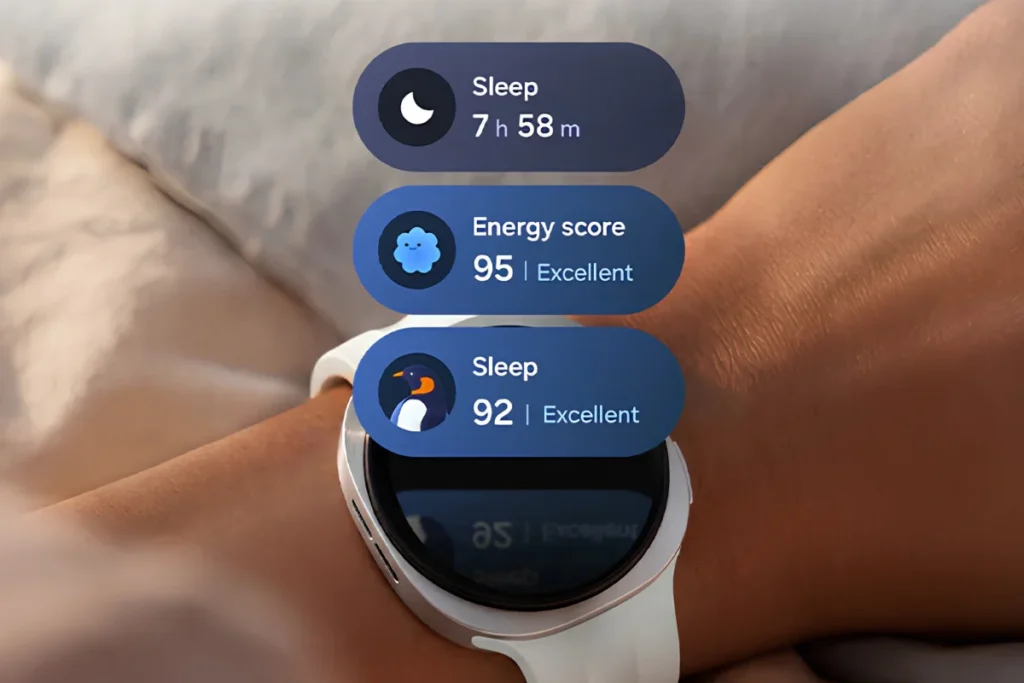
Fitness and health monitoring have traditionally been a priority in Samsung’s range of watches, which is why the Galaxy Watch 9 vs Galaxy Watch 8 comparison highlights that aspect above all else. The Galaxy watches use Samsung’s BioActive Sensor, which uses optical heart rate monitoring, ECG heart signal and BIA for body composition along with skin temperature sensors and blood oxygen monitoring (SpO2). This being the case, both versions come packed with functions such as Advanced Sleep Coaching, Bedtime Guidance, Energy Score, Vascular Load, Running Coach and Antioxidant Index measurement.
In order to take wellness monitoring to another level, Samsung recently introduced its Galaxy Watch 9 with its suite of proactive health metrics using Samsung Health. Firstly, the Heart Health Score provides comprehensive long term cardiovascular analysis with an insight into your health and recommendations for lifestyle changes. Secondly, the Daily Cardio Load monitors your fitness routine including workout intensity and recovery period which can be useful for runners and people who hit the gym. Thirdly, the Fitness Index provides you with a complete view of your physical fitness status.

© PCMag
But beyond daily exercises, there is a new feature called Vitals, which quietly monitors five important metrics during your sleep such as heart rate, heart rate variability, respiratory rate, skin temperature and blood oxygen and alerts you if your metrics fall out of your normal range. Also included is the Hearing feature, which monitors how long you have been in a noisy environment and gives you alerts and noise reports. It has updated sleep apnea metrics for better understanding of the severity of this condition. Yet customers should keep in mind that some of the features above may not be locked permanently on the new smartwatch because Samsung has already started releasing its new One UI 9 Watch update based on Wear OS 7 for the Galaxy Watch 8, which includes these software-based wellness features.
However, it is important to be aware of the limitations of the smartwatch’s health tracking capability for both gadgets. None of these indicators, whether they are Heart Health Score, Fitness Index, Vitals or sleep apnea detection, can be used as a diagnostic tool and substitute a professional doctor’s work. Moreover, Galaxy Watch 9 and Galaxy Watch 8 impose strict limitations regarding their ecosystem and region. For instance, such options like ECG, irregular heartbeat alert, blood pressure measurement and some Samsung Health Monitor’s tools can only be used on a compatible Samsung Galaxy smartphone.
One major disadvantage of the Galaxy Watch 9 is the inconsistent performance of its overnight sleep tracking feature, according to some initial independent reviews, while the Galaxy Watch 8 had relatively stable overnight sleep tracking performance. The disadvantage of the Galaxy Watch 8 watch, on the other hand, is that it does not have these health dashboards straight out of the box and has to go through gradual regional software updates to catch up with the Galaxy Watch 9.
Verdict: The Galaxy Watch 9 is better at health management since it has everything new to offer in terms of prevention of wellness-related issues such as Sleep Apnea 2.0 severity and Hearing tests right off the bat without having to wait for any updates from carriers or regions.
Performance: How Much Faster Is the New Processor?#
When it comes to the Galaxy Watch 9 vs Galaxy Watch 8, performance becomes the main criteria for comparing these smartwatches. While the Galaxy Watch 9 utilizes Qualcomm 3nm penta-core Snapdragon Wear Elite chipset, the Galaxy Watch 8 uses Samsung 3nm penta-core Exynos W1000 chipset. In both cases, the amount of RAM (2GB) and storage capacity (32GB) are the same. Thus, all users will benefit from the same capabilities of multitasking and the same storage for their music playlists and applications regardless of which version of this watch they choose. Still, using Qualcomm chipset instead of Samsung one helps the Galaxy Watch 9 operate more efficiently and process AI faster.

© PCMag
However, in real-world usage, the contrast between the two processors is marginal instead of drastic. The Exynos W1000 processor used in the Galaxy Watch 8 was capable of offering smooth scrolling, fast app launches and slick tile swipes at its launch date. By upgrading to the new Snapdragon Wear Elite processor in the Galaxy Watch 9, the smoothness will be further enhanced while making sure animations are smooth and ensuring faster responsiveness from the CPU and GPU when launching heavier third-party apps or switching active workout screens. It should not be expected that there will be drastic improvements in basic actions such as reading messages or setting a kitchen timer.
© Samsung
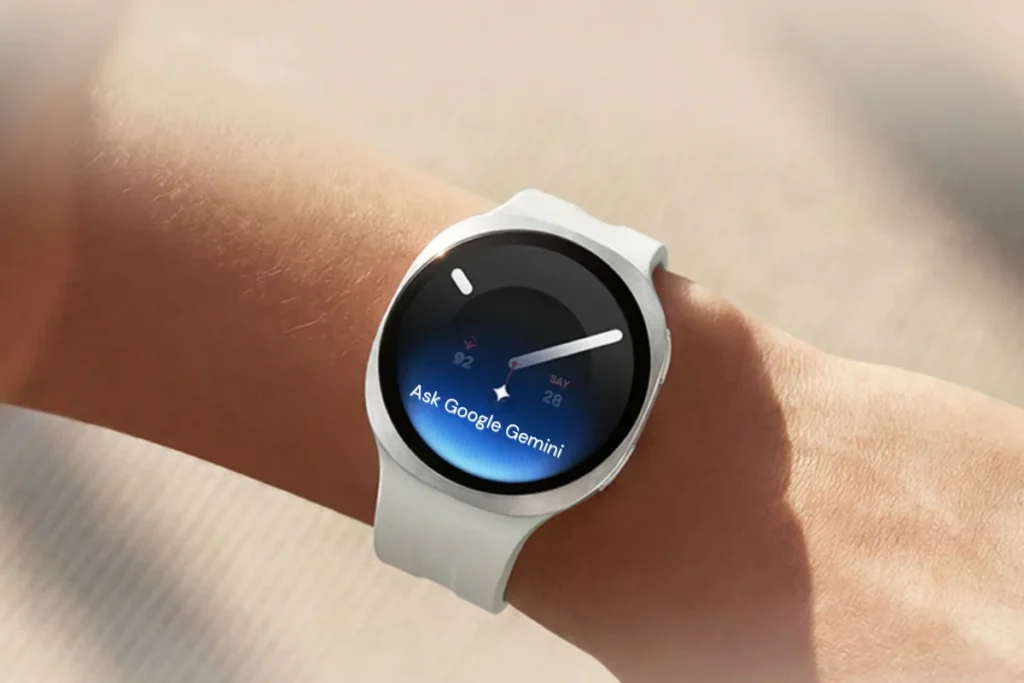
The area where Snapdragon Wear Elite really helps Galaxy Watch 9 stand out is in its AI responsiveness and voice assistance without needing the hands. Galaxy Watch 9 allows on-device AI enhancements and enables Raise to Talk mode for Google Gemini, meaning that you will need only to raise your wrist and start talking without clicking any button or using wake words. Also, it provides Generative AI Tiles which are creating customized quick views by voice prompts. At the same time, Galaxy Watch 8 also has Google Gemini as its default assistant but still uses common button clicks and wake words.
However, there are also some performance drawbacks for both watches which are worth mentioning. The first con of the Galaxy Watch 9 is that regular users who read push notifications, monitor their walking activities in the morning and look up the weather forecast will hardly notice a revolutionary speed difference when compared to the Galaxy Watch 8 because, as we know, RAM remains limited by 2GB. Another con of the Galaxy Watch 8 is that the outdated Exynos W1000 processor cannot boast the advanced power management capabilities and AI optimizations of the Snapdragon Wear Elite processor.
Verdict: In terms of performance, there is no doubt that the Galaxy Watch 9 excels due to its updated Qualcomm Snapdragon Wear Elite chip, enhanced local AI processing and seamless Gemini access via Raise to Talk.
Battery Life: Does Galaxy Watch 9 Last Longer?#
© Samsung
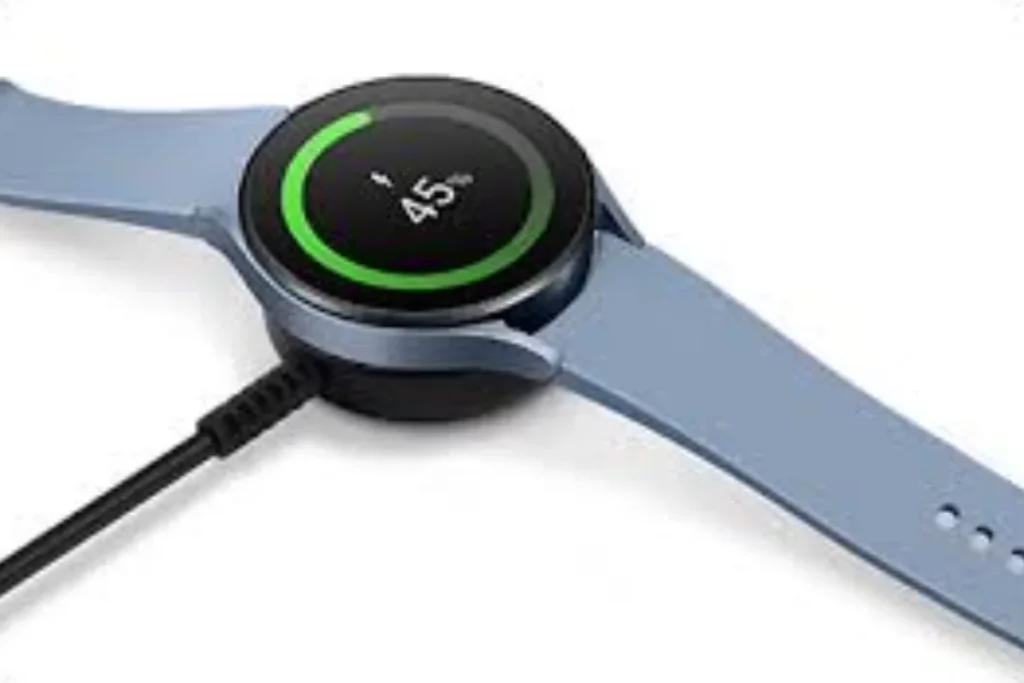
When comparing the Galaxy Watch 9 to the Galaxy Watch 8, one will see that battery performance will be among the main deciding factors and the statistics prove which improvements Samsung has made. Thus, the battery in the 40 mm Galaxy Watch 9 has been increased to 390 mAh, while in the 40 mm Galaxy Watch 8 there is a 325 mAh battery, which means an increase of 65 mAh or 20%. As for the 44 mm Galaxy Watch 9, it has a 445 mAh battery while the 44 mm Galaxy Watch 8 has 435 mAh.
Even with this increased capability, the actual endurance remains very similar between the two devices. Samsung’s official rating for both watches is up to 30 hours with the Always-On Display active, while the real-life endurance tends to average about 26 hours for both watches. If you disable the Always On Display, the 44mm Galaxy Watch 9 could be extended from 30 to 35 hours, although intensive use like GPS workout or LTE will make you recharge the watch at least once within 24 hours. When the time comes to charge your watch, the Galaxy Watch 8 allows fast wireless charging which goes up to 45% within 30 minutes, while the 44mm Galaxy Watch 9 requires more than 90 minutes to charge up to 100%.
Even though the capability is higher, the actual battery life of the two gadgets is rather close. The official battery life of both watches according to Samsung is 30 hours with Always-On Display on, whereas the actual battery life for both watches can be estimated at around 26 hours. Should you turn off the Always-On Display, then the 44mm Galaxy Watch 9 might provide up to 35 hours battery life instead of the standard 30 hours, but still the heavy workloads such as GPS workout or LTE connection will require you to charge the watch at least once in 24 hours. As far as charging your watch is concerned, the Galaxy Watch 8 provides quick wireless charging with 45% done in 30 minutes, while the 44mm Galaxy Watch 9 will take more than 90 minutes to reach 100%.
Software and Smart Features: Wear OS 7 vs Wear OS 6#
Software is an incredibly important factor when it comes to how new and modern a smartwatch may seem every day. However, the story between the Galaxy Watch 9 vs Galaxy Watch 8 regarding their software has changed quite rapidly after being launched into the market. Right out of the box, the Galaxy Watch 9 is equipped with Wear OS 7 combined with Samsung’s One UI 9 Watch software. On the other hand, the Galaxy Watch 8 initially comes with Wear OS 6 and One UI 8 Watch.
UI 9 Watch adds elegance to the wrist-wear experience. UI 9 Watch enhances Samsung Health with more visible graphs and color coding of status cards, enables the re-sizing of cards on the home screen and offers adjustable font sizes on tiles where their layouts change accordingly. Moreover, it provides the ability to change camera settings directly from your watch by connecting it with an eligible phone. In addition to that, Galaxy Watch 9 includes Raise to Talk Google Gemini and Generative AI Tiles, which offer quicker response with reminders and hands-free tasks management across multiple applications.
Yet it would be wrong to assume One UI 9 Watch is permanently exclusive to the new watch. The software update based on Wear OS 7 has been already rolled out to the Galaxy Watch 8 family by Samsung in the United States and South Korea and will be extended to other countries. This means current owners of the Galaxy Watch 8 will receive updated UI design, better health graphs, card resizing options and basic software improvements for free. Both watches also feature the same Now Bar from Samsung along with multi-info tiles showing different stats.
When it comes to long-term use, the Galaxy Watch 9 starts off one year ahead of time as a matter of course since it came a generation after the Wear OS 7-based Galaxy Watch 8, receiving updates for another year before the Watch 8 stops getting updates. However, both devices have their fair share of software cons as well. One of the cons of the Galaxy Watch 9 is that Samsung’s great policy for updates lessens the software difference between the generations, reducing one of the primary incentives to spend money on the latest generation. The con of the Galaxy Watch 8, on the other hand, is that it does not have hardware-integrated AI conveniences such as Raise to Talk Gemini right away and will be a year ahead in software update support.
Verdict: Galaxy Watch 9 excels in software because it offers the combination of Wear OS 7 with One UI 9 Watch along with Raise to Talk Gemini, Generative AI Tiles and an additional year of future software updates.
Should You Upgrade from Galaxy Watch 8 to Galaxy Watch 9?#
You should upgrade to Galaxy Watch 9 if:#
- You want a newer Snapdragon Wear Elite processor.
- You need additional health and fitness insights.
- You prefer the larger battery of the 40mm model.
- You want the latest Galaxy Watch features.
- You are upgrading from an older Galaxy Watch.
You should stick to the Galaxy Watch 8 if:#
- Your current smartwatch performs smoothly.
- You are happy with its existing health features.
- You mainly use it for notifications, workouts and sleep tracking.
- You can get it at a significantly lower price.
- You don’t need the newer processor or additional AI features.
Final Verdict#
If I had to choose one, I would go with the Samsung Galaxy Watch 9. The Snapdragon Wear Elite processor, additional health insights and bigger battery in the 40mm model make it a more capable smartwatch. I particularly like how Samsung is bringing more health information together, making it easier to understand fitness and everyday wellness.
For me, the Galaxy Watch 9 offers a better overall package, especially if I am investing in a smartwatch for the next few years. Having better performance and more useful health features on my wrist is always a plus, so this would be my pick.
FAQs#
01How big is the battery inside the Galaxy Watch 9?
The Galaxy Watch 9 packs a 390mAh battery in the 40mm version and a 445mAh battery in the 44mm version, giving the Galaxy Watch 9 up to 30 hours of rated usage with the Always-On Display turned on.
02What new health tracking tools come with the Galaxy Watch 9?
The Galaxy Watch 9 introduces Heart Health Score, Daily Cardio Load, Fitness Index, overnight Vitals alerts, Hearing monitoring and Sleep Apnea 2.0 severity insights, though these features on the Galaxy Watch 9 are meant for wellness tracking rather than medical diagnoses.
03Does the Galaxy Watch 8 get the One UI 9 Watch and Wear OS 7 update?
Yes, Samsung is rolling out the Wear OS 7 and One UI 9 Watch update to the Galaxy Watch 8, which brings refreshed health charts and newer wellness features like Vitals and Heart Health Score directly to the Galaxy Watch 8.
 RK
Written by
With a focus on real-world usability, Rahul at WearableXP covers smartwatches and wearable fitness tech. He evaluates how devices combine activity tracking, health metrics, battery life and connectivity. His work helps readers understand how smartwatches fit into everyday routines through practical performance and software-driven features.
More from Rahul 346 storiesKeep readingmore from Smart Watches
All storiesSmart WatchesApple Watch Series 12 vs Pixel Watch 5: Which Has Better Health Tracking? Smart WatchesApple Watch Ultra 4 vs Garmin Fenix 9: Which Is Better for Serious Outdoor Fitness?
 NewsHONOR Watch 6 Pro Launched Globally With 5,500-Nit Tandem OLED and 18-Day Battery
What’s inside
- 01Galaxy Watch 9 vs Galaxy Watch 8 Specifications1 min
- 02Galaxy Watch 9 vs Galaxy Watch 8: What’s Actually Different?1 min
- 03Design and Display: Is There Anything New?2 min
- 04Health Tracking: What New Features Does Galaxy Watch 9 Offer?2 min
- 05Performance: How Much Faster Is the New Processor?2 min
- 06Battery Life: Does Galaxy Watch 9 Last Longer?1 min
- 07Software and Smart Features: Wear OS 7 vs Wear OS 62 min
- 08Should You Upgrade from Galaxy Watch 8 to Galaxy Watch 9?1 min
- 09Final Verdict1 min
- 10FAQs1 min