 Smart WatchesApple Watch Ultra 4 vs Garmin Fenix 9: Which Is Better for Serious Outdoor Fitness?
Apple Watch Series 12 vs Pixel Watch 5: Which Has Better Health Tracking?
Apple Watch Series 12 vs Pixel Watch 5: Compare heart rate, ECG, sleep, blood pressure trends, health accuracy and battery life.
Independently tested. We never accept payment for reviews.How we test
What’s inside11 sections · 16 min read
- 01Apple Watch Series 12 vs Pixel Watch 5 Specifications1 min
- 02Apple Watch Series 12 vs Pixel Watch 5: What’s the Main Difference?2 min
- 03Health Sensors and Monitoring: Which Watch Has Better Hardware?2 min
- 04Heart Rate, ECG and Cardiovascular Monitoring2 min
- 05Blood Pressure Tracking: Which Watch Offers More Useful Insights?2 min
- 06Sleep Tracking: Apple Watch vs Pixel Watch2 min
- 07Fitness, Recovery and Daily Readiness2 min
- 08Battery Life, Compatibility and Subscription Costs2 min
- 09Which Smartwatch should you choose?1 min
- 10Final Verdict1 min
- 11FAQs1 min
Buying a smartwatch for health tracking sounds easy until you start comparing them. One promises to keep a closer eye on your heart, while another claims to understand your health patterns over time. Suddenly, choosing a watch feels like solving a medical puzzle!
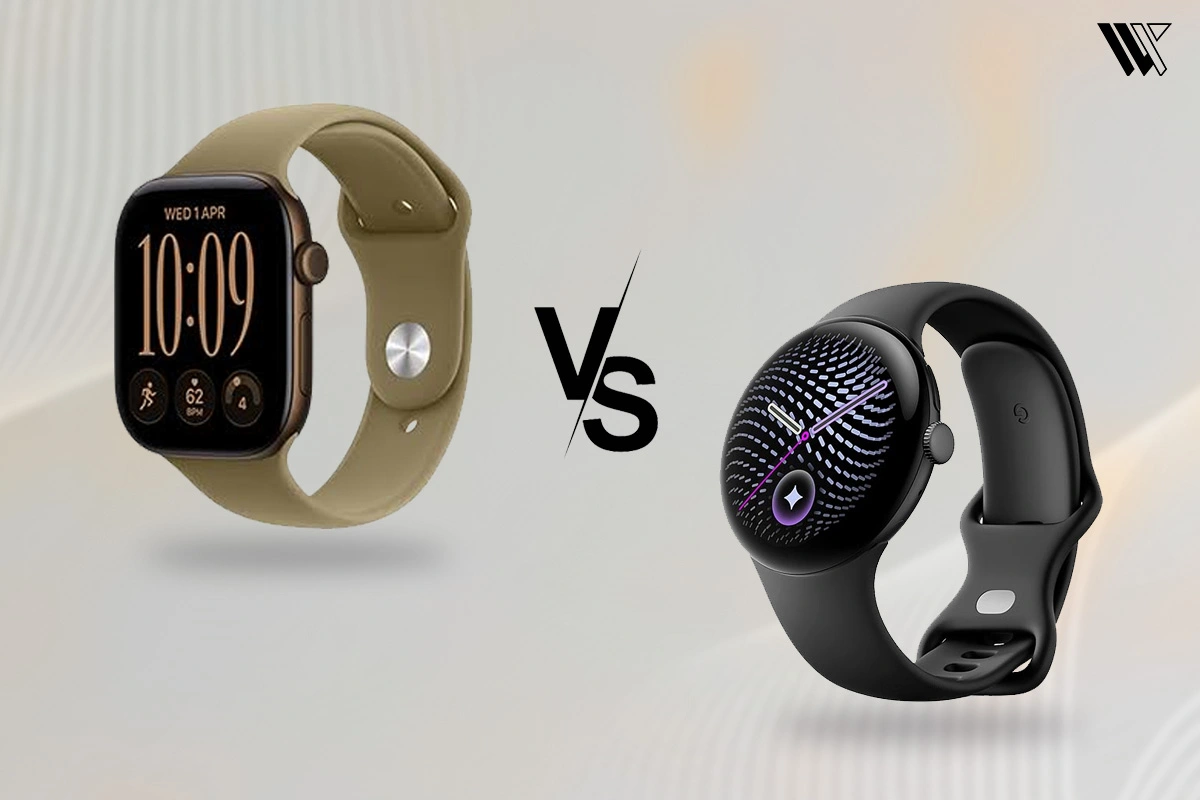
The Apple Watch Series 12 and Google Pixel Watch 5 take two different approaches to health tracking. Both offer plenty of features, but Apple focuses more on detailed health monitoring, while Google puts greater emphasis on long-term health trends through its Health Guardian platform.
Interestingly, both watches have almost the same starting price, but there’s one catch: Apple requires an iPhone, while Google needs an Android phone. So, which one deserves a place on your wrist? Let’s find out!
Apple Watch Series 12 vs Pixel Watch 5 Specifications#
| Specification | Apple Watch Series 12 | Google Pixel Watch 5 |
|---|---|---|
| Operating System | watchOS 27 | Wear OS 7.0 |
| Case Sizes | 42mm, 46mm (Aluminum, Titanium), 43mm, 47mm (Ceramic) | 41mm, 45mm |
| Case Materials | 100% recycled aluminum, 100% recycled titanium or ceramic | 100% recycled aluminum |
| Dimensions | 42mm: 42 × 37 × 9.7 mm (Ceramic: 43 × 37 × 9.85 mm) | 41mm: 41 mm diameter × 12.3 mm height |
| Weight | 42mm: 31.5g – 42.8g | 41mm: 31.0g |
| Display Type | Always-On Retina wide-angle LTPO3 OLED, 1Hz refresh rate, 326 ppi | Actua 360 LTPO AMOLED, 1-60 Hz refresh rate, 320 ppi, DCI-P3 |
| Display Brightness | Up to 2,000 nits peak, 1 nit minimum | Up to 3,000 nits peak, 1 nit minimum (AOD) |
| Display Protection | Ceramic Shield 2 (Aluminum), Sapphire crystal (Titanium & Ceramic) | Custom 3D Corning Gorilla Glass 5 |
| Processor | Apple S11 chip (64-bit dual-core, 4-core Neural Engine) | Qualcomm Snapdragon W5 Gen 2 Accelerated + Cortex-M55 co-processor |
| Health Sensors | Always-on optical heart sensor, 2nd-gen electrical heart sensor (ECG), blood oxygen sensor, wrist temperature sensor | Multi-path optical heart rate sensor, multipurpose electrical sensors (ECG), red & infrared SpO2 sensors, cEDA sensor, far-field skin temperature sensor |
| Other Sensors | Compass, always-on altimeter, high-g accelerometer, high-dynamic-range gyroscope, ambient light, 6m depth gauge, water temperature sensor | Compass, altimeter, 3-axis accelerometer, gyroscope, ambient light, barometer, magnetometer |
| GPS & Positioning | Precision L1 GPS (GPS, GLONASS, Galileo, QZSS, BeiDou) | Dual-frequency GPS (GPS, Galileo, GLONASS, BeiDou, QZSS) |
| Battery Life | Up to 24 hours normal use, up to 38 hours Low Power Mode, up to 10 hours workout tracking | 41mm (332 mAh): Up to 30 hours normal / 48 hours Battery Saver |
| Price | $399 (42mm GPS, Aluminum) | $399.99 (41mm Wi-Fi) |
Apple Watch Series 12 vs Pixel Watch 5: What’s the Main Difference?#
© Apple
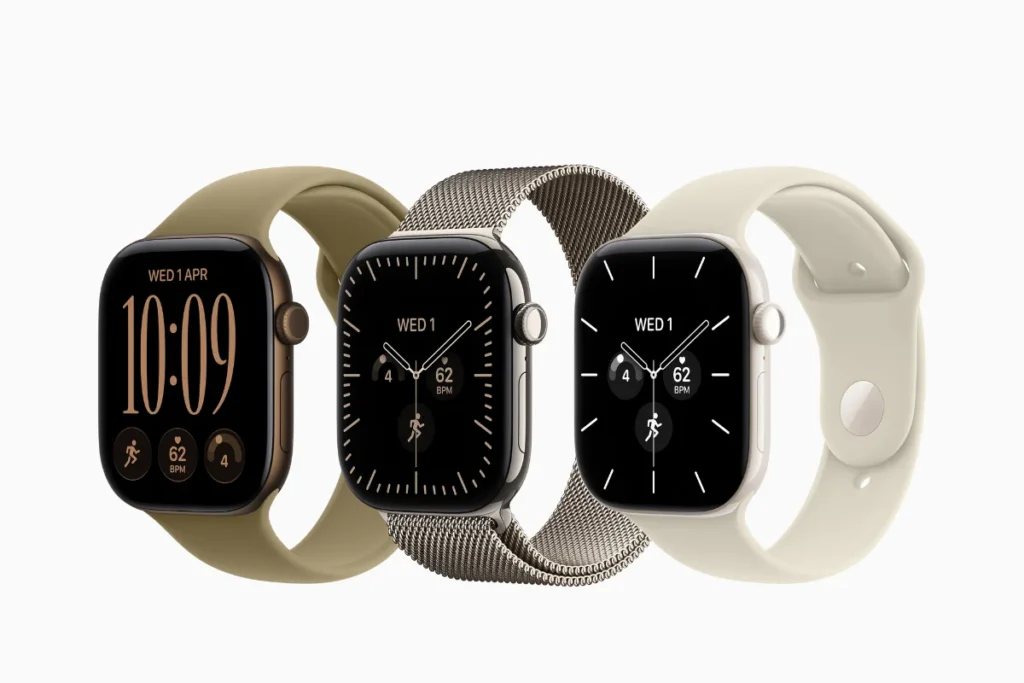
If you analyze Apple Watch Series 12 and Pixel Watch 5 in more detail, one may see that the biggest differences can be traced in the approach these companies take regarding health monitoring. Indeed, Apple Watch Series 12 is created using a completely new approach to tracking your well-being, namely it incorporates the Health Sensing System that is dedicated to high-frequency heart rate and heart rate variability measuring. In other words, Apple is not going to summarize your weekly results but will use this information to update Readiness score, Vitals app and health notifications that are cleared by FDA. At the same time, Pixel Watch 5 relies on Google Fit technology that uses the data provided by the Health Guardian system and includes the long periods of measurement in the Wear OS 7.
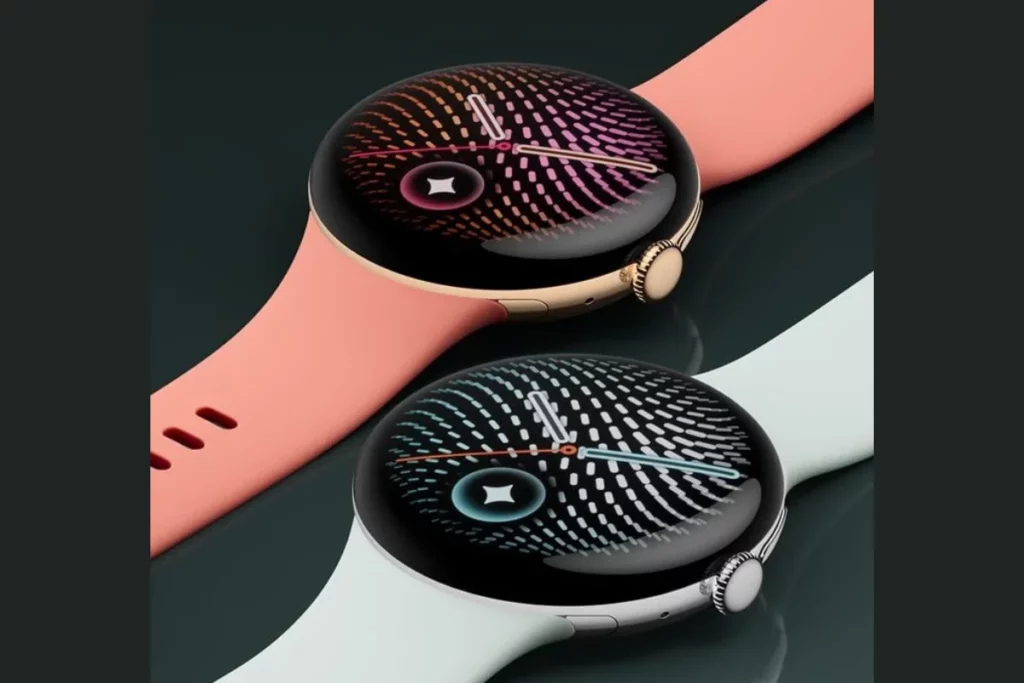
Unlike Apple, Google does not try to track the high-speed measurements but employs artificial intelligence to provide monthly trends related to blood pressure, insulin resistance and sleep breathing.
The watches are at virtually the same entry level pricing point in the USA market, with the Apple Watch Series 12 available at $399 for the 42mm aluminum GPS version and the Pixel Watch 5 being available at $399.99 for the 41mm Wi-Fi version. Nevertheless, the two have a clear wall separating them in terms of ecosystems. The Apple Watch Series 12 needs an iPhone 11 or later or an iPhone SE (2nd Generation or later) to be running on iOS 27, therefore leaving the Android users with no way out. On the other hand, the Pixel Watch 5 is compatible with almost any phone running on Android 12.0 or later.
There is also a list of trade-offs offered by each gadget from day one. The Apple Watch Series 12 has more variety in terms of case materials, such as aluminum, titanium and ceramic, as well as more extensive clinical notifications, however, the 24-hour battery capacity of this model does not match Google’s model. At the same time, the Pixel Watch 5 has extended battery capacity and even better 3,000-nit domed screen, however, this model is produced in aluminum cases only, while the best Gemini-powered health training is only available through a paid subscription to Google Health Premium.
Health Sensors and Monitoring: Which Watch Has Better Hardware?#
© Apple
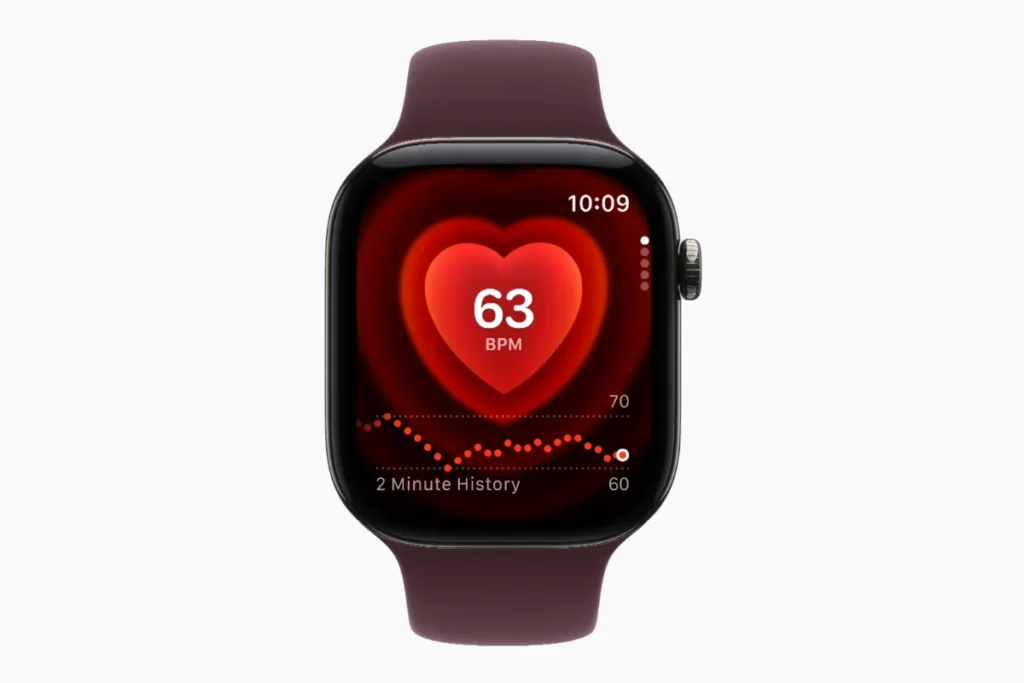
However, the internal hardware of the above mentioned wearables is what accounts for their unique differences in functionality. Specifically, Apple Watch Series 12 is equipped with an updated optical heart rate sensor featuring large and energy efficient green LEDs. In combination with the new S11 chipset, it significantly improves the frequency at which the device measures your heart rate. Apart from that, it features an updated electrical heart sensor for ECG measurements, a blood oxygen sensor, a wrist temperature sensor, a high g-force accelerometer and a high dynamic range gyroscope. Beyond standard health hardware, Series 12 even adds a depth gauge rated to 6 meters and a water temperature sensor for swimmers, all protected by Ceramic Shield 2 on aluminum models or sapphire crystal on titanium and ceramic builds.
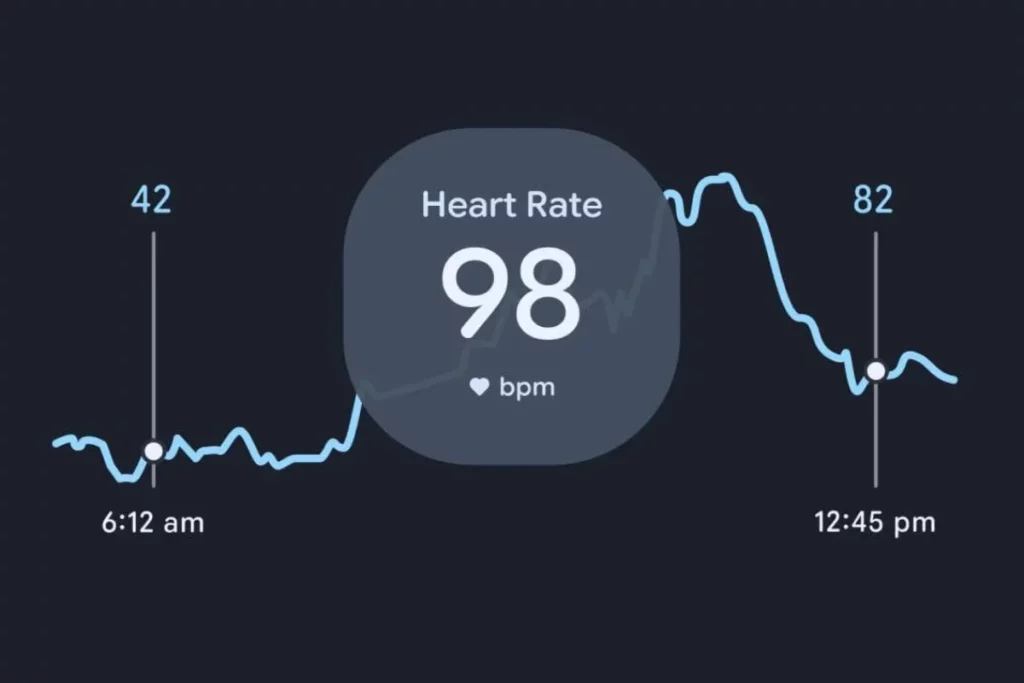
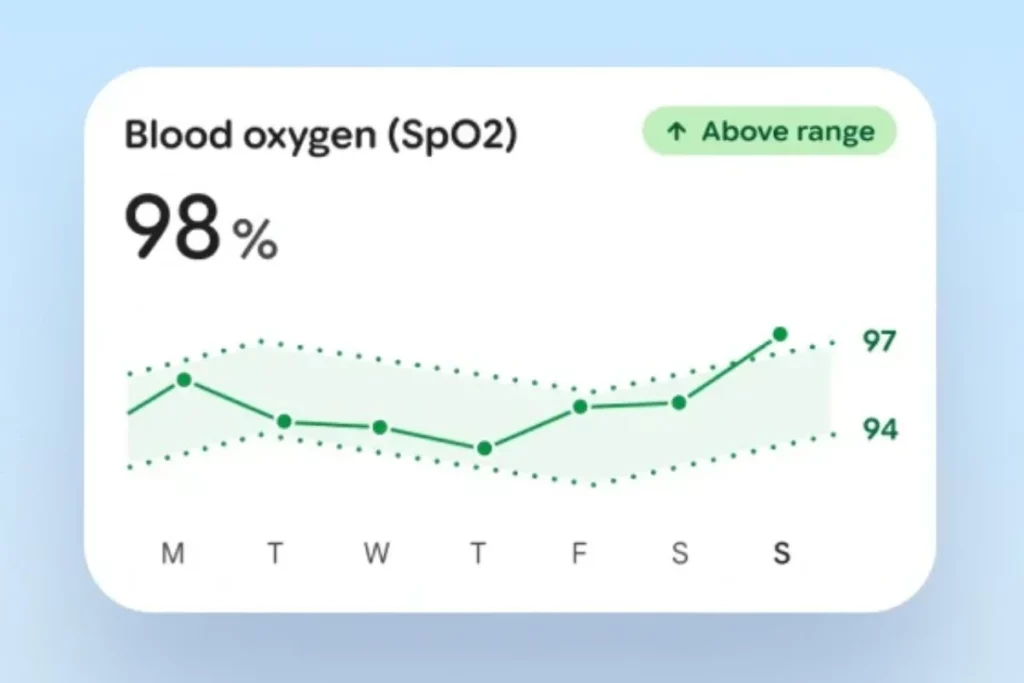
The Pixel Watch 5 is able to match the Pixel Watch 5 with a similar array of sensors that is housed inside a 100% recyclable aluminum frame and uses the Qualcomm Snapdragon W5 Gen 2 Accelerated processor combined with the co-processor called Cortex-M55. The backside of the device has multiple optical sensors that measure the heart rate, multipurpose electrical sensors that allow performing ECG analysis and red and infrared SpO2 sensors that measure the levels of oxygen in the bloodstream. While the Pixel Watch 5 has one more additional hardware piece compared to the Apple Watch, it is cEDA sensor that measures changes in skin conductivity due to stress reactions of your body.
From looking at the specs only, one would be tempted to crown the hardware to the watch with a higher number of sensors, particularly since the Pixel Watch 5 has cEDA to detect stress, unlike the Apple Watch Series 12, which lacks such functionality. But the number of sensors doesn’t determine the quality of health-tracking. Factors like the tightness of the device against the wrist, the efficiency of optical LED in filtering the interference caused by the motion and variation in skin coloration and the quality of filtering noise in the processor determine much more than the list of sensors. The optical array design and S11 processor of Apple enable the device to read HRV up to 24 times faster than Series 11. But the multi-path sensor and cEDA hardware in the Pixel Watch 5 do better in reading overall wellness and stress. Regarding drawbacks, the Pixel Watch 5 has Gorilla Glass 5 instead of sapphire glass and is thick at 12.3mm compared to Apple’s thinner 9.7mm aluminum body.
Verdict: The Apple Watch Series 12 emerges victorious in the hardware battle due to the new optical heart rate sensor design, enhanced display durability and increased sampling speed via the S11 processor.
Heart Rate, ECG and Cardiovascular Monitoring#
© Apple
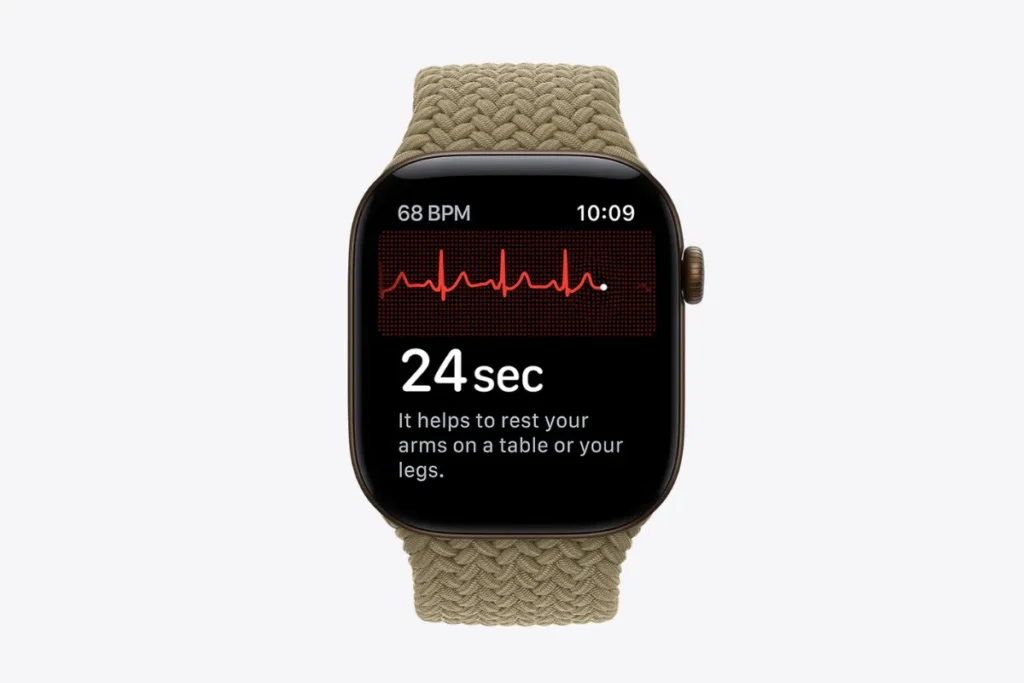
Heart health monitoring plays an absolutely crucial role when comparing the Apple Watch Series 12 and Pixel Watch 5. This is where Apple makes use of its best technical upgrade. Because of the new optical sensor and the S11 processor, the Apple Watch Series 12 monitors the background heart rate measurements every 5-seconds nonstop throughout the day, doing this 60 times more often than its predecessor Series 11. At the same time, it monitors heart rate variability (HRV) up to once every 5-minutes, which means up to 24 times more often than it did before. The company even provides two different views on this measurement through the Heart Rate app: Recovery HRV for stress and recovery analysis and overall HRV for cardiovascular health monitoring. Moreover, overnight vitals and the new daytime vitals screen now include HRV measurements to track physiological changes before going to bed. In addition, there are single-lead ECG monitoring, irregular rhythm notification for AFib, high/low heart-rate notifications and hypertension notifications available.
The Pixel Watch 5 offers a comprehensive set of heart-related features that help to keep users’ hearts healthy. First, it provides constant heart rate monitoring through the day and while exercising, with the help of the ECG app and irregular heart rhythm warnings in case there are any signs of AFib. Moreover, the user is provided with heart rate variability monitoring, alerts on high and low heart rates and cardiovascular trends by Google Health Guardian that detect the slightest changes during weeks not seconds. Also, the Pixel Watch 5 features a number of cardiovascular safety features such as Loss of Pulse Detection, where the watch calls for help in case the user is unconscious.
It’s easy to see the differences between the two devices after looking at their approaches to heart metrics monitoring. First, the Apple Watch Series 12 is all about frequent measurements, it provides heart metrics every 5-seconds when it comes to heart rate and every 5 minutes when it comes to heart rate variability. With such an approach, users get real-time information about their heart metrics and their responses to exercises, stress and sleep. On the other hand, even though Pixel Watch 5 provides reliable continuous monitoring of heart rate and great emergency features, the emphasis here is more on analyzing cardiovascular patterns throughout time with the help of Health Guardian and not on providing too many fast HRV measurements during the day.
Section Verdict: Apple Watch Series 12 is the best in cardiovascular measurements due to its five-second heart rate background checks, high-frequency HRV measurement and daytime vitals that provide you with much more heart data daily.
Blood Pressure Tracking: Which Watch Offers More Useful Insights?#
Blood pressure is certainly one of the most discussed features in the debate between the Apple Watch Series 12 and Pixel Watch 5, but it is definitely the one that people find the hardest to comprehend. Both watches cannot substitute the usual arm cuff and provide no definite blood pressure readings (for instance, 120/80 mmHg). What both companies do is utilize optical sensor information and machine learning to analyze certain patterns, but with totally different results.
Apple Watch Series 12 is dedicated to hypertension alerts only. The optical heart sensor measures the vessel response to each heartbeat and Apple uses its algorithm to analyze these signals for 30 days. If there is a pattern associated with chronic high blood pressure, the watch will send you a notification about this issue and will require you to measure blood pressure using a standard blood pressure cuff and consult a doctor. It is an appropriate and medically-based tool aimed at identifying a hidden health issue but not for serving as a daily meter. However, the drawback is obvious, if there is no pattern, there is no monthly trend graph but just a lack of notifications.
The Pixel Watch 5 follows a more holistic approach of tracking health via the Google Health Guardian platform. The device does not need to wait until sending out an alarm about hypertension, instead, it continuously monitors your body signals and provides a monthly summary of your blood pressure trends in the Google Health app at the beginning of each month. In order to give a measurement, the watch must be worn for at least five consecutive days without any need for cuff calibration. Apart from providing the information about blood pressure trends, the Health Guardian now offers you a feature called the Insulin Resistance Trends that needs to be worn for at least seven days per month. Google has clearly stated that the features are for wellness purposes only and are not clinical tests for prescreening hypertension or diabetes.
A comparison between these two reveals a clear conflict between a clinical approach and curiosity. Apple Watch Series 12 has a more clinical-based and well-defined alerting system for any potential case of high blood pressure, whereas Pixel Watch 5 offers a report on your monthly trends of blood pressure and insulin resistance to spot any pattern in your life despite there being no emergencies. The main limitation with these two watches is that any user hoping for a cuff-based blood pressure reading will not find one and the trends in health guardian of Pixel Watch 5 have limitations as well.
Sleep Tracking: Apple Watch vs Pixel Watch#
© Apple
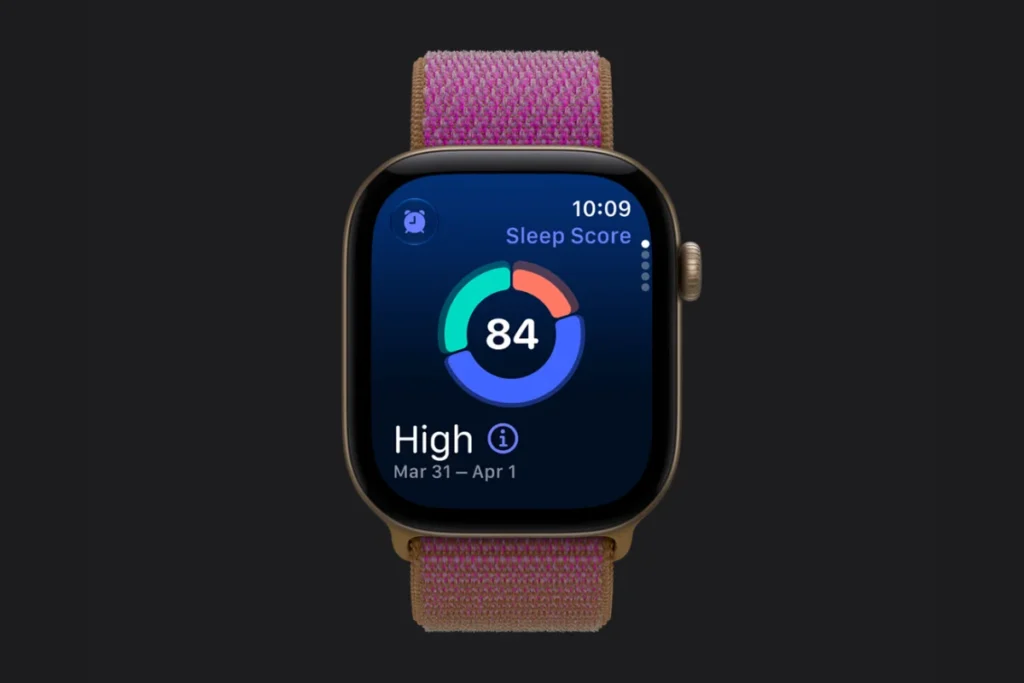
Good health tracking doesn’t stop when the lights go out and both smartwatches put serious effort into overnight monitoring. Apple Watch Series 12 tracks your sleep stages, awake, REM, core and deep and combines sleep duration, bedtime consistency, wake-ups and stage breakdowns into a nightly Sleep Score. Because it measures HRV up to every five minutes, your overnight vitals now pair wrist temperature, respiratory rate, blood oxygen and sleep duration with Recovery HRV to paint a detailed picture of how restorative your night actually was. Most importantly, Apple Watch Series 12 includes FDA-cleared sleep apnea notifications, which monitor breathing disturbances over time and alert you if your patterns suggest moderate to severe sleep apnea.
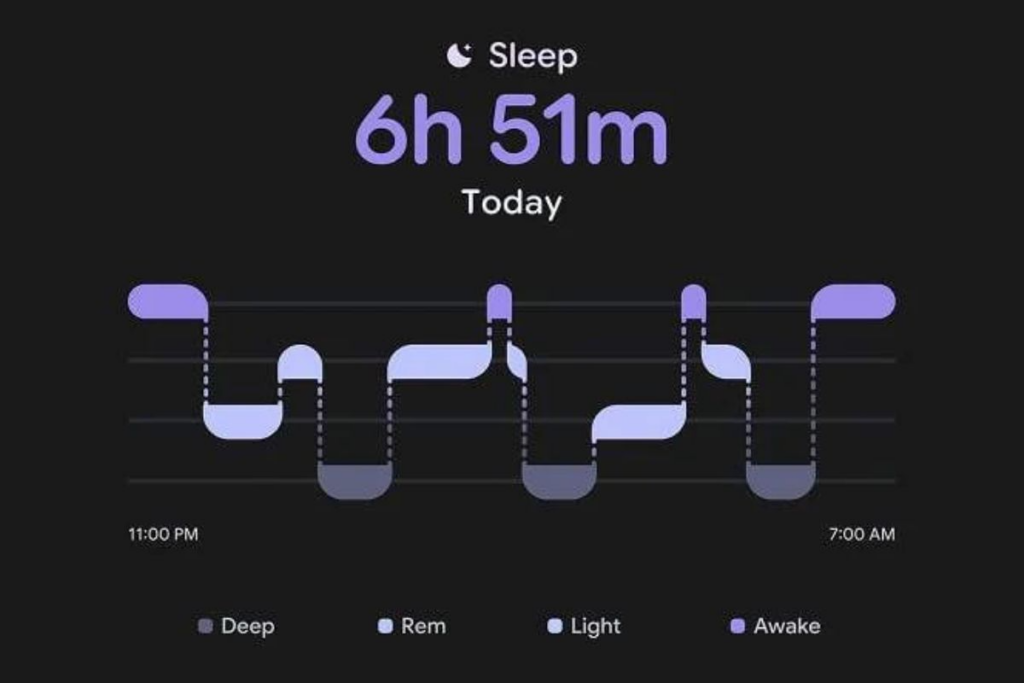
The Pixel Watch 5 relies on the legacy Fitbit technology in its reputation for robust sleep monitoring along with the use of Wear OS 7 and Google Health. Daily morning analysis provides a summary of your sleep cycles and an overall Sleep Score along with overnight heart rate and heart rate variability measurements. Along with that, the introduction of Health Guardian also brings the introduction of Sleep Breathing Quality trends, which are able to passively track overnight breathing variations and present their long-term trends in your monthly report. In some markets, Google also introduced a Breathing Emergency Detection, which is able to detect severe drops in blood oxygen levels and call emergency services.
Although both watches are efficient in taking care of sleep fundamentals, it is necessary to distinguish between Google’s Sleep Breathing Quality trends and Apple’s sleep apnea notifications. While the latter watch is cleared for notifying about possible sleep apnea problems, Google is very precise in stating that Sleep Breathing Quality is a general wellness measure, not a sleep apnea detector. Nevertheless, Pixel Watch 5 is more convenient when worn to bed since the battery life of this watch is 30-40 hours, thus eliminating frequent charging needs. Although the 24-hour battery limit of Apple Watch Series 12 is reduced by its fast charging capacity, which allows receiving 10 hours of sleep monitoring within 5 minutes of charging, charging will still be required more frequently compared to Google’s watch.
Verdict: Sleep health is an area where the Apple Watch Series 12 beats out the competition, thanks to its FDA-cleared sleep apnea alerts and high-frequency nighttime HRV vitals that provide more insight than Google’s focus on breathing trends.
Fitness, Recovery and Daily Readiness#
© Apple
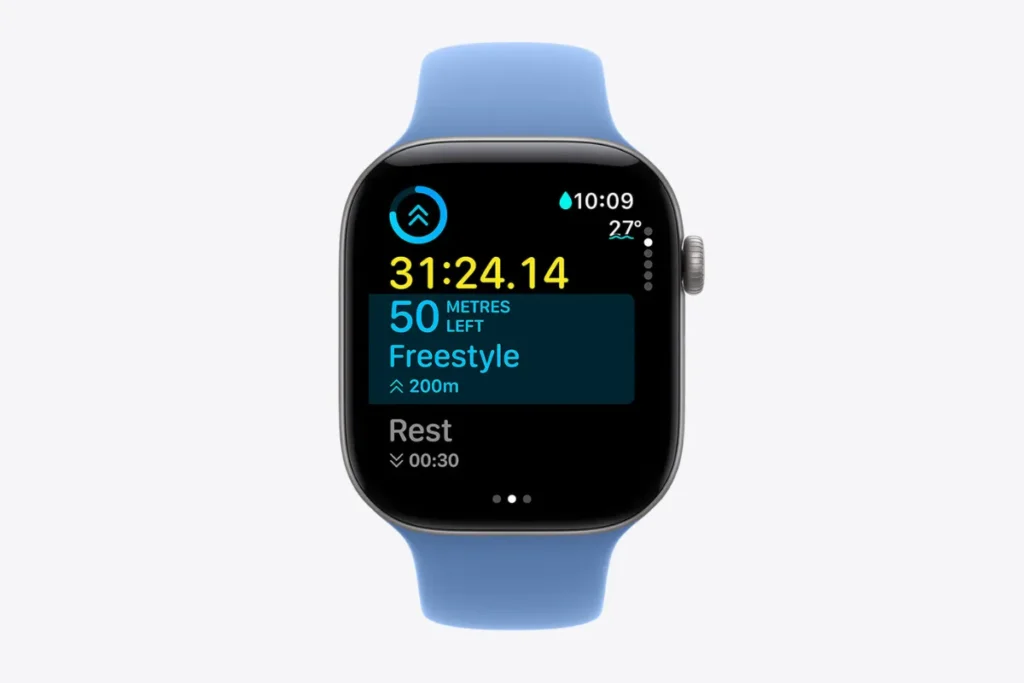
However, if your watch is unable to interpret your raw sensor data and give you meaningful tips based on it, then there will be no point in collecting that information. When it comes to recovery score and AI, both Series 12 of Apple Watch and Pixel Watch 5 rely on it heavily. Series 12 sees the debut of its own native Readiness score, which is graded from 0 to 10.
Every morning, watchOS 27 will take into account your activity and training load, sleep score and overnight vitals such as Recovery HRV and gives you a clear suggestion to either Recover, Pace Yourself, Ready or Go For It. Not only that, but your Readiness Score can be updated during the day if you do a challenging exercise or if your vitals change while you’re awake. In order to measure indoor activities accurately, Series 12 has a new version of a pedometer, along with Running features such as Pacer, Race Route, Automatic Track Detection and Workout Buddy that does not require your iPhone if used via cellular or Wi-Fi connection. Later on in 2026, Apple’s revamped Health App based on Apple Intelligence will introduce Insights, Longevity and Health Age scores.
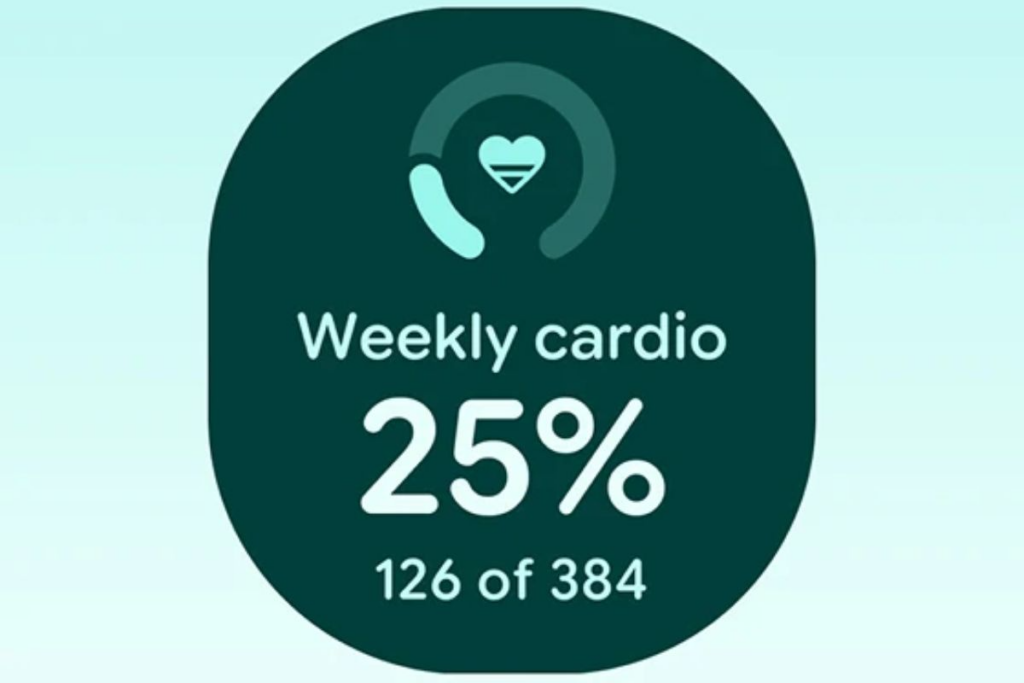
While the Pixel Watch 5 competes with Fitbit by providing Daily Readiness and recovery information, which has been further refined by adding the Google Health Coach and Gemini Intelligence services. The Pixel Watch 5 employs dual-frequency GPS technology, 3D environment modeling and atmospheric correction to ensure accurate tracking and mapping of routes when outdoors, with its cEDA sensor providing data about your stress level and body’s response for your daily recovery analysis. It is in personalized training that Google tries to edge out with Gemini’s ability to develop customized workout routines, make adjustments depending on your resting state and answer any natural-language question.
Both readiness systems cannot be considered scientifically better unless tested through independent clinical comparison over time, since both of them use proprietary algorithms that combine sleep data, heart rate variability and activity load. The main distinction between these solutions is their price and the emphasis they make. While Apple Watch Series 12 offers everything within its Readiness system, training load statistics and enhanced information from its Health app for free, Pixel Watch 5 demands subscription to Google Health Premium (9.99 per month/99 per year) to access its sophisticated Gemini algorithm-based coaching and analytical services. In return, the user gets dual-frequency GPS for running outdoors and cEDA stress tracking in Pixel Watch 5, but not in Apple Watch Series 12.
Verdict: Pixel Watch 5 leads in terms of training and coaching due to the combination of its dual-band GPS, cEDA body response monitoring and the Gemini feature that creates customized workouts.
Battery Life, Compatibility and Subscription Costs#
© Apple
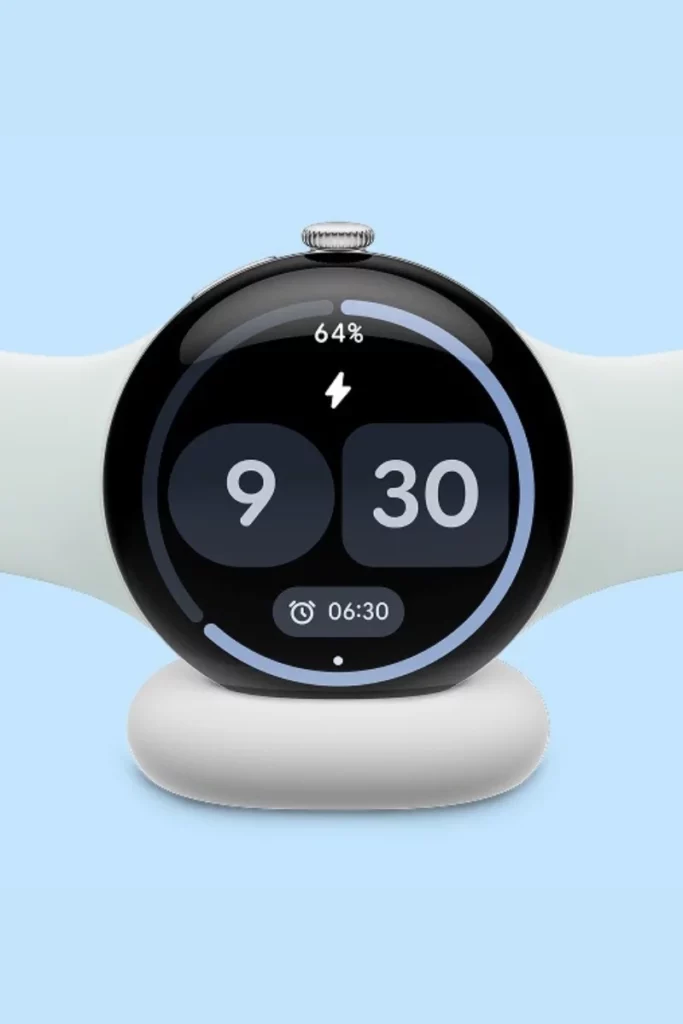
However, no matter how efficient the health sensors are, if the watch is placed dead on a nightstand, then daily usage criteria will be very important to consider in terms of choosing between the Apple Watch Series 12 and Pixel Watch 5. One of such criteria is the battery life of the watch and here, the Pixel Watch 5 definitely proves its superiority. Thus, the 41mm Pixel Watch 5 features 332 mAh battery that provides up to 30 hours of usage time in case if the always-on display is on and up to 48 hours when the Battery Saver mode is enabled while the 45mm model has 465 mAh battery that gives up to 40 hours of usage time normally and up to 72 hours when the Battery Saver mode is on.
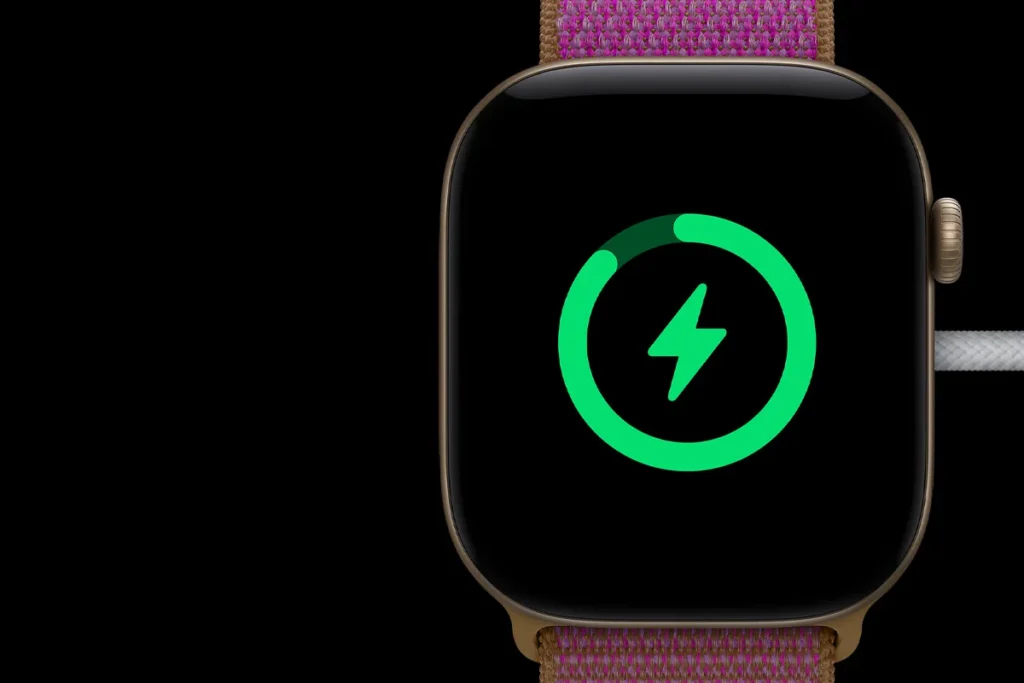
With respect to battery life claims, the Apple Watch Series 12 is a step behind, providing users with up to 24 hours of regular usage time, 38 hours in Low Power mode and 10 hours of activity recording outdoors. In other words, owners of the Apple Watch Series 12 will have to recharge their watches at least once a day and it goes without saying that those who wear their watches during sleeping to monitor HRV and sleep apnea will have to do that. Nevertheless, recharging the Apple Watch Series 12 is not difficult thanks to the improved charging process and 15 minutes provide up to 12 hours of regular usage time, 30 minutes 80% and 5 minutes 10 hours of sleep recording. On the other hand, the Pixel Watch 5 allows its owners to go without recharging for about one and a half or even two days.
As for recurring expenses, the situation is just reversed in favor of Apple. At a starting price point of $399 (up to $699 for titanium, up to $899 for ceramic), Apple Watch Series 12 provides every single core health feature such as Readiness, Vitals, ECG, Sleep Score, notifications about hypertension and warnings about sleep apnea absolutely free of charge within the Apple Health application. Apple Fitness+ is an additional workout video subscription service and isn’t necessary for health monitoring at all. Pixel Watch 5 starts from $399.99 (model 41mm Wi-Fi edition, $429.99 for 45mm model, with LTE edition). While core health tracking and Health Guardian’s monthly blood pressure, insulin-resistance and sleep-breathing monitoring are available absolutely for free in the case of Pixel Watch 5, access to advanced Gemini-powered adaptive training and insights will require the use of Google Health Premium subscription priced at $9.99 per month or $99 annually after three months trial period. The region availability affects ECG, Satellite SOS and Health Guardian alerts on both smartwatches and the necessity of iPhone or Android 12+ is mandatory for their use.
Verdict: The Pixel Watch 5 is superior when it comes to real-world battery longevity since its 30 to 40 hour battery life makes day and night health monitoring much simpler without the need for daily recharging.
Which Smartwatch should you choose?#
You should choose Apple Watch Series 12 if:#
- You use an iPhone and want seamless integration with Apple’s ecosystem.
- You prefer more frequent heart rate and HRV measurements.
- You want hypertension notifications and sleep apnea alerts.
- You need detailed recovery insights through Apple’s Readiness score.
- You want comprehensive health tracking without an additional subscription.
You should choose Pixel Watch 5 if:#
- You use an Android smartphone and prefer Google’s ecosystem.
- You want blood pressure and insulin resistance trend reports.
- You are interested in Google’s Sleep Breathing Quality insights.
- You prefer longer advertised battery life.
- You want Gemini-powered fitness coaching and personalised health guidance.
Final Verdict#
If I had to choose one smartwatch for health tracking, I would go with the Apple Watch Series 12. Its frequent heart rate and HRV measurements, hypertension notifications, sleep apnea alerts and new Readiness score make it a useful option for keeping track of everyday health and recovery.
What I like most is that it brings so many health insights together in one place without requiring an additional subscription. For me, that makes the Apple Watch Series 12 a smartwatch worth choosing as an everyday health companion.
FAQs#
01Can the Apple Watch Series 12 provide direct blood pressure readings?
The Apple Watch Series 12 does not display exact systolic or diastolic blood pressure numbers like a traditional arm cuff. Instead, it evaluates optical heart-rate patterns over 30-day periods and sends a hypertension notification if it detects consistent signs of chronic high blood pressure, which prompts you to confirm the result with a standard cuff and speak with a doctor.
02What sleep health features does the Apple Watch Series 12 offer?
Every night, the watch tracks your sleep stages, total duration, wrist temperature, respiratory rate and overnight HRV to calculate an easy to read Sleep Score. Furthermore, it includes FDA-cleared sleep apnea notifications that monitor your breathing disturbances over time and alert you if your patterns point to moderate to severe sleep apnea.
03Does the Google Pixel Watch 5 include sleep apnea notifications?
The Google Pixel Watch 5 does not offer FDA-cleared sleep apnea notifications. Although it tracks sleep stages, Sleep Score and Sleep Breathing Quality trends to highlight long-term overnight breathing patterns, Google clearly states that this metric is designed for general wellness only and is not a sleep apnea screener.
 RK
Written by
With a focus on real-world usability, Rahul at WearableXP covers smartwatches and wearable fitness tech. He evaluates how devices combine activity tracking, health metrics, battery life and connectivity. His work helps readers understand how smartwatches fit into everyday routines through practical performance and software-driven features.
More from Rahul 345 storiesKeep readingmore from Smart Watches
All storiesSmart WatchesApple Watch Ultra 4 vs Garmin Fenix 9: Which Is Better for Serious Outdoor Fitness? NewsHONOR Watch 6 Pro Launched Globally With 5,500-Nit Tandem OLED and 18-Day Battery
 NewsHuawei Watch Air Officially Teased: 6.9mm Titanium Design and Launch Date Revealed
What’s inside
- 01Apple Watch Series 12 vs Pixel Watch 5 Specifications1 min
- 02Apple Watch Series 12 vs Pixel Watch 5: What’s the Main Difference?2 min
- 03Health Sensors and Monitoring: Which Watch Has Better Hardware?2 min
- 04Heart Rate, ECG and Cardiovascular Monitoring2 min
- 05Blood Pressure Tracking: Which Watch Offers More Useful Insights?2 min
- 06Sleep Tracking: Apple Watch vs Pixel Watch2 min
- 07Fitness, Recovery and Daily Readiness2 min
- 08Battery Life, Compatibility and Subscription Costs2 min
- 09Which Smartwatch should you choose?1 min
- 10Final Verdict1 min
- 11FAQs1 min