

I used my Apple Watch with all my runs buzzing every mile split like it was checking in on me. Now I’m running with a screenless band and have been forgetting that I’m even wearing something until my sleeve caught on it mid-stride. This is more or less the entire point. No screen, no notifications and no looking down at my pace when I should be paying attention to the ground.
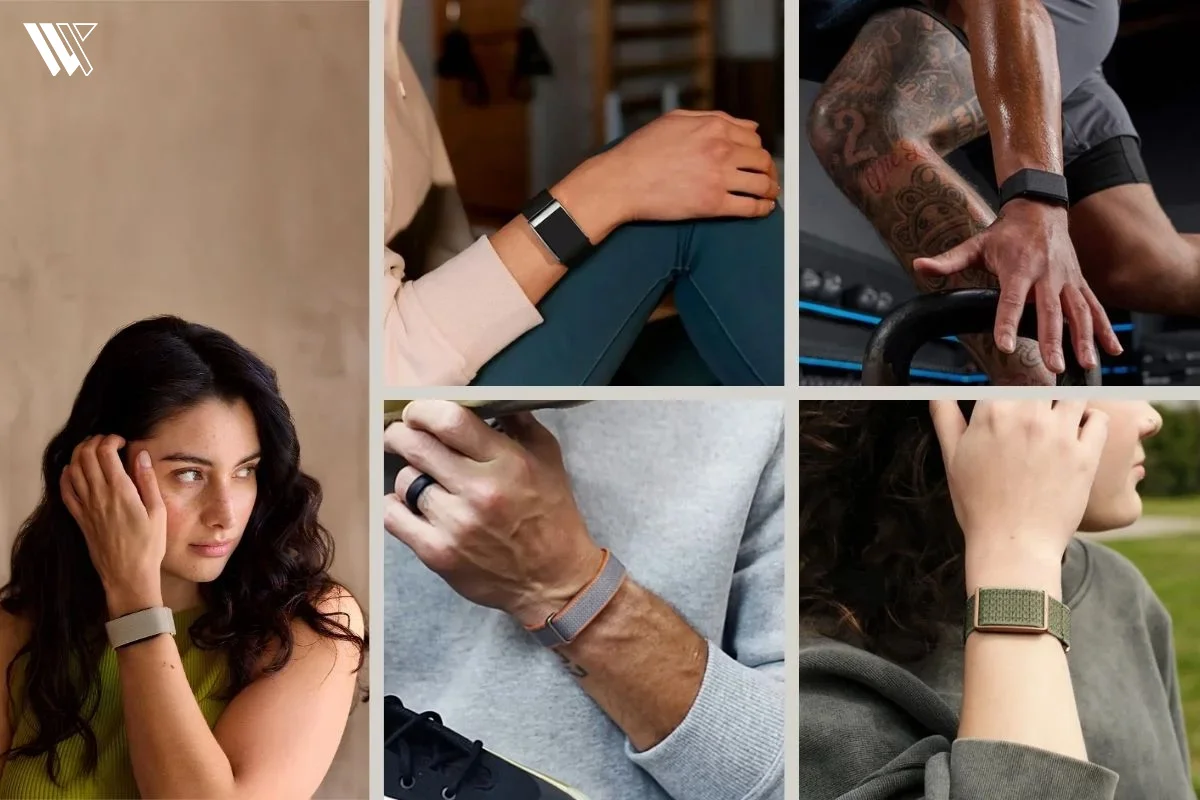
It’s important to know that the screenless bands are not here to be a substitute for your GPS watch. If you want real time pace tracking or navigation when running or a watch face to see your live heart rate, then you should look somewhere else. These screenless bands for running shine precisely where other smartwatches fail when it comes to recovery, sleep tracking, heart rate variability after the run and whether your body has processed a run from yesterday or if you are one night away from a stress fracture.
It was undoubtedly an extremely crazy year in the industry, with Garmin and Google joining the race and making WHOOP actually compete for prices. But here are the best screenless bands for running in 2026 to add to your wishlist!
Best Screenless Bands for Running at a Glance
| Band | Price | Battery | Subscription | Best for |
|---|---|---|---|---|
| Garmin CIRQA | $199.99 | Up to 10 days | Not required | Garmin ecosystem users |
| WHOOP 5.0 / MG | $199–$359/year | 14+ days | Required | Recovery-obsessed marathoners |
| Google Fitbit Air | $99.99 | Up to 7 days | Not required | Budget first timers |
| Amazfit Helio Strap | $99.99 | Up to 10 days | Not required | Runners on a budget who still want real metrics |
| Polar Loop (Gen 2) | $199.99 | Up to 8 days | Not required | Existing Polar watch owners |
Garmin CIRQA: Best for Garmin Users Who Want Fewer Distractions

© Garmin
Garmin finally showed up to this party in July 2026 and the CIRQA landed with a price tag of $199.99, without any GPS and without any screen, which seems like a downgrade until you realize that’s the entire point of it. Comes in four colors– Black, Captain Blue, French Grey and Mauve, in two different sizes and lasts up to 10 days on a single charge.
Decode the Decor
The Smart Jewelry Revolution — a practical guide to wearable tech.
Where CIRQA becomes interesting is its integration of everything good about Garmin Connect in the first place. Body Battery, Training Readiness, HRV Status, sleep score, stress tracking. The data from your CIRQA is stored right next to Forerunner or Fenix if you have them, which really means that CIRQA is less of a new gadget and more of a way to get even more out of your already existing stuff. Not to mention that core metrics require no subscription fee, which is a major deal compared to WHOOP.
Here comes the downside though, there’s no real-time tracking in CIRQA. No live pace, no GPS and while Garmin made an update allowing users to track live heart rate during workouts without paying for Connect+, that’s basically where it ends. So if you are one of those runners who like to track their splits in the middle of a race, you’ll need a Garmin watch for that.
Pros:
- No subscription fee for core health and recovery metrics
- Plugs directly into Garmin Connect if you already use it
- Good 10 day battery life
- Four colors, two sizes at launch
Cons:
- No built in GPS or live pace tracking
- Advanced AI insights require Connect+
- Less helpful if you are not using Garmin devices
WHOOP 5.0 / MG: Best Recovery Coaching, If You’re Willing to Pay for It

© WHOOP
WHOOP basically invented this category and is still leading in terms of sheer recovery depth. The 5.0 model comes with 14+ days of battery life, wireless charging that works while you wear the band (this might seem like a small detail but it’s one of my favorite features in this lineup), as well as metrics such as Strain, Recovery and the new WHOOP Age. The WHOOP MG edition adds on-demand ECG and blood pressure trend estimation, if you’re ready to shell out for the premium tier.
Here’s the thing though and I have to be honest about it. WHOOP doesn’t sell hardware anymore, you’re renting it through membership programs that start at $199 per year for WHOOP One with the 5.0 device, going all the way up to $359 per year for WHOOP Life with the MG. Stop paying and your band stops working. For runners getting ready for the marathon season, the coaching and strain data genuinely help to figure out when you should train hard and when not to. I’ve seen some very serious athletes use the band and stick to it, but after a few years of paying $199 to $359 annually, things look ugly compared to owning a $199.99 CIRQA.
Additionally, wrist heart rate tracking during high-intensity intervals is still not very consistent with WHOOP. If you’re running track workouts, many avid users end up wearing the bicep band as a result.
Pros:
- Best in class recovery and strain coaching
- 14 plus days of battery, wireless charging when worn
- Deep sleep and HRV analysis
- Optional WHOOP Body clothing collection if you don’t want wristbands anymore
Cons:
- Only available through subscription, hardware stops working if you unsubscribe
- $199-$359 annual membership is rather pricey
- Wrist HR during high-intensity workouts is often inconsistent
Google Fitbit Air: Best for Runners Who Just Want to Try This Category

© Fitbit
Google released their screenless tracker, Fitbit Air, in May 2026 and positioned it at $99.99, beating most other screenless fitness trackers. This is a very small tracker that looks like a pebble, a 7-day battery and a five-minute charge will give you an entire day of operation, which is really handy in case you miss the charging process before your run.
Also, Fitbit Air abandoned its old app in favor of Google Health and this is where the story gets more interesting. In terms of health tracking, you get 24/7 heart rate, HRV, sleep stage tracking and AFib alerts and there is also a Gemini-powered AI coach available through Premium once the three-month trial period expires. For the person who has never used a screenless tracker before and is wondering whether he or she needs such a device or not, this is the best choice in terms of risk-to-reward ratio.
However, for those who want to train with it and need more depth of features, Fitbit lacks some things in this aspect as well. Firstly, it doesn’t provide a readiness score as, for instance, a Garmin or WHOOP does. Also, workout detection focuses on general physical activity rather than marathon training.
Pros:
- Cheapest option on this list
- 7 day battery life with five-minute quick top-ups
- Doesn’t require subscription for basic features
- Compatible with Android and iOS
Cons:
- Has fewer running-specific training features
- The new Google Health application needs time to adjust
- Lacks built-in GPS functionality
Amazfit Helio Strap: Best Value for Runners Who Still Want Real Data
© Amazfit
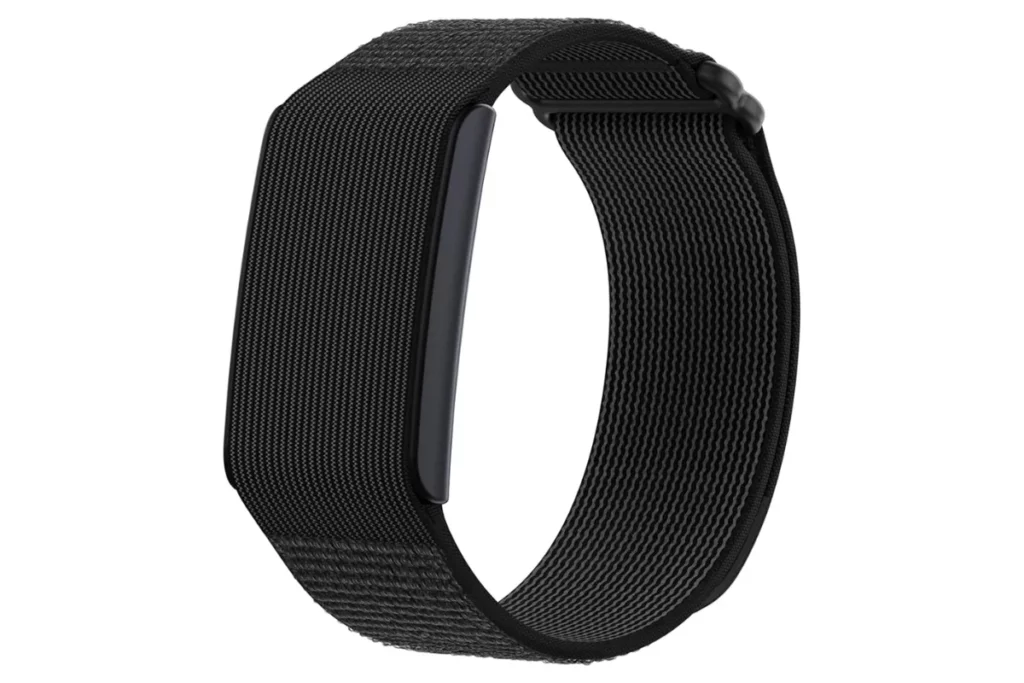
The Fitbit Air is the easy route, the Amazfit Helio Strap is what I would direct a runner towards if they want more serious training capabilities without having to spend WHOOP money. The Amazfit Helio Strap is priced at $99.99, only weighs 20 grams and lasts for up to 10 days on a single charge, beating the Fitbit Air in all three regards.
The main reason for the praise was its capability of being used for training rather than casual use. The features include automatic recognition of strength exercises, estimation of VO2 max, training load, BioCharge energy scoring (similar to Body Battery from Garmin) and integration with Strava, TrainingPeaks and Komoot after the run is finished. It is all available in a free Zepp app without any subscriptions at all. I have even witnessed runners using the arm-worn accessory sensor in comparison with the Garmin chest strap and getting a heart rate difference of only a couple of beats per minute, which is quite an achievement for the affordable price.
It certainly isn’t perfect. Zepp app can seem overly cluttered compared to Garmin Connect and the automatic workout recognition feature sometimes misses the start of a run, but for the price, I don’t believe there is a better screenless device that actually can be used for training.
Pros:
- $99.99 with seriously useful training metrics
- Up to 10 days battery life in a 20 gram device
- Free of charge, synchronizes with Strava and TrainingPeaks
- Optional arm strap increases heart rate accuracy significantly
Cons:
- Zepp app can be cluttered
- Unreliable automatic workout detection
- Overall ecosystem lags behind Garmin and WHOOP
Polar Loop (Gen 2): Best If You’re Already Deep in the Polar Ecosystem

© Polar
The Polar Loop Gen 2 costs $199.99 and lasts up to 8 days of battery life and if you own any Polar Vantage or Grit X watch, it is a perfect fit to become a light wearable to wear for sleep and recovery tracking without carrying a bulky sports tracker to bed. It uses Precision Prime technology of sensors and works with the Polar Flow application, so your Nightly Recharge and Training Load Pro results stay in one place.
And now, the most important part which many people neglect when talking about this device. This device doesn’t have a reliable standalone optical heart rate monitor to track your live data like WHOOP or Amazfit and to measure your heart rate in real-time during the run, you have to pair it with an external chest strap like Polar H10. Without it, it just tracks the “intensity” of your wrist movements.
So, if you are a Polar fan with a Polar H10 chest strap and you want just a comfortable and light wearable for 24 hours sleep tracking, it is for you. If you search for a self-contained screenless wearable which will measure your heart rate while running, it isn’t for you.
Pros:
- Comfortable and lightweight fabric band
- Good sleep data
- No subscription required
- Smooth integration with other Polar watches
Cons:
- External chest strap needed for real-time running heart rate data
- Outdated Polar Flow application compared with others
- No arm strap accessory like WHOOP or Amazfit offer
Screenless Bands vs Running Watches: Which One Do You Actually Need?
| Feature | Screenless Band | Running Watch |
|---|---|---|
| Live pace during a run | Limited or none | Excellent |
| Notifications | No | Yes |
| Battery life | Usually longer | Depends on model |
| Recovery tracking | Strong | Strong |
| Built in GPS | Rare | Standard |
| Distraction free running | Better | Lower |
If your training revolves around consistency, getting enough sleep and timing correctly when to push and when to relax, you already get all of that with a band. If you train for a particular finish time and need pace reminders and trail navigation capabilities, you definitely have to use a smartwatch. Many serious runners use both watches for training sessions and bands throughout the day.
How Accurate Are These Things, Really?
Optical heart rate monitoring became much more precise in recent times, but there isn’t any medical-grade optical monitoring. They are great at showing you trends, though. One day of an abnormal recovery score isn’t saying much. But if your recovery score is low for five days in a row, it really means something. This is also true for other parameters such as HRV, resting heart rate and sleep stages. It’s the pattern that matters, not one-day values.
During workouts, including any high-intensity interval or tempo workouts, wrist-based optical sensors can behave unexpectedly in terms of lagging behind your heart rate or showing some spikes. If precision during the workout session is crucial for you, you won’t be able to replace a chest strap monitor with a wrist or bicep sensor.
Wrap Up
In all honesty, the most interesting aspect of this category in 2026 isn’t the device, but the fact that finally WHOOP has some competition in terms of price. For many years, there was no choice, either you used WHOOP for the tracking or had nothing else. Garmin and Amazfit have demonstrated how much data could be received without paying a monthly fee for your own screenless fitness band.
When talking about the future of this category, I would definitely go for the development of the ability of these devices to pair with your running watch rather than to become your running watch. There is no need to have five apps, all that is needed is just one dashboard of training and recovery.
FAQs
Decode the Decor
The Smart Jewelry Revolution
A practical guide to wearable tech's future — delivered straight to your inbox.
Author
