

Virtual reality has always promised to take us to another world. The only catch? You have to strap a bulky headset to your face first. It’s a little like going to the cinema, except you bring your own screen and end up looking like a confused astronaut.
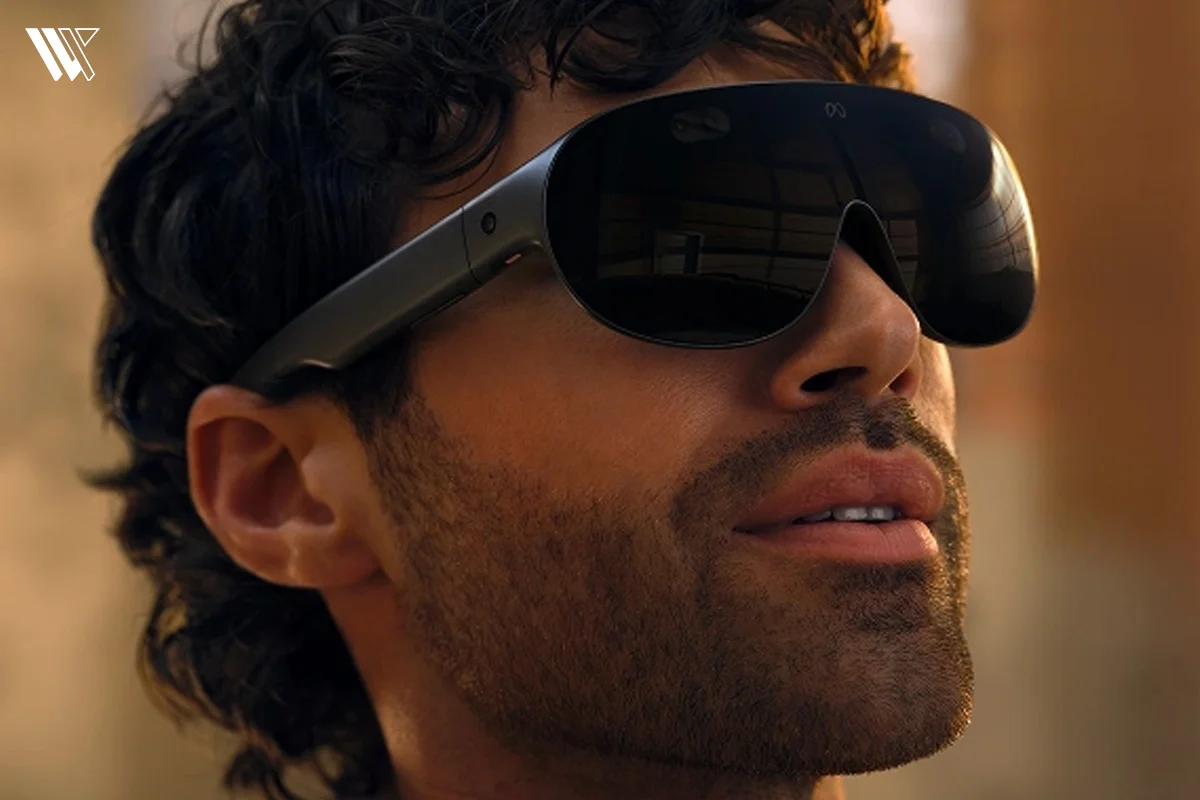
But what if enjoying virtual reality didn’t require wearing something that looked like a helmet from a science fiction movie? That’s the idea behind Meta VR Glasses, introduced at Meta Connect 2026 on September 23-24. Meta is taking a different approach to VR, one that could make virtual experiences feel less like a special occasion and more like a part of everyday life.
But can Meta really make virtual reality as easy as putting on a pair of glasses? Let’s find out.
What Are Meta VR Glasses?
© Meta
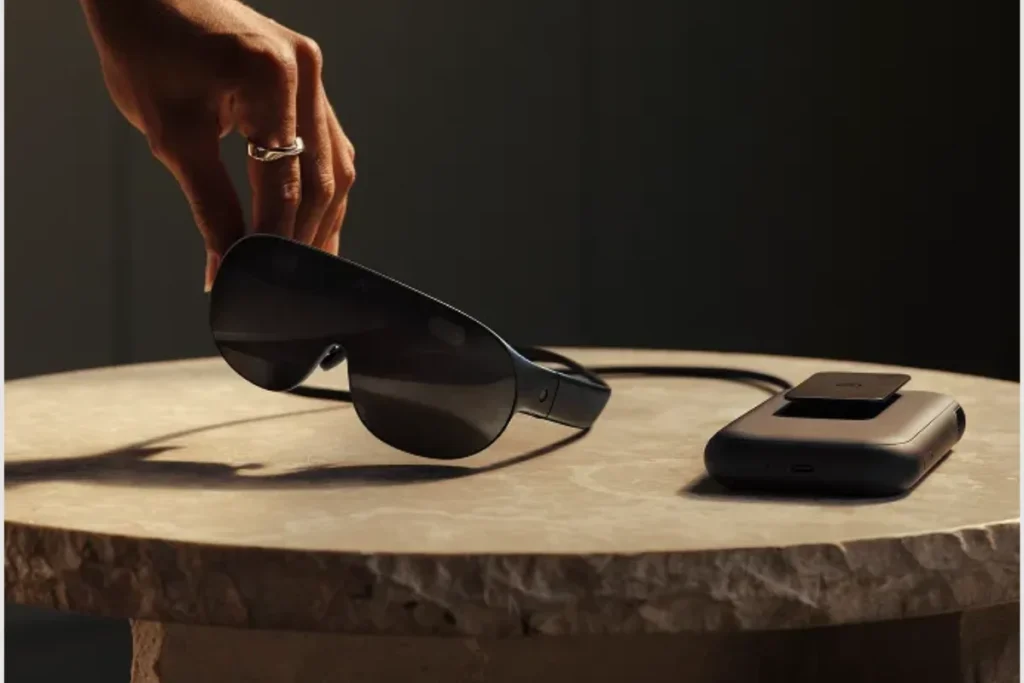
In order to truly appreciate the value of such technology, one first needs to learn exactly what kind of devices we have here. Meta VR Glasses are essentially a whole new type of gadget that allows users to enjoy immersive digital experiences through a wearable, glasses-style piece of technology. Such an invention is quite different from all other Meta products, specifically those known as Meta Quest devices, which are popular among gamers.
Decode the Decor
The Smart Jewelry Revolution — a practical guide to wearable tech.
While the Quest line is built primarily for heavy, room-scale virtual reality, the Meta VR Glasses are designed for comfort and everyday wearability. These glasses were unveiled at Meta Connect 2026, alongside Meta Muse Charm and Meta AI Glasses Gen 3, highlighting Meta’s expanding focus on wearable technology
This drastic shift is made possible by their unique physical design. The Meta VR Glasses form factor resembles a thick pair of stylish sunglasses rather than a scuba-diving mask. To achieve this incredibly slim profile, Meta shifted the heavy processing units out of the glasses entirely. Instead, they use a separate compute puck design. This small, pocket-sized puck connects to the glasses, holding the battery and the core computing power, which keeps the actual eyewear weighing around just 100 grams.
Because of this unique design, the target audience has also shifted. This is not just another VR headset for hardcore gamers looking to play intense virtual reality shooters. Instead, it is a deliberate attempt to create a lighter spatial computing device for everyone. The Meta VR Glasses are built for people who want to watch movies on a giant virtual screen on an airplane, handle light productivity tasks on the go or enjoy immersive entertainment without feeling weighed down.
However, this experience comes at a premium, with Meta VR Glasses officially priced at $1,299.99 and expected to reach consumers in spring 2027.
How Meta VR Glasses Work
© Meta
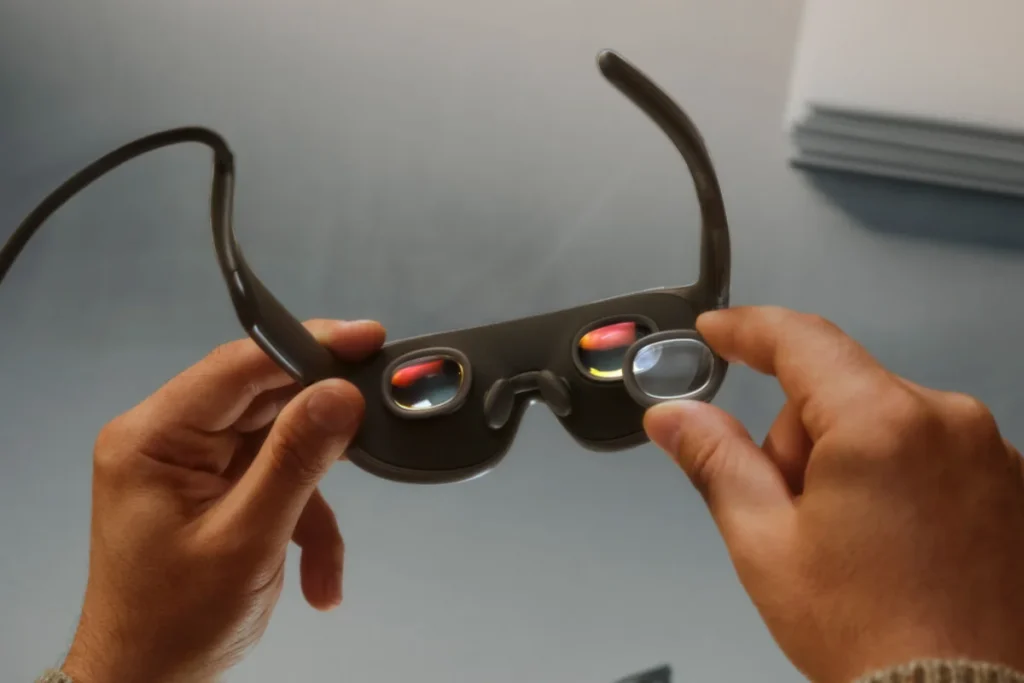
The hardware hidden inside Meta VR Glasses is highly advanced and surprisingly powerful. They feature stunning 5K micro-OLED “Infinite Display” panels that deliver crisp, vivid visuals directly to your eyes. These panels offer 37 pixels per degree, which provides the optical density required for reading text comfortably. Custom pancake lenses help keep the entire optical system thin while maintaining a beautiful, wide field of view.
Navigation within the operating system is completely reimagined. The device relies on advanced eye tracking and fluid hand gestures instead of bulky plastic controllers. High-resolution passthrough cameras ensure you can always see the real physical world around you. Furthermore, built-in spatial audio provides an immersive, theater-like soundscape using advanced Dolby Atmos technology.
Unlike traditional headsets where everything is crammed onto your forehead, the computing workload is intelligently divided. The glasses carefully handle the display panels, tracking sensors and audio speakers. Meanwhile, the external tethered puck handles all the intense heavy lifting. This puck contains a powerful Qualcomm Snapdragon Reality Elite computing chip.
Additionally, the puck holds 12 GB of RAM and 128 GB of internal storage. It also houses the battery pack, which supports 45W fast charging. Because the puck handles the compute, battery and storage, the glasses remain incredibly comfortable on your nose. This innovative split design is the real secret behind how Meta VR Glasses work so comfortably over long periods.
Why Meta Is Moving From Headsets to Glasses
Traditional VR always follows a very strict, isolating routine. You put on a heavy headset, completely block out the real world and enter a completely virtual environment. It is an undeniably amazing experience, but it is also socially isolating and physically draining.
Meta’s new overarching vision shifts aggressively away from that isolation. They want you to wear glasses naturally while you interact with digital content anywhere you go. With Meta VR Glasses, you can comfortably see a massive virtual movie screen while still clearly seeing your living room couch and your family members.
The technology industry has finally realized a hard, undeniable truth. The main challenge is no longer creating immersive virtual experiences, because the software is already fantastic. The true challenge is making people actually want to use them daily. By drastically moving from a headset format to a glasses format, Meta hopes to permanently remove the physical friction of virtual reality.
Meta VR glasses vs Meta Quest: what has changed?
In terms of comparing the widely used Meta Quest headset to the newer Meta VR Glasses, it becomes clear that the differences between these devices are quite significant. First, the Quest is a standard VR headset with heavy head straps and a front-heavy visor, while the latter uses the glasses-style form factor which is ultra-lightweight.
In addition to that, the way input is done has significantly changed. The Quest devices use controllers all the time – whether you want to go through the menu or launch a game, you will need to use these plastic controllers. However, the new Meta VR Glasses only require eye and hand gestures. You simply look directly at an application icon and pinch your fingers in the air to open it.
In addition, there has been a massive change in the expected use cases. The Quest series was designed with gaming as the prime focus of development. Yes, it does a lot of things extremely well, but video games remain its core competency. In contrast, the Meta VR Glasses focus on general computing, professional activities and media entertainment.
In summary, the Quest succeeded in making VR easy and affordable for millions. But the Meta VR Glasses will succeed in making spatial computing seamless in people’s lives.
Are Meta VR Glasses the Future of Spatial Computing?

© Meta
Use cases of this new hardware are extremely numerous and promising in the real world. Entertainment is one of the key areas of interest for the platform. Meta VR Glasses have become the first IMAX Enhanced-certified VR device providing an awesome virtual cinema on the user’s face. The user may simply watch 3D movies on Disney+ or enjoy immersive live sports from their premium court-side seats.
Productivity is yet another key factor. You won’t have to spend extra cash on multiple physical monitors, all you need to do is to conjure up a huge display space right from the air. These entirely private screens make it possible to connect directly to a Mac or Windows laptop. In other words, remote working from busy airports or coffee shops becomes easy and safe.
© Meta
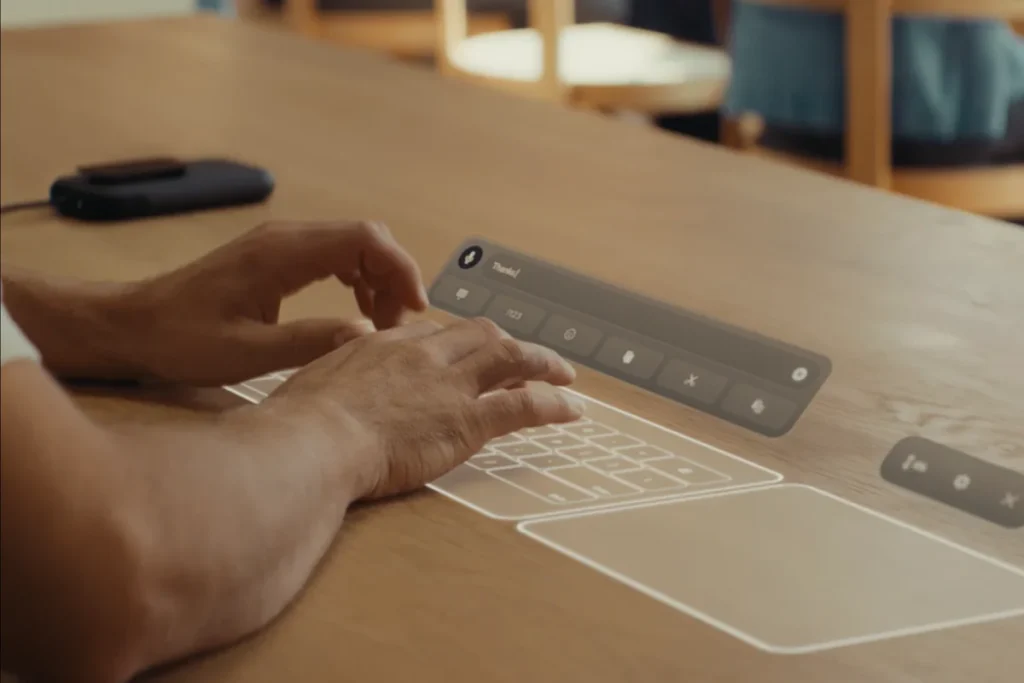
One particularly interesting feature is the ability to turn any flat surface into a virtual keyboard and touchpad. This allows users to type messages, write documents and navigate their virtual workspace without carrying a physical keyboard. It also makes the glasses more practical for productivity, especially when working away from a traditional desk.
Of course, gaming has not been left behind, but it has evolved significantly. With the advanced hand-tracking technology and controller-free controls, casual games become much more user-friendly. Users can also instantly get access to Xbox Cloud Gaming for console games on an enormous virtual screen. For example, Meta has already revealed some controller-free games such as Phoenix Wright Ace Attorney VR, where you can literally point your finger at objects in a virtual courtroom.
Why AI Matters for the Future of Meta VR Glasses
AI acts as the vital ingredient that binds this whole new ecosystem together. The absence of advanced AI would make operating an interface without controllers extremely difficult. It transforms virtual reality from being a ‘device that is controlled’ to being a ‘device that knows you.’
Deep Meta AI integration, specifically through their advanced Muse AI agent, makes this natural interaction possible. You can use seamless, conversational voice interaction to quickly open applications, search the web or meticulously adjust your virtual workspace.
This highly context-aware assistance means the glasses actually know what you are looking at in the real world. If you are designing a complex 3D model, the AI can assist you naturally without requiring complicated, floating menus. Therefore, advanced AI software is just as important as the physical hardware inside Meta VR Glasses.
Meta VR Glasses vs AI Smart Glasses: Two Different Futures
It is highly important to clarify exactly how this fits into Meta’s broader, expanding wearable lineup. The company now actively sells two very different wearable product categories. You have the popular Ray-Ban Meta Smart Glasses on one side and the new Meta VR Glasses on the exact opposite side.
AI Smart Glasses are built specifically for effortless everyday wear. They look exactly like normal, stylish sunglasses and feature real-world audio assistance through an onboard camera and an AI voice agent. Their primary goal is to quickly replace minor phone interactions, like taking a fast photo, listening to music or asking a quick factual question.
In contrast to that, Meta VR Glasses are fully devoted to powerful immersive computing. These glasses are not only equipped with an external camera, they also feature full high-resolution internal displays. In addition, instead of giving answers verbally, they are able to create a huge interactive digital space right before your eyes. One gadget is designed to help you in your physical world, whereas the other is aimed at increasing your digital computing world.
The Biggest Challenges Meta VR Glasses Must Solve
However, in spite of all the wonderful technological innovations, there is still a lot of challenges that the Meta VR Glasses have to face. In particular, wearing them for extended periods of time does not seem to be comfortable at all. Even though the glasses weigh only 100 grams, which is not much for a person’s face, handling the cable can become an issue for some people, as it comes with a puck.
Battery life is another very real limiting factor for this generation. Because high-performance spatial computing requires a massive amount of continuous electrical power. Currently, the included puck provides about 3-hours of continuous high-resolution battery life before it desperately needs a recharge. This short lifespan might not be enough for a full, uninterrupted workday or a long-haul international flight.
Acceptance by society will likewise play a large role in determining whether this product will succeed. Will the average person feel comfortable wearing them in a public place like a crowded cafe? Last but not least, the cost factor will play a huge role. This piece of hardware costs an unbelievable $1,299. Adoption of this hardware will surely take some time to gain traction.
Can Meta VR Glasses Replace Smartphones or Computers?
A lot of technology fanatics tend to question whether this innovation will immediately render smartphones or even the good old laptops useless. However, the honest-to-goodness answer is that it does not yet seem like that will be the case. Meta VR Glasses have the potential to lower our reliance on such equipment.
However, modern smartphones remain vastly stronger for quick applications, fast text communication and ultimate pocket portability. You simply cannot slip these glasses into a tight jeans pocket without annoyingly managing the wired battery puck.
The near future would be a blend of both. Instead of the smartphone being substituted entirely by the glasses, we are progressing into a world of “smartphone + glasses”. Ultimately, Meta VR glasses would serve as an addition to the computer that you currently own.
What Meta VR Glasses Mean for the Future of Wearables
So, where do we stand after this promising launch within the never-ending sequence of technological achievements by humans? Well, if you go back in history, then the first generation of wearable devices was exclusively concerned with physical fitness, everybody knows about fitness bands reminding users about their daily step counting goals. However, the second generation gave us stylish smartwatches and glasses that provided text messages in an instant.
Now, we are stepping firmly and confidently into the third major generation: spatial and AI computing wearables. Meta VR Glasses represent Meta’s incredibly ambitious attempt to finally pull computing out of tiny, glowing glass screens. They want to project our digital lives seamlessly into our natural physical environment, blending the two worlds effortlessly.
Wrap Up
Meta VR Glasses offer a fresh take on virtual reality, bringing immersive entertainment and productivity into a lighter, more accessible form. While challenges such as battery life, comfort and pricing remain, they show how VR could gradually move beyond traditional headsets. Whether people will embrace this new approach remains to be seen, but one thing is clear: the future of VR might not require strapping a bulky headset to your face after all.
FAQs
Decode the Decor
The Smart Jewelry Revolution
A practical guide to wearable tech's future — delivered straight to your inbox.
Author
