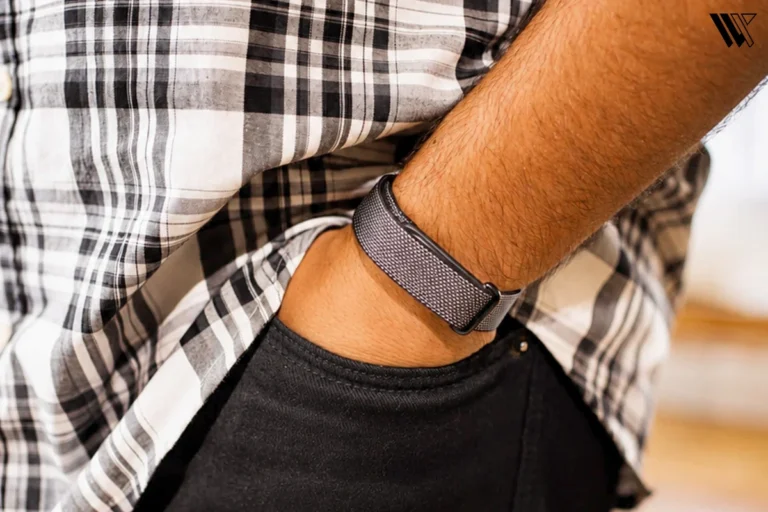
 NewsGoogle Confirms Fitbit Air Will Get Sleep Breathing Quality Feature Soon
Fitbit Air vs Luna Band: Which Screenless Wearable Is Better for Health Tracking?
We often go through the day without paying much attention to what our body is telling us. We stay busy, squeeze in a workout when we can and hope to get a good night's sleep. But how do we know whether our daily habits are actually helping us feel better? Health trackers can offer some answers, but not everyone wants a smartwatch screen lighting up with notifications throughout the day. Sometimes, all we need is something that quietly tracks our health in the background.
Independently tested. We never accept payment for reviews.How we test
What’s inside11 sections · 13 min read
- 01Design and Comfort2 min
- 02Fitbit Air vs Luna Band Specification Comparison Table1 min
- 03Health Tracking Features: Fitbit Air vs Luna Band3 min
- 04Fitness Tracking Features Compared3 min
- 05Accuracy and Reliability Compared1 min
- 06Battery Life and Charging Experience1 min
- 07App Experience and Software Ecosystem Compared1 min
- 08Price And Availability1 min
- 09Fitbit Air vs Luna Band: Which One Should You Choose?1 min
- 10Final Verdict1 min
- 11FAQs1 min
We often go through the day without paying much attention to what our body is telling us. We stay busy, squeeze in a workout when we can and hope to get a good night’s sleep. But how do we know whether our daily habits are actually helping us feel better? Health trackers can offer some answers, but not everyone wants a smartwatch screen lighting up with notifications throughout the day. Sometimes, all we need is something that quietly tracks our health in the background.
This is where the Fitbit Air vs Luna Band step into the scene. Both have screenless technology that can track the health and activities of the wearer, but both have a very unique approach to it. In addition to monitoring, it is also important how easy the use of the bands make it for the user to know how much he/she has slept and exercised.
In this Fitbit Air vs Luna Band comparison, we will explore the differences and similarities in the design, health tracking, fitness options, mobile apps, battery performance and value for money of these two bands.
Design and Comfort#
© WearableXP

© Luna
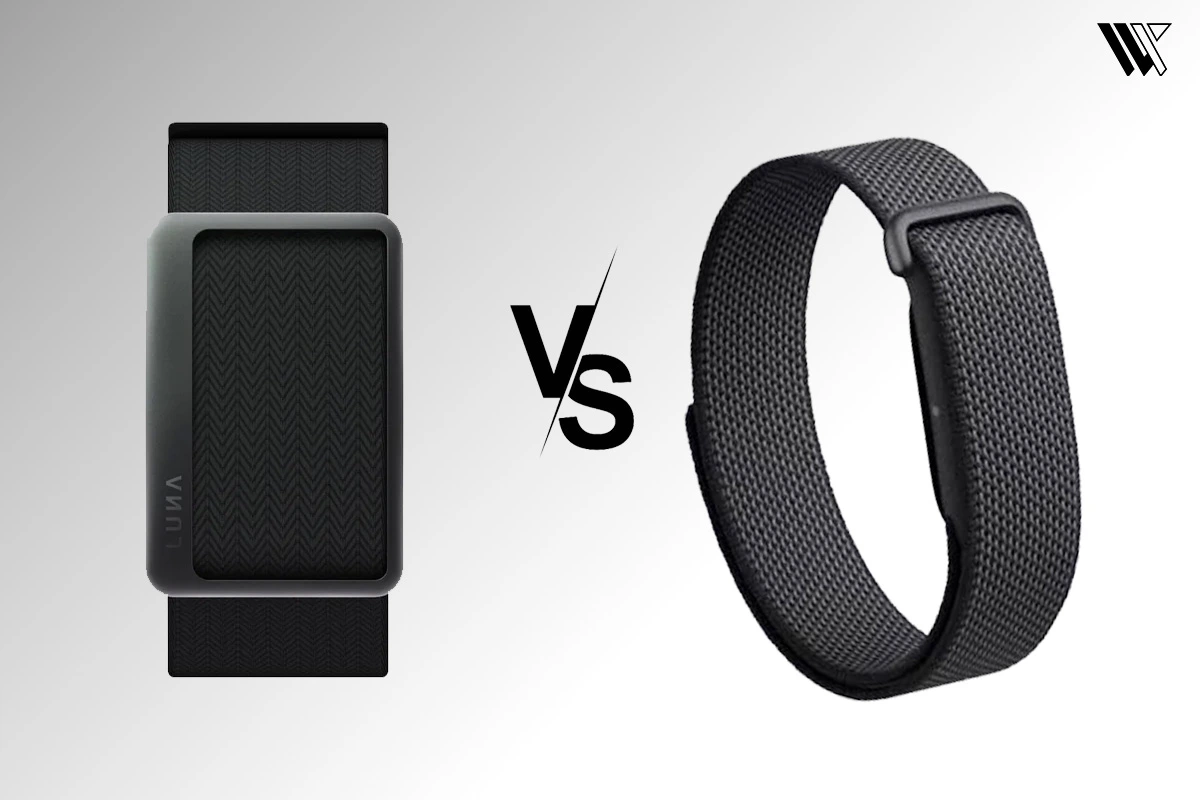
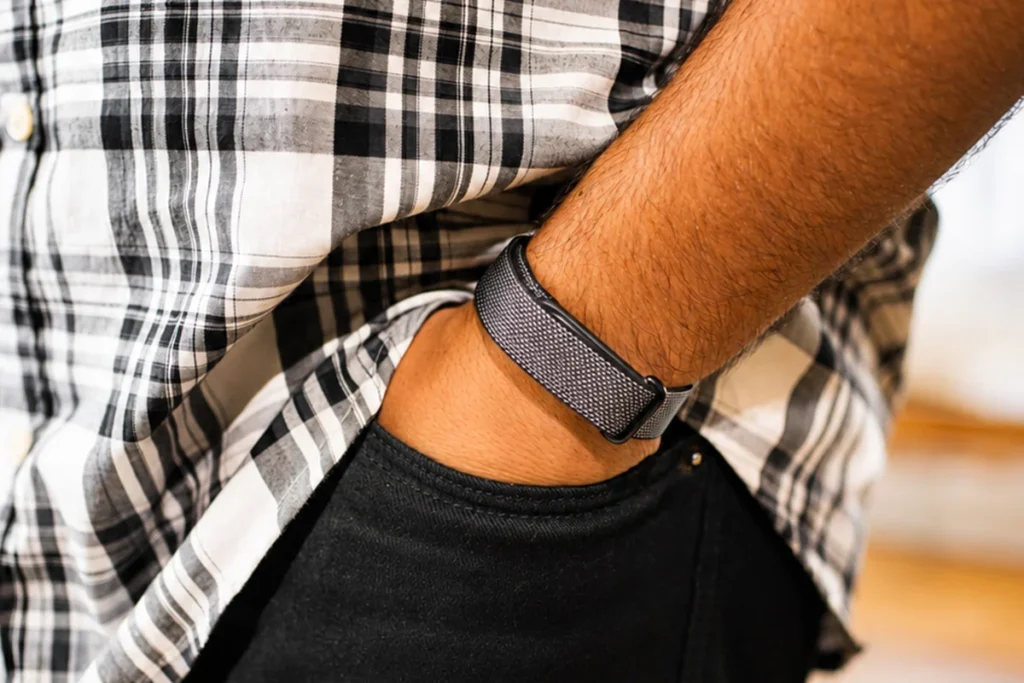
When it comes to picking an item that you plan on wearing around the clock, the physical design of such a product becomes crucial. When it comes to the Fitbit Air vs Luna Band design comparison, you will see the physical differences instantly.
Fitbit Air is a smart band that is characterized by an extremely lightweight design weighing no more than 14 grams and featuring a removable core sensor unit measuring 34.9 x 17 x 8.3 mm. The product comes with a robust polycarbonate body along with a thin, micro-adjustable strap making this product very small in size. Thanks to its very small physical size, this gadget will remain practically invisible when used during everyday activities or office work. Whereas, the Luna Band comes with a heavier build with a weight of about 26 grams. Although this product is considerably heavier than Fitbit Air, it features a premium design made from the high-quality materials that are resistant to heat and providing an elegant appearance fitting into the look of classic jewelry or watches. Moreover, both wearables can easily cope with moisture and sweat because this band is water-resistant up to 5 ATM while that one up to 50 meters.
In terms of comfort during the night, the Fitbit Air takes the lead since its extremely thin construction means that it almost never catches on your bed sheets. You can wear it to bed and hardly notice that you have it physically. As for the Luna Band, although it is made of material that provides great comfort during overnight usage thanks to its soft exterior, its thicker sensor part is somewhat distracting since it may be felt when you lay your head on your arm. In addition, both of these devices lack screens, which makes them perfect for sleeping in. While one of them does not disturb you during the night due to its lack of any display light, another one keeps itself dark as well, which does not distract from your sleep environment at all.
Verdict: The Fitbit Air is your ideal choice if you wish to have the lightest wearable in terms of weight. The Luna Band would be the better choice for people who are interested in having a sleek and elegant design on their wrist.
Fitbit Air vs Luna Band Specification Comparison Table#
| Specification | Fitbit Air | Luna Band |
|---|---|---|
| Category | Screenless band | Screenless band |
| Dimensions | 34.9 x 17 x 8.3 mm | 40 x 27 x 11.8 mm |
| Weight | 5.2g (core), 12g with band | 24g |
| Water Resistance | 5 ATM (up to 50 meters) | 5 ATM (up to 50 meters) |
| Sensors | Optical HR (PPG), SpO2, Skin Temp, Accelerometer, Gyroscope | 7-LED Optical array, SpO2, Skin Temp, 6-axis IMU |
| Health Tracking | HR, HRV, SpO2, sleep, skin temperature, AFib detection | HR, HRV, SpO2, sleep, temperature trends, strain, recovery |
| GPS | Connected GPS (relies on phone) | In-app connected GPS |
| Connectivity | Bluetooth 5.0 | Bluetooth Low Energy (BLE) |
| Device Compatibility | iOS 16.4 or higher, Android | iOS 18.0 or higher, Android |
| App Experience | Google Health app, Gemini AI Coach | LifeOS app, built-in free AI insights |
| Notifications | Basic vibration alerts and Smart Wake alarms | Haptic health alerts for thresholds and goals |
| Battery Life | Up to 7 days | Up to 10 days |
| Charging Time | 5-minute quick charge (1 day), 90 mins full | 60 minutes for a full charge |
| Price | $99 USD | $149 |
| Subscription | $9.99/month Premium option | No subscription required |
| Best For | Users wanting Google ecosystem integration and an ultra-light fit | Users wanting comprehensive raw data without monthly fees |
Health Tracking Features: Fitbit Air vs Luna Band#
In order to learn more about the Fitbit Air vs Luna Band debate, it is necessary to compare the way in which each of these two gadgets measures users’ health parameters and sleep quality.
Sleep Tracking and Sleep Quality Insights #

© Luna
© WearableXP
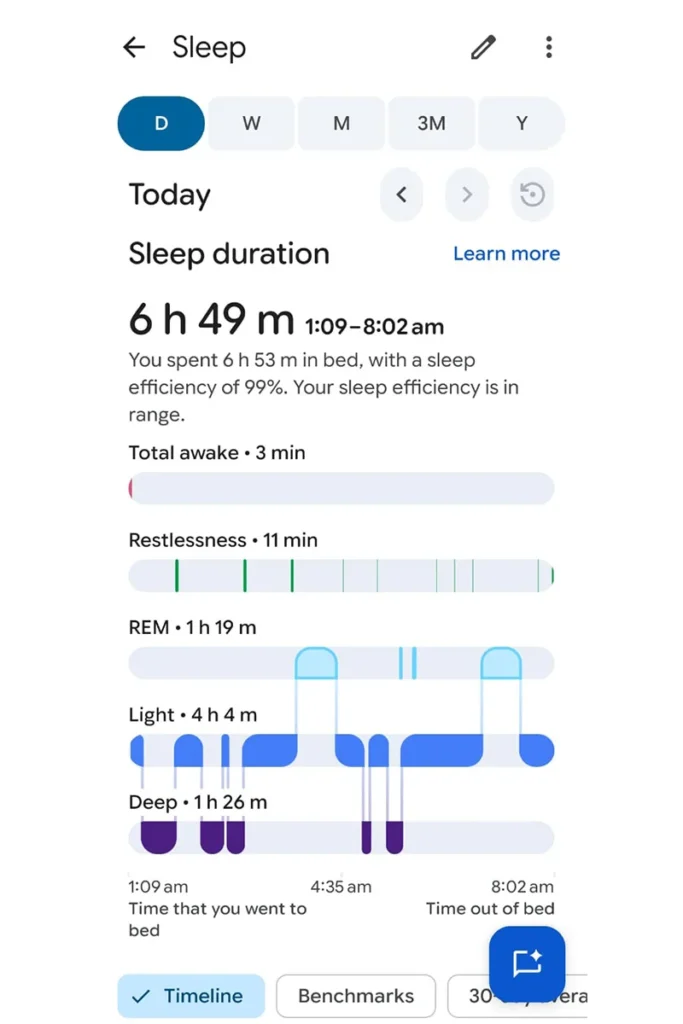
The sleep data offered by the Fitbit Air is presented in an extremely polished form, breaking down your sleep into light, deep and REM sleep stages. You get a very clear Sleep Score, which is simple to interpret. In addition, the Fitbit platform offers personalized suggestions for improving sleep habits. The Luna Band also comes equipped with sleep tracking capabilities, however, it is especially focused on how your sleep affects your recovery process. It offers clear graphs of overnight HRV and temperature changes. Both trackers can give you a sleep summary, however, the Luna Band incorporates that information right into your daily life with the help of LifeOS.
Recovery Tracking and Readiness Insights #
One of the features of the Fitbit Air is its Daily Readiness Score which uses your sleep pattern, heart rate and activity level to suggest whether you should do a hardcore workout session or simply have a day off. Yet, the feature is usually linked with the Fitbit Premium service. Another band worth mentioning is the Luna Band which provides a built-in recovery score comparing your strain level during the day with your recovery at night. The Luna Band provides in-depth analysis and advice related to it for free. Both platforms provide excellent readiness indicators, but they diverge on the cost of accessing those deep insights.
Stress Monitoring and General Wellness #
The stress monitoring function is also one of the important types of functions. The Fitbit Air includes the stress measurements in its package, which will allow you to assess physiological indicators of stress and obtain a daily Stress Management Score. In addition to that, the application allows you to practice breathing exercises and get tips for managing stress. The Luna Band offers wellness summaries that will assess the level of activation of your nervous system during the day. They will show you the amount of stress but will focus on the physical one rather than on breathing exercises.
Heart Rate Monitoring and Trends #

© Luna
© WearableXP
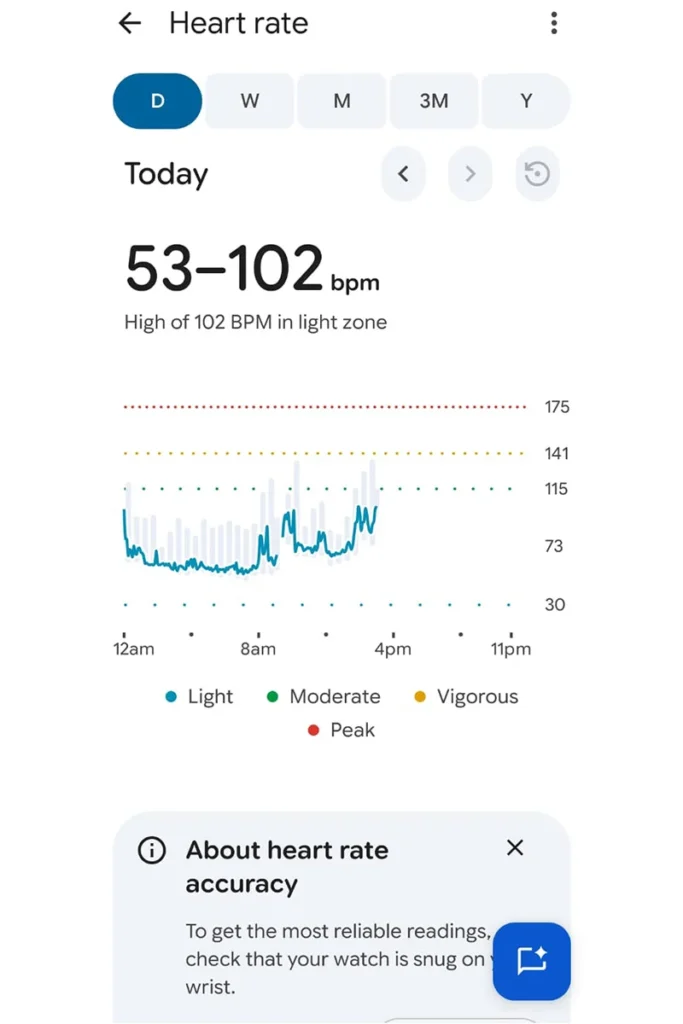
In terms of heart rate monitoring from Fitbit Air vs Luna Band, both devices provide continuous optical heart rate tracking. With the Fitbit Air device, users can check their resting heart rate, as well as trends in their heart rate over the span of days, weeks and months within the native app. The Luna Band, on the other hand, provides resting heart rate tracking and focuses on the analysis of heart rate variability (HRV), which is very important to estimate physical stress. The Luna Band boasts a high level of accuracy based on its internal tests, while the Fitbit Air uses Google’s trusted sensor technology. Both of the present long-term heart rate trends beautifully, though Fitbit’s historical graphs are often considered for readability.
Health History and Long-Term Trends #
Health history is important in health monitoring through wearable devices. The Fitbit Air shows the health history of the user as well as any changes on a weekly and monthly basis. It enables users to understand their history easily without having to analyze the data. The Luna Band too is good at tracking progress and provides an AI coach to give explanations about any trend seen. The Luna app simplifies complex biometric data so that users do not have to be scientists to understand their long-term health trajectory.
Fitness Tracking Features Compared#
Fitness monitoring plays an important role in the discussion on Fitbit Air and Luna Band. It is essential to make comparisons of how well each of the devices monitors physical activities and fitness statistics.
Daily Activity Tracking and Step Counting #
The Fitbit Air comes with seamless daily activity tracking, monitoring step counting, distance estimates and active zone minutes. It encourages users to stay active with hourly movement reminders and clear daily activity summaries. The Luna Band has step tracking and daily activity summaries as well, but it contextualizes this movement into a broader “strain” metric. Both devices offer useful activity goals and progress indicators, ensuring that casual users are motivated to keep moving throughout the day.
Workout Tracking and Exercise Recognition #
While recording the particular exercises, the Fitbit Air has an automatic activity detection system, which means that the device detects when you begin your run or walking and you do not need to push any buttons. With the Luna Band, automatic workout detection is provided for running, walking, cycling and rowing with more than 60 different sport modes. The Luna Band records your workout time, heart rate and workout summary after completing the exercise. Both devices have no screen, which means that the information about your current performance is displayed on your smartphone via the particular application. For outdoor activities like running you can also check our Best Screenless Bands for Running.
Calorie Tracking and Energy Expenditure #
The Fitbit Air calculates the estimated amount of calories burnt depending on the person’s heart rate, age, body weight and gender. The information about the amount of energy spent each day and the calories burnt through activities is displayed on these devices using ring closing visuals. The same applies to the Luna Band which estimates the amount of calories burnt and offers some activity statistics. However, it should be pointed out that the amount of calories burnt on any device is just an estimate, not a measurement. Both platforms do an excellent job of presenting these approximations so users can gauge their daily energy output consistently.
Workout Intensity #

© Luna
© WearableXP
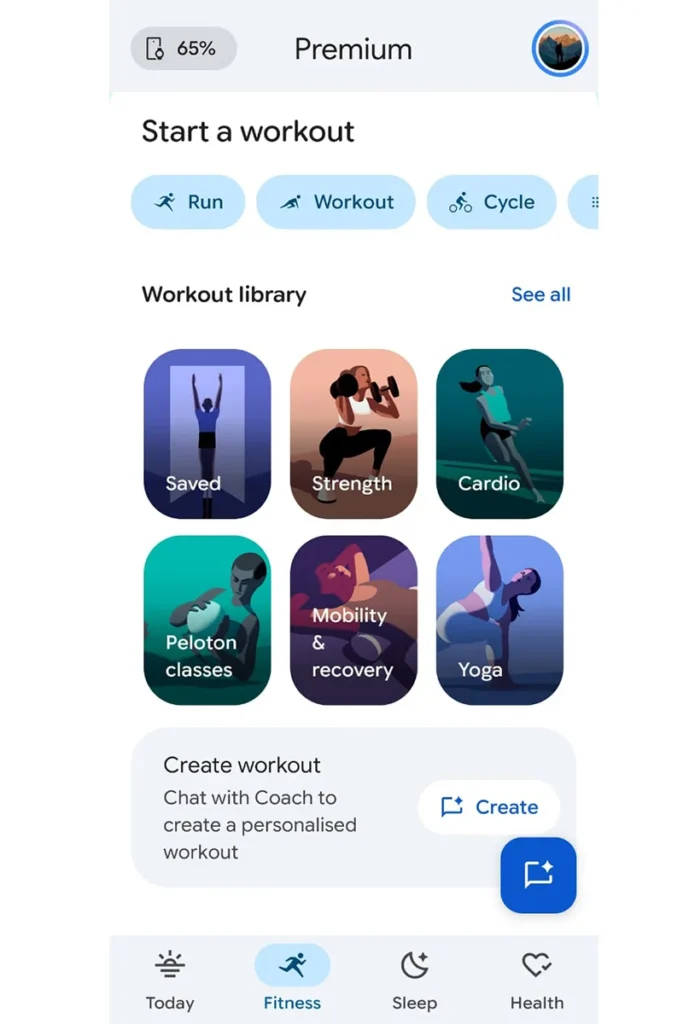
It is also very simple to measure workout intensity on both devices. The Fitbit Air has active zone minutes that will help to monitor the duration in the three different heart rate zones: fat burn, cardio and peak. Whereas, the Luna Band also has detailed information about heart rate zones and training load, showing how hard you trained in one particular workout. The Luna Band provides all of this data free of charge and this is a great benefit for athletes.
Fitness Goals, Progress and Activity Insights #
The Fitbit Air gives daily goals, activity streaks and weekly summaries which make the process of progress monitoring fun and encouraging. If you subscribe to the Premium version, the application will give you customized tips. On the other hand, Luna Band also gives progress monitoring features but for a longer period. It also gives customized tips through the free artificial intelligence coaching service. The Fitbit approach is great for casual users who love earning badges, whereas the Luna Band approach may suit people who follow a more structured fitness routine and want direct feedback on their training load.
GPS, Connected Workouts and Fitness App Integration #
Because there is no screen on either gadget, the GPS feature depends on your smartphone. Fitbit Air has a connected GPS feature whereby it connects to your phone location to track your outdoor workouts such as running and biking. The device perfectly works with Google Health App and Apple Health. Luna Band also has connected GPS in the app and it also syncs data with Apple Health. In case you are an outdoor runner or biker but you do not like to carry a phone, there is a limitation with both of these health trackers.
Accuracy and Reliability Compared#
Amongst various factors one may take into account when comparing Fitbit Air vs Luna Band, the most important feature would be its precision. Without the accurate numbers, there will be no efficient coaching whatsoever.
This gadget boasts years of research and development by Google and Fitbit in terms of hardware and software sensors. The quality of optical sensors of this device is excellent, since the device performs outstandingly at measuring heart rates at rest and during exercises. While it is a wellness tracker and not a clinically approved device, it still shows remarkable consistency in results. Skin color and tattoos are usually an issue when working with optical sensors, but not in the case of Fitbit.
While the Fitbit Air has already shown its reliability, the Luna Band has sensors which still need time to prove their reliability in the market. In the Luna Band, there are some issues reported in various reviews related to inaccuracies in measuring the user’s heart rate when they are working out and distinguishing their sleep stages. The Luna Band has excellent software but lags a bit in its hardware.
Battery Life and Charging Experience#
One of the greatest advantages of a screenless wearable is the absence of a need to recharge it every day. Comparing the Fitbit Air vs Luna Band in terms of their batteries, both gadgets look good, but one of them stands out.
First of all, the Fitbit Air comes with a battery that works for 7 days. This gadget has a highly effective system and once its battery runs down, 5 minutes of charging will be enough to use it for an entire day. This is rather convenient for those users who are willing to remove the band only during the shower time.
While the Fitbit Air has a battery that works for 7 days, the Luna Band features an even bigger battery and can work for 10 days. The gadget has an advantage for travelers and users who dislike recharging cables. Although the Luna Band looks bulkier, it has more space inside for a battery.
App Experience and Software Ecosystem Compared#
A screenless wearable is as useful as the app that interprets the data from its sensors into daily metrics. It is therefore crucial to compare the performance of the respective companion phone app while doing Fitbit Air vs Luna Band comparision. Since both wearables lack a display screen on which you can view your information fast, you are going to use the mobile apps extensively to get insights about your body.
The Fitbit Air comes with the Google Health application, providing a clear and intuitive dashboard where your entire data will be displayed. Apart from this, the application features fast Bluetooth synchronization and your health statistics will be uploaded into the cloud, allowing for instant updates the moment you open your phone. The other feature offered by this device is the advanced, Gemini-based Health Coach, which analyzes your sleep patterns and heart rate trends and provides useful recommendations based on that information. Unfortunately, while being able to view your tracked metrics for free, you will have to purchase a premium subscription for Google Health costing $9.99 per month.
Unlike that, the Luna Band comes with the special LifeOS app that has no monthly subscriptions at all. Rather than forcing you to browse endless graphs with a history of your activity, this application is designed with the voice-first artificial intelligence, which means that you can talk out loud to the app and ask about the quality of your sleep. Moreover, this system has a smart connection to the digital calendar on your phone. In other words, as the LifeOS app monitors your current stress level together with the schedule of your day, it can vibrate your wrist before an upcoming stressful meeting.
Price And Availability#
The Fitbit Air is priced at $99.99 USD that comes with an optional subscription of $9.99 USD monthly or $99 USD annually, which can be purchased from Google Online/offline store, Amazon and Best Buy.
On the other hand, the luna band is priced at $149 USD which you can purchased it from Luna online store, Amazon as well as from Best Buy.
Fitbit Air vs Luna Band: Which One Should You Choose?#
You should buy Fitbit Air if:#
- You want a lightweight and compact screenless wearable.
- You prefer a lower starting price.
- You want simple health and activity tracking through Google’s health ecosystem.
- You want to track sleep, heart rate, steps and daily activity without a smartwatch screen.
- You are comfortable using basic features without a paid subscription.
You should buy Luna Band if:#
- You want more workout modes and detailed fitness tracking.
- You prefer personalized recovery insights and AI-powered coaching without a monthly subscription.
- You want longer advertised battery life between charges.
- You want features such as workout intensity tracking and heart-rate zones.
- You prefer a wearable that combines daily health tracking with broader fitness insights.
Final Verdict#
Of these two devices, if I were to choose one wearable for best screenless tracker, it would be the Fitbit Air. I like the way this device is light and uses a minimalist way to track my health. In addition, its compatibility with the Google health network gives it an added edge as it would be easy for me to track my daily health information.
The Fitbit Air provides me with what I would expect from a daily health tracker. I would prefer something simple and comfortable. This is why Fitbit Air would be my choice.
FAQs#
01Does the Fitbit Air require a monthly subscription?
The Fitbit Air displays your basic daily tracking data for free. However, the Fitbit Air requires a $9.99 monthly Google Health Premium subscription to unlock deeper, AI-driven coaching insights.
02How long does the Fitbit Air battery last?
The Fitbit Air battery provides up to seven days of continuous use on a single charge. Furthermore, if your Fitbit Air is running low, a quick five-minute charge gives you enough power for a full day.
03How does the Luna Band help manage daily stress?
The Luna Band connects directly to your smartphone’s calendar to monitor your upcoming schedule. By cross-referencing this schedule with your real-time heart rate, the Luna Band sends gentle haptic vibrations to help you relax before a busy meeting begins.
04How long is the battery life on the Luna Band?
Thanks to a slightly thicker physical design, the Luna Band houses a larger battery that lasts up to 10 days. Because of this extended capacity, the Luna Band is perfect for users who want to avoid frequent charging sessions.
 RR
Written by
Reetain, with a focus on emerging trends and immersive tech, covers smart wearables and evolving device categories. He explores how sensors, AI, and connectivity come together in modern wearables, helping readers understand how these technologies shape everyday digital experiences and the future of personal computing.
More from Reetain 60 storiesKeep readingmore from Screenless Bands
All storiesNewsGoogle Confirms Fitbit Air Will Get Sleep Breathing Quality Feature Soon Smart RingsBest Hormone Tracking Wearables: Smart Rings and Devices for Cycle, Fertility and Health Insights
 Screenless BandsNoise Rep vs Amazfit Helio Strap: Which Screenless Fitness Tracker Is Better?
What’s inside
- 01Design and Comfort2 min
- 02Fitbit Air vs Luna Band Specification Comparison Table1 min
- 03Health Tracking Features: Fitbit Air vs Luna Band3 min
- 04Fitness Tracking Features Compared3 min
- 05Accuracy and Reliability Compared1 min
- 06Battery Life and Charging Experience1 min
- 07App Experience and Software Ecosystem Compared1 min
- 08Price And Availability1 min
- 09Fitbit Air vs Luna Band: Which One Should You Choose?1 min
- 10Final Verdict1 min
- 11FAQs1 min