

There was a time when I thought a fitness tracker needed a screen to be useful. After spending time with and comparing the Garmin CIRQA vs WHOOP 5.0 vs Fitbit Air, I am not so sure anymore. All three take almost the same basic approach: put the tracker on your wrist, forget about it and check the numbers later instead of constantly looking down at your wrist.
But that is where the similarities start to end. The Fitbit Air is the one I would look at if I simply wanted an affordable way to track my everyday health. The Garmin CIRQA makes much more sense to me when training and fitness become a bigger part of the picture. And then there is WHOOP, which takes recovery, sleep and training load so seriously that the subscription becomes part of the product itself.
After spending time with the Garmin Cirqa vs WHOOP 5.0 vs Fitbit Air, I found that these three take very different approaches to screenless tracking. Fitbit keeps things simple and affordable, Garmin leans into fitness and training, while WHOOP puts recovery and coaching first. So, if I had to keep just one on my wrist, which would I choose? Let’s break down what each one does best, where it falls short and which one is actually worth your money.
Garmin CIRQA vs WHOOP 5.0 vs Fitbit Air at a Glance
| Feature | Garmin CIRQA | WHOOP 5.0 | Fitbit Air |
|---|---|---|---|
| Hardware Cost | $199.99 (one-time purchase) | $0 (included with membership) | $99.99 (one-time purchase) |
| Required Subscription | None ($0/year) | $199/year (One) or $239/year (Peak) | None ($0/year) |
| Premium | Garmin Connect+ ($69.99/year) | Mandatory | Google Health Premium ($9.99/month) |
| Battery Life | Up to 10 days | 14+ days | Up to 7 days |
| Weight | 21 g | 26.5 g | 12 g |
| Dimensions | 47 × 27 × 9 mm | 34.7 × 24 × 10.6 mm | 34.9 × 17 × 8.3 mm |
| Display / Screen | Screenless | Screenless | Screenless |
| Physical Controls | Physical action button | Tap gestures | Tap status light |
| Water Resistance | 5 ATM (50 meters) | 5 ATM (IP68 certified) | 5 ATM (50 meters) |
| GPS Tracking | Connected GPS (via phone) | Connected GPS (via phone) | Connected GPS (via phone) |
| Heart Rate Broadcasting | ANT+ and Bluetooth | Bluetooth LE only | None |
| Primary Metric Focus | Training Readiness & Body Battery | Recovery Score & Strain | Daily Readiness & Cardio Load |
| Best For | Training depth without recurring fees | Recovery-centric athlete coaching | Affordable, lightweight daily wellness |
The Biggest Difference Is How You Pay
The Fitbit Air is available to consumers in the market at an affordable cost of $99.99. The Garmin CIRQA can be purchased for $199.99 one-time. These two devices provide you with complete information about your continuous health data, sleep information, readiness data and workouts without having to pay any monthly or annual fee.
Decode the Decor
The Smart Jewelry Revolution — a practical guide to wearable tech.
However, WHOOP is an altogether different concept. Instead of selling its hardware directly to consumers, it sells its algorithmic platform through subscriptions. The basic WHOOP One package costs $199 per year while the advanced WHOOP Peak package costs $239 per year and both use the 5.0 sensor. There is a third tier which uses WHOOP MG, called the WHOOP Life which costs $359 per year. Once you stop your subscription, your WHOOP device will stop collecting and showing any data. If you’re still deciding between these two approaches, our Garmin CIRQA vs WHOOP 5.0 comparison takes a closer look at their features, fitness tracking and overall value.
Both Garmin and Google also provide the option to upgrade. For Garmin, the additional feature is called Garmin Connect+ and costs $69.99 per year, while Google Health Premium provides detailed historic information and additional coaching at $9.99 per month. However, one must note that Fitbit and Garmin do not penalize you for not purchasing any add-ons.
Design and Comfort

© Garmin

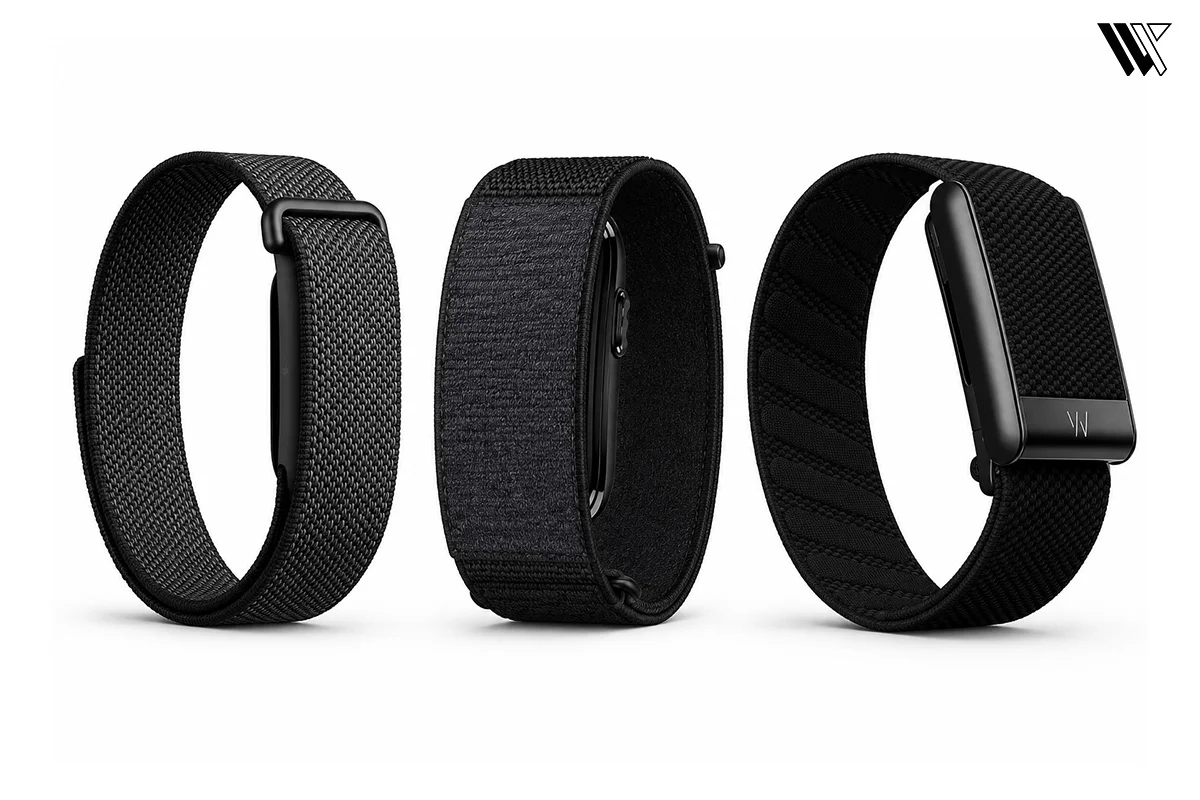
© WHOOP
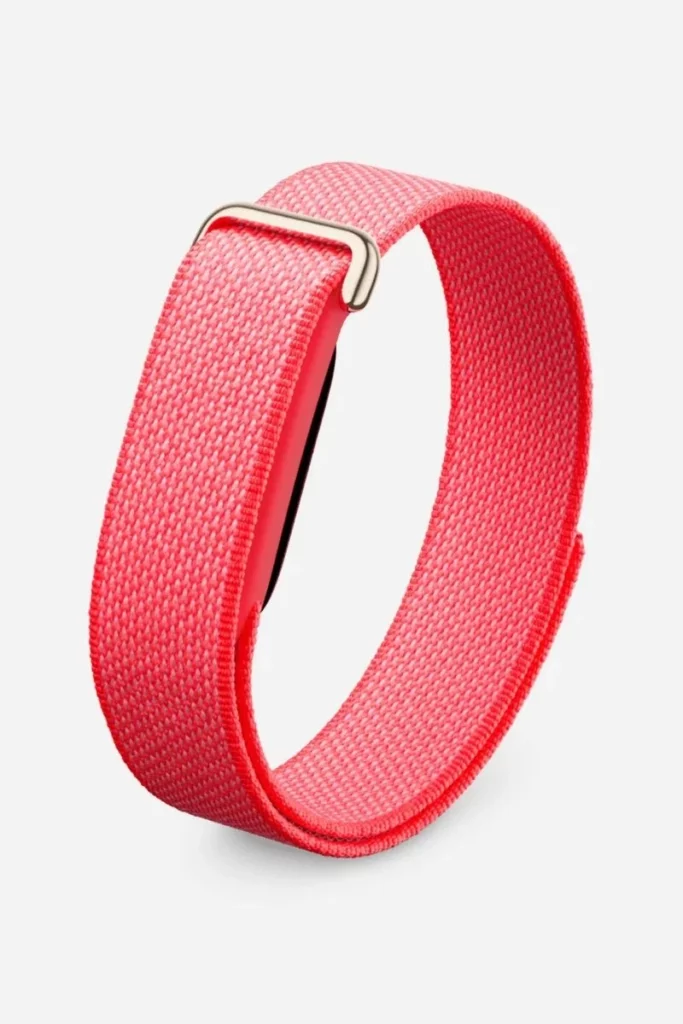
The Fitbit Air is definitely compact in size, with a pebble-shaped body of 34.9 x 17 x 8.3mm and a weight of only 5.2 grams for the main module and approximately 12 grams when it includes the woven strap. Due to its slimness that is less than 17mm in width, the area of contact with the skin is reduced and moisture is able to escape naturally without sweating in humid weather. On the wrist, it literally vanishes beneath my long sleeves and when sleeping because of the lack of buttons on its matte surface which is activated by simple double touches to operate the LED lights. Unfortunately, its sleek design has one minor drawback in that, due to the thinness of the tension band, it sometimes bites into the skin.
On the other hand, the Garmin CIRQA is a more bulky, sports-oriented device that uses a fiber-reinforced polymer module measuring 47 × 27 × 9 mm and weighs around 20.7 to 21.2 grams depending on the strap size. Although the CIRQA has a bigger profile and a longer footprint extending through the wrist, the manufacturer has designed it with a smooth and anatomical curvature that follows the form of the arm and thus keeps its shallow 9 mm depth extremely close to the skin without applying sharp pressure. The device features a ComfortFit elastic fabric strap that is 24 mm wide and is capable of evenly distributing the tension applied by the strap in the wrist or upper arm area without bouncing the sensors during intensive training sessions. Want to see how Garmin’s screenless approach compares with Fitbit’s? Our Garmin CIRQA vs Fitbit Air comparison breaks down their design, features and everyday usability.
And the WHOOP 5.0 is 34.7 × 24 × 10.6 mm in size that weighs about 26.5 grams with the band on, being 7% smaller than WHOOP 4.0 in volume while maintaining the same tough IP68 construction. Despite still being the largest among the three at 10.6 mm thick, WHOOP makes up for its bulk by equipping it with a super comfortable and quick-drying SuperKnit and CoreKnit band design with a no-metal Fast Link clasp slider that prevents any skin pinching from the pins. But WHOOP’s real strength lies in its modular and completely ergonomic Any-Wear system, allowing one to easily clip the sensor pod off and use it on a biceps sleeve or on WHOOP Body compression wear to take the tracker off the wrist.
Verdict: Fitbit Air provides a seamless, feather-light experience that works wonders while sleeping, however, its skinny band does not provide enough stability to train vigorously. The WHOOP 5.0 wins the race when it comes to wearing the device out-of-wrist, as it is capable of attaching to the bicep and clothing, though 10.6 mm thickness of the WHOOP 5.0 makes it the biggest band on the wrist out of the three. The best option for me would be the Garmin CIRQA owing to the stable and breathable design.
Health Sensors and Everyday Wellness
Being around these devices all day long suggests that, although they gather the same basic data about constant biological indicators such as heart rate, heart rate variability, movement using 3-axis accelerometers, respiration rate and changes in skin temperature during the night, the actual sensors and analysis techniques are different.
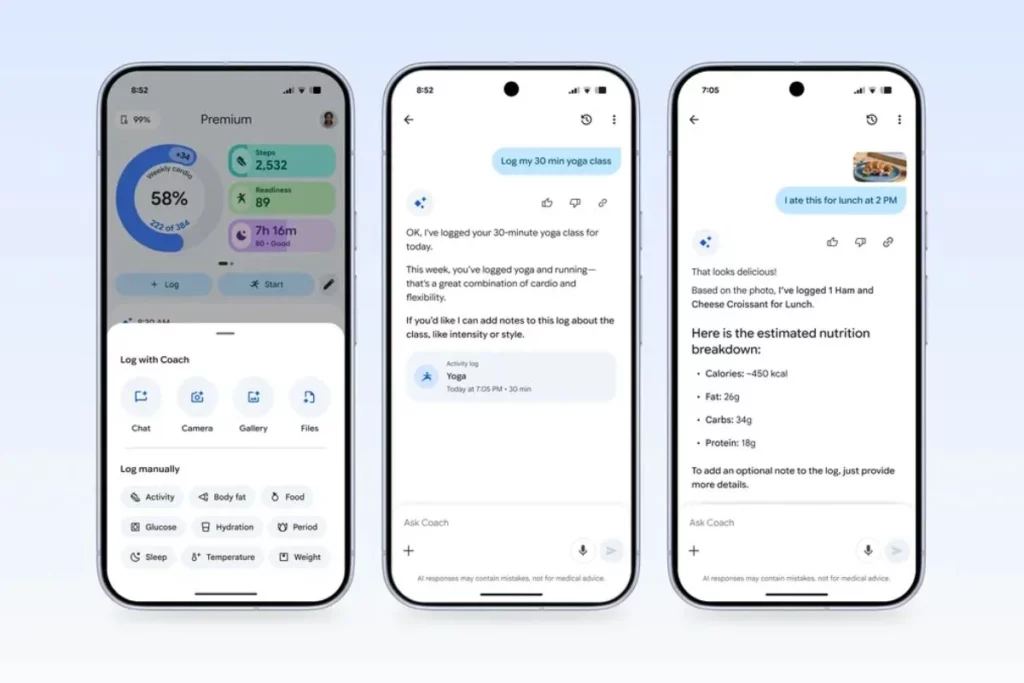
The Fitbit Air focuses on clean preventive health tracking via a multipath optical photoplethysmogram (PPG) array, in addition to a separate red / infrared sensor used to measure SpO2 blood oxygen saturation, along with an integrated skin temperature variation sensor. Not just limited to tracking resting heart rate and sleep data, but its most significant health-related feature is FDA-cleared irregular heart rhythm notifications (detects atrial fibrillation using PPG algorithms) which track your potential AFib while sleeping or resting. All of which is tracked seamlessly by the Google Health app, displaying your health trends without any confusing graphs and numbers. The limitation is the passive nature of metric tracking during the day and insights from the Google Health Premium subscription only.

© Garmin
The Garmin CIRQA on the other hand, treats your everyday physiology like a dynamic, real-time energy budget. It uses the latest version of an optical sensor array combined with a contact thermistor to measure skin temperature and Pulse Ox metrics, assessing the health of your autonomic nervous system through HRV measurements taken every few seconds rather than merely on a night-by-night basis. All of this information helps fuel the Garmin-exclusive feature known as Body Battery, which shows you how your day to day stress levels, dehydration or even office fatigue take a toll on your energy while also monitoring how restful downtime helps recharge you.

© DC Rainmaker
Lastly, the WHOOP 5.0 relies on an upgraded multi-LED, multi-wavelength PPG sensor, which has been optimized for acquiring high-fidelity beat to beat measurements along with breathing patterns and skin temperatures. The physiological parameters captured by WHOOP sensors are analyzed using the company’s recovery score and daily stress measures in order to make sense of the physical and psychological strain that you experience. With a more premium subscription such as WHOOP Peak, WHOOP associates wellness metrics with your biological age and healthspan.
Verdict: The Fitbit Air allows me to spot early health signs automatically with accurate baseline vitals and AFib alerts, but does not provide the necessary in-depth and real-time health data that active users require. WHOOP 5.0 offers the most in-depth analysis of physiological trends and Healthspan Modeling, but the basic version of WHOOP 5.0 does not include the ECG functionality and requires an expensive membership to access deeper insights. I prefer Garmin CIRQA as my health companion due to real-time tracking of Body Battery and HRV Status.
Sleep and Recovery

© PC Mag
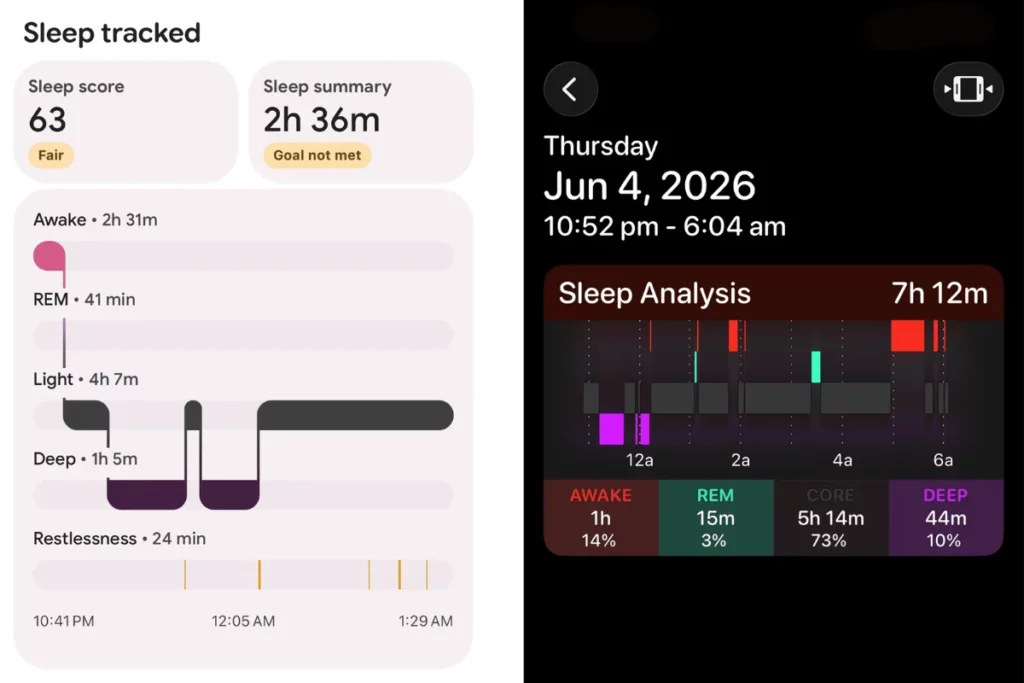
WHOOP 5.0 utilizes an exclusive recovery-focused platform, which measures continuous heart rate variability (rMSSD) in slow-wave deep sleep to measure the body’s parasympathetic nervous system’s reactivation process. On a daily basis, the device compares the nocturnal heart rate variability (rMSSD) score to the user’s heart rate, respiration rate stability and sleep efficiency to calculate a percentage-based Recovery Score (coded Green, Yellow or Red). WHOOP’s adaptive Sleep Coach determines your individualized Sleep Need for each night using your existing sleep debt, daily exertion and napping habits. When combined with the WHOOP Journal and the built-in AI Coach, the app connects your individual behavioral actions such as evening caffeine intake, late-night food consumption, alcohol and hydration directly to your recovery percentage.

© Garmin
The Garmin CIRQA uses a dual physiological engine model that assesses sleep performance in addition to muscular and cardiovascular fatigue. The CIRQA is capable of performing a 24/7 sleep stage analysis in order to produce a Sleep Score based on the duration of light, deep and REM sleep stages in addition to the time spent awake, with the inclusion of automatic naps and Sleep Need assessment during the day. What makes the CIRQA really special is its HRV Status, which compares a 7-day average value to a consistent 3-week baseline value of the individual’s HRV. This data is fed right into the multi-parameter Training Readiness score (1 to 100 scale) together with a Recovery Time countdown in hours.
©: 512 Pixels
A core feature of the Fitbit Air is its simple recovery program, which strips away any complicated data analysis to deliver an easy-to-understand recovery program for health and fitness. Its night-time analysis is based on resting heart rate variations, changes in the baseline of your heart rate variability while sleeping, sleep time and sleep stages to generate a straightforward Sleep Score and Daily Readiness Score along with Cardio Load for each week. This technology enables you to get clear guidelines in terms of your sleep and cardiovascular load and allows you to understand if your body can manage more target active minutes or you should do some restorative walking instead. But at the same time, there is no midday nap guidance and training load balancing included in its sleep model. If sleep and recovery are your main priorities, our Fitbit Air vs WHOOP comparison takes a closer look at how the two approaches differ.
Fitness and Workout Tracking
Once you put on your sneakers and start to sweat, the philosophical divide between the three tracker devices without screens becomes instantly clear. Because there is no screen face on which you can see your numbers while you run, each of the three devices employs unique sensors and sampling techniques for tracking performance.
The most comprehensive, athlete-oriented gadget of all three is Garmin CIRQA. With over 80 sports modes for manual logging and a dedicated button on the edge, one can easily start/stop/lap an exercise without unlocking their smartphone. On the technical side, Garmin employs its tried and true Firstbeat physiological engine to determine heart rate zones, aerobic/anaerobic training effect, estimate VO2 max and calculate post-exercise recovery time. The product additionally includes ANT+/Bluetooth heart rate broadcasting, thus making a screenless device into a specialized optical chest strap, which sends live heart rate right to bike computers and smart trainers as well as gym equipment. Outside, the device uses Connected GPS via a smartphone along with Garmin LiveTrack safety tracking service.
WHOOP 5.0 is different from its competitors because it measures physical activity through strain and recovery instead of following the conventional sports watch template. WHOOP uses a unique strain metric, which assesses the body’s cardiovascular output on a logarithmic 0 to 21 scale and sets your goal for the day depending on how much you have recovered in the morning. WHOOP’s Strength Trainer measures the muscular load using the information about weight volume, repetitions and velocity of force production gained from the accelerometer and gyroscope readings. Although its automatic background detection algorithm recognizes typical cardio exercises with great accuracy, precise tracking of the strength sets or heart rate zones needs the phone app to be open during exercise.
The Fitbit Air breaks down exercises into easily understood goals for the cardiovascular system by monitoring Active Zone Minutes every day and Cardio Load once a week to make sure that you keep an adequate base fitness level without overtraining. In my workouts, I observed that sometimes the automatic SmartTrack of the Fitbit Air does not react well and may miss the beginning of the workout or classify it wrong due to its variability. However, when I start the workout myself in the Google Health application, the heart-rate sampling works perfectly fine and gives me accurate information about pace, distance using Connected GPS and heart-rate zones. The only limitation that it has is its complete dependence on your phone screen since it has no buttons and cannot broadcast your heart rate.
Garmin Connect vs WHOOP vs Google Health
The Garmin Connect app

© Garmin
The Garmin Connect app works as a highly dense sports science analytics tool focused on performance data tracking. Technical infrastructure allows for arranging raw heart rate data continuously, HRV Status beat to beat and weeks of accumulated training load in highly interactive charts. All your lifetime training data, your AC/TC ratios, gear miles and VO2 max are consolidated within one place without hiding the most important physiological metrics behind the paywall. If you are used to tracking your cycling rides with a Garmin Edge or running with a Forerunner, then CIRQA will seamlessly fit into your training timeline.
The Optional Subscription: Those users who wish to have assistance from an artificial intelligence-based system will receive Garmin Connect+ for $6.99 monthly or $69.99 annually. This will add personalized changes in workouts, detailed explanation of the recovery process and race training to your already existing information, however, the athletic tracking itself is totally free of charge.
WHOOP 5.0
© WHOOP
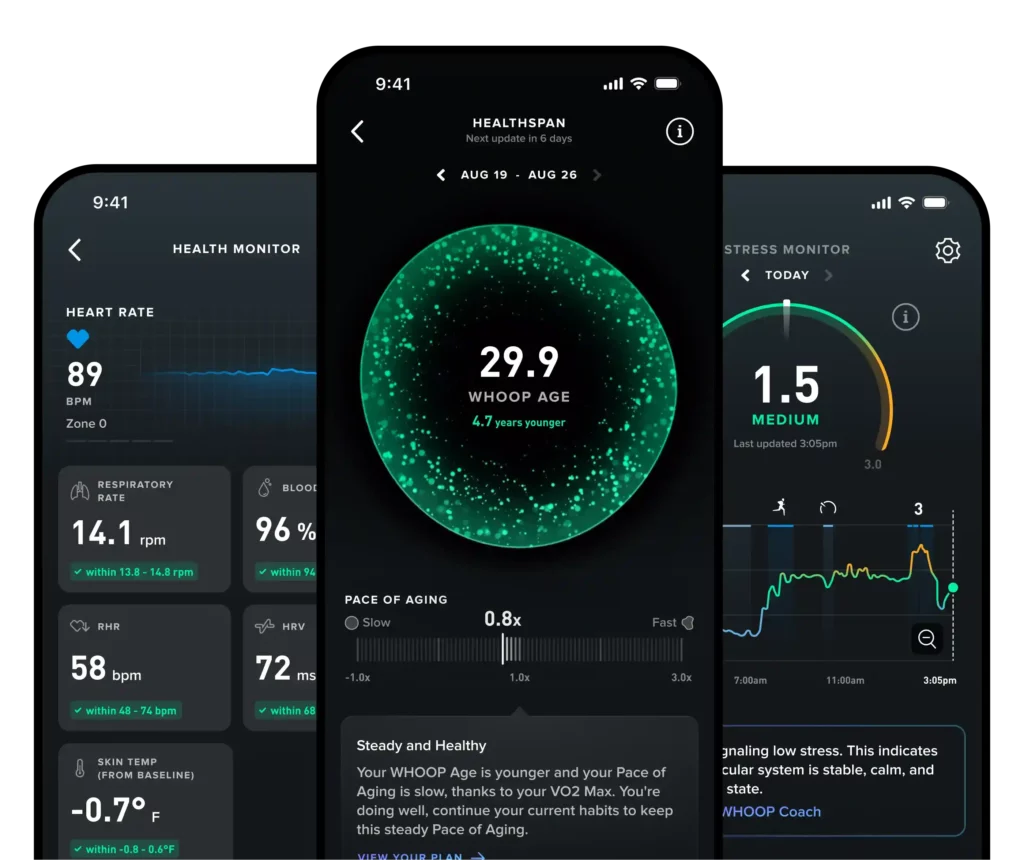
WHOOP offers the most refined, behavior-centric mobile application out there, built from the ground up based on the closed loop between Recovery, Strain and Sleep. Instead of simply throwing up numbers about your daily activities, WHOOP’s algorithmic system calculates your cardio stress and sleep debt, presenting you with easily understandable daily goals. The heart of the experience lies in the WHOOP Journal, wherein you record daily behavioral tags like late dinner, alcohol consumption, screen time, magnesium use or meditation. Through statistical correlation, the app’s regression analysis engine produces monthly personalized insight reports for you that show you the math behind the connection between certain behaviors and your HRV and sleep patterns.
Google Health
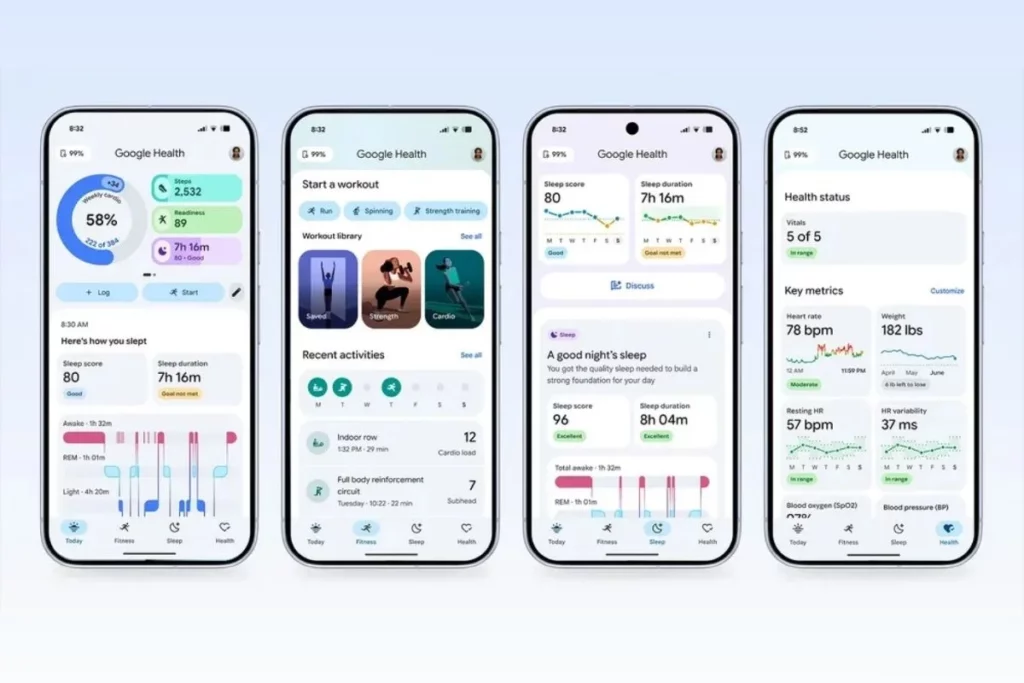
Google Health (the unified evolution of the Fitbit ecosystem) offers an elegant and user-friendly interface that is optimized for smooth use in the context of health monitoring every day. All your information will be presented in four tabs: Today, Fitness, Sleep and Health. The system will filter out all those complicated sport-related statistics and focus on readability.
Optional Subscription: Though some metrics, sleep cycles and AFib notifications are available for free, harnessing the full capabilities of the Google Health platform entails a monthly subscription fee of $9.99 or a yearly subscription fee of $99.99 (Google AI bundle included). The Google Health Coach powered by Gemini, historical trends analysis, mindfulness practices and personalized weekly workouts are all locked behind the Premium subscription.
Battery and Charging
The battery life of these screenless devices offers them huge advantages over smart watches.
- WHOOP 5.0: The WHOOP 5.0 offers up to 14+ days of battery life with just one charge. The watch uses the slide on battery pack which means you can charge the device without taking it off your wrist.
- Garmin CIRQA: The Garmin CIRQA offers 10 days of battery life on a single charge. It is charged using the magnetic connector which is attached to the bottom of the device.
- Fitbit Air: The Fitbit Air has 7 days of battery life per charge. It charges using the magnetic charger and takes around an hour to get fully charged from zero.
In terms of battery life and charging convenience on the wrist, the WHOOP wins the day.
Compatibility and Ecosystem
How easily a screenless tracker talks to your phone, fitness apps and workout gear determines whether it slips seamlessly into your daily routine or creates frustrating data silos.
- Garmin CIRQA: The obvious winner for sports devices due to dual Bluetooth and ANT+ which sends heart rate data live to bike computers, treadmills and other equipment. Thanks to the new Garmin Physio TrueUp, you can sleep in the CIRQA, run with a Forerunner watch and have the Training Load and Body Battery combined into one timeline in Garmin Connect. Also works well with Apple Health, Strava and Natural Cycles.
- Fitbit Air: Designed for seamless smartphone connectivity on Android 11+ and iOS 16.4+. Bidirectional synchronization with Android’s Health Connect and Apple Health makes it ideal for those who work in the Google/Pixel ecosystem. Unfortunately, since it lacks both ANT+ and HR broadcasting, it cannot send the live pulse data to external devices such as bike computers and gym monitors.
- WHOOP 5.0: Focused on the software, behavioral data and community. Supports iOS, Android and Bluetooth HR broadcasting to apps such as Strava or Peloton. However, the biggest value of WHOOP comes from locked-in historical data about recovery algorithms and WHOOP Teams. One major downside here is that once you switch from WHOOP, you won’t be able to take its proprietary Recovery and Strain baselines with you.
Women’s Health
When it comes to assessing women’s health via screenless devices, all is determined by how intelligently each particular model utilizes nighttime biometrics such as skin temperature fluctuations, resting heart rate, heart rate variability, in order to chart hormones and plan for fertility.
Cycle monitoring with the Fitbit Air is very simple and can be done within the Google Health application. You can enter the date of menstruation, the intensity of the flow, the mood and any symptoms manually and thanks to typical calendar algorithms, the upcoming dates and ovulation periods are estimated. Although the Fitbit Air has a built-in sensor that measures the skin temperature at night and records fluctuations in it, Google Health does not yet use this information for fertility tracking or predicting ovulation based on the BBT method.
CIRQA from Garmin utilizes a more sophisticated physiological method based on temperature. CIRQA tracks nightly skin temperature fluctuations measured either on your wrist or upper arm in order to measure slight thermal changes taking place during the luteal phase after ovulation in order to predict the day of ovulation and your menstrual cycle retrospectively through Garmin Connect. There is also pregnancy tracking for the monitoring of specific biometric changes and weight during each trimester. Garmin provides integration with FDA-approved Natural Cycles in order to track your night-time temperature without having to record it using a thermometer.
The WHOOP 5.0 is the best device for dynamic and performance-focused hormonal coaching using its Menstrual Cycle Insights and Hormonal Insights features. Rather than relying on viewing your period from a distinct calendar tab, WHOOP makes use of ongoing changes in nighttime HRV, resting heart rate and skin temperature to determine if you are in the follicular, ovulatory or luteal phase. It then adjusts its Sleep Need and Strain calculations in accordance with your true physiological capabilities, pushing you to train harder when estrogen promotes increased endurance while recommending that you take breaks when progesterone promotes increased recovery needs.
Who Should Choose Fitbit Air?
Choose Fitbit Air if
- You want the budget friendly option for health tracking.
- You want something lightweight and comfortable enough to wear all day.
- You mainly care about steps, sleep and everyday health tracking.
- You like the Google Health ecosystem.
- You want the core tracking features without a mandatory subscription.
- You want AFib irregular-rhythm notifications where supported.
Avoid Fitbit Air if
- You need detailed training and workout analytics.
- You want a physical button to control workouts.
- You already use Garmin devices and want everything in one ecosystem.
- You want deeper recovery and coaching features like WHOOP.
Who Should Choose Garmin CIRQA?
Choose Garmin CIRQA if
- You train regularly and want more detailed fitness data.
- You already use Garmin watches or other Garmin devices.
- You want a physical button for starting workouts.
- You want features such as Training Readiness, Training Status and Recovery Time.
- You want to broadcast your heart rate to compatible devices.
- You like the option of wearing it on your wrist or upper arm.
- You do not want to pay a mandatory yearly subscription.
Avoid Garmin CIRQA if
- You only need basic health tracking and want to spend less.
- You want the smallest and lightest tracker possible.
- You prefer WHOOP’s recovery and behavior-focused coaching.
- You want built-in GPS without carrying your phone.
Who Should Choose WHOOP 5.0?
Choose WHOOP 5.0 if
- You use recovery data to decide how hard to train.
- You like tracking habits through the Journal.
- You want coaching that turns your data into daily recommendations.
- You do strength training and want to track muscular load.
- You want the longest claimed battery life of the three.
- You are comfortable paying for a yearly membership.
Avoid WHOOP 5.0 if
- You do not like paying a recurring subscription.
- You want to buy a tracker once and use it without yearly fees.
- You only need basic features such as steps and sleep.
- You expect ECG or blood-pressure features from the standard WHOOP 5.0.
Final Verdict
If I had to pick just one, I would go with the Garmin CIRQA. After spending time with it, what I like most is how naturally it fits into my day. I can wear it without thinking about it, keep track of my health and recovery and still get plenty of useful fitness data when I actually work out. The physical button is also a small detail that I ended up appreciating more than I expected.
The real reason why Garmin CIRQA is the right choice for me, however, lies in its balance between all the necessary elements. It provides the user with enough information to make this watch really helpful in his daily activities, but still leaves everything pretty simple. In no way does the device demand constant attention from the user or adjustments to its settings. This is exactly the kind of tracker that I can wear from morning to evening and forget about until the moment when I need this information.
Decode the Decor
The Smart Jewelry Revolution
A practical guide to wearable tech's future — delivered straight to your inbox.
Author
